. 2010 Jul;21(7):795-800.
doi: 10.1007/s00192-010-1119-z. Epub 2010 Mar 4.

Tape functionality: position, change in shape, and outcome after TVT procedure--mid-term results

Affiliations

Tape functionality: position, change in shape, and outcome after TVT procedure--mid-term results

Jacek Kociszewski et al. Int Urogynecol J. 2010 Jul.

Erratum in

  • Int Urogynecol J Pelvic Floor Dysfunct. 2010 Nov;21(11):1439-41

Abstract

Introduction and hypothesis: This study evaluates the relevance of the tape position and change in shape (tape functionality) under in vivo conditions for mid-term outcome.

Methods: Changes in the sonographic tension-free vaginal tape (TVT) position relative to the percentage urethral length and the tape-urethra distance were determined after 6 and 48 months in 41 women with stress urinary incontinence.

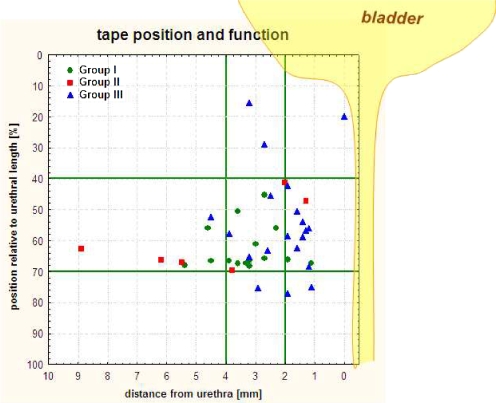
Results: At 48 months, 76% (31/41) of women were cured, 17% (7/41) were improved, and 7% (3/41) were failures. Disturbed bladder voiding was present in 12% (5/41), de novo urge incontinence in 7% (3/41). The median TVT position was at 63% of urethral length. Median tape-urethra distance was 2.7 mm, ranging from 2.9 mm in continent patients without complications to 1.1 mm in those with obstructive complications. Patients with postoperative urine loss had a median distance of 3.9 mm. The tape was stretched at rest and C-shaped during straining in 15 of 41 women (37%) at 48 months (all continent). Patients with this tape functionality at 6 months were also cured at 48 months in 86% of cases (19/22), and only 14% (3/22) showed recurrent incontinence.

Conclusions: Mid-term data suggest an optimal outcome if the tape is positioned at least 2 mm from the urethra at the junction of the middle and distal thirds. Patients with optimal tape functionality at 6 months are likely to show mid-term therapeutic success.


Figures
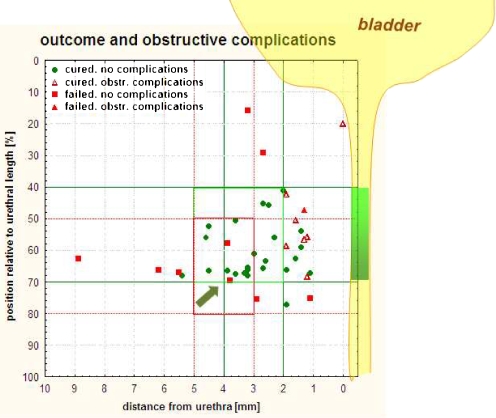
Fig. 1
Fig. 1
Outcome 48 months after TVT insertion according to tape position relative to the urethra and tape distance from the urethra. The optimal tape position, which was found to be at 50–80% of the urethral length with a tape–urethra distance of 3–5 mm at 6 months (indicated by red rectangle) [9], significantly shifts ventrocranially (p < 0.001). At 48 months, the highest success rates were found for tape position at 40–70 % of the urethral length and a tape–urethra distance of 2–5 mm (green square)
Fig. 2
Fig. 2
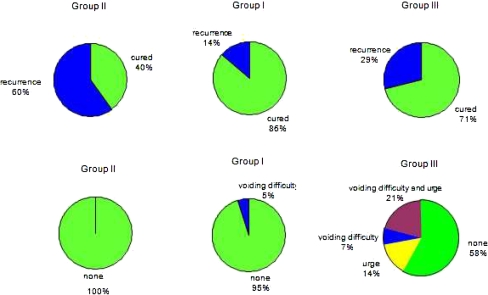
Changes in tape shape in Groups I–III (tape functionality) by baseline tape position at 48-month follow-up. The groups are explained in the “Patients and methods” section
Fig. 3
Fig. 3
Patients were assigned to the groups based on tape functionality at the 6-month postoperative follow-up. The figure shows cure and complication rates by group at 48 months

References

    1. Harms L, Emons G, Bader W, Lange R, Hilgers R, Viereck V. Funneling before and after anti-incontinence surgery—a prognostic indicator? Part 2: tension-free vaginal tape. Int Urogynecol J Pelvic Floor Dysfunct. 2007;18:289–294. doi: 10.1007/s00192-006-0147-1. - DOI - PubMed
    1. Masata J, Martan A, Svabik K, Drahoradova P, Pavlikova M. Ultrasound imaging of the lower urinary tract after successful tension-free vaginal tape (TVT) procedure. Ultrasound Obstet Gynecol. 2006;28:221–228. doi: 10.1002/uog.2692. - DOI - PubMed
    1. Tunn R, Schaer G, Peschers U, Bader W, Gauruder A, Hanzal E, et al. Updated recommendations on ultrasonography in urogynecology. Int Urogynecol J Pelvic Floor Dysfunct. 2005;16:236–241. doi: 10.1007/s00192-004-1228-7. - DOI - PubMed
    1. Viereck V, Bader W, Krauss T, Oppermann M, Gauruder-Burmester A, Hilgers R, et al. Intra-operative introital ultrasound in Burch colposuspension reduces post-operative complications. BJOG. 2005;112:791–796. doi: 10.1111/j.1471-0528.2005.00526.x. - DOI - PubMed
    1. Skala C, Emons G, Krauss T, Hilgers R, Gauruder-Burmester A, Lange R, et al. Postoperative funneling after anti-incontinence surgery—a prognostic indicator? Part 1: colposuspension. Neurourol Urodyn. 2004;23:636–642. doi: 10.1002/nau.20056. - DOI - PubMed