


Implantable resonators--a technique for repeated measurement of oxygen at multiple deep sites with in vivo EPR
- PMID: 20204802
- PMCID: PMC3806631
- DOI: 10.1007/978-1-4419-1241-1_38
Implantable resonators--a technique for repeated measurement of oxygen at multiple deep sites with in vivo EPR
Abstract
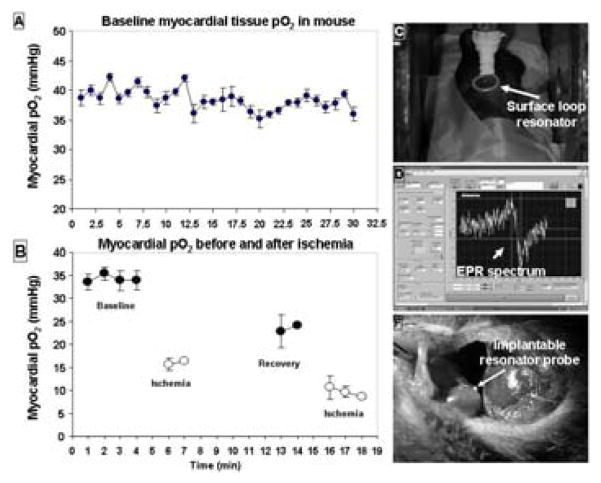
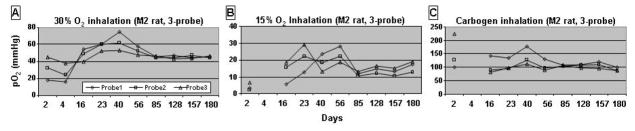
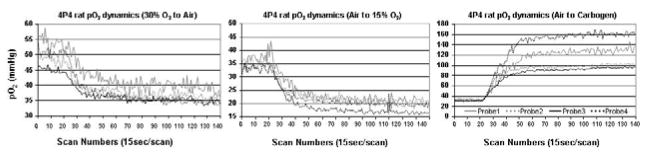
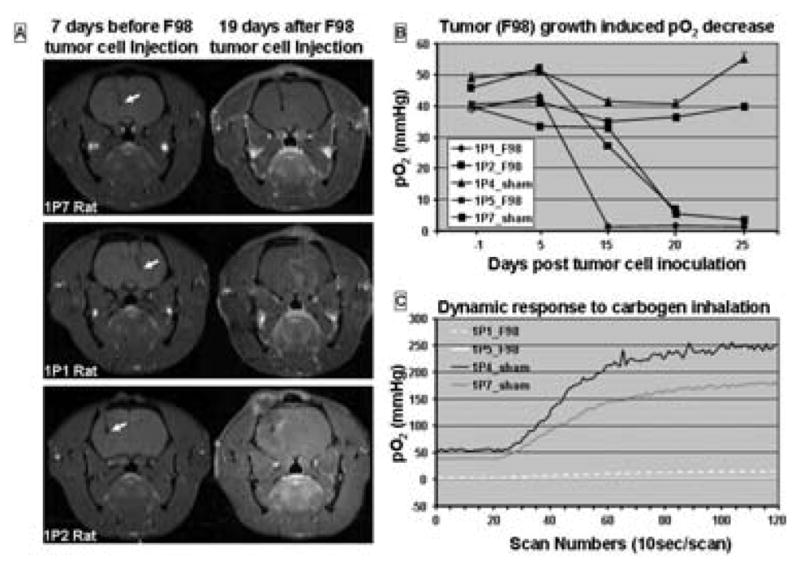
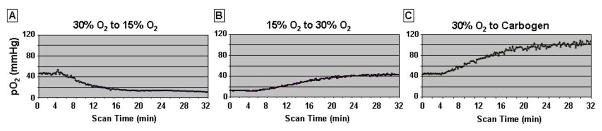
EPR oximetry using implantable resonators allows measurements at much deeper sites than are possible with surface resonators (> 80 vs. 10 mm) and achieves greater sensitivity at any depth. We report here the development of an improved technique that enables us to obtain the information from multiple sites and at a variety of depths. The measurements from the various sites are resolved using a simple magnetic field gradient. In the rat brain multi-probe implanted resonators measured pO(2) at several sites simultaneously for over 6 months under normoxic, hypoxic, and hyperoxic conditions. This technique also facilitates measurements in moving parts of the animal such as the heart, because the orientation of the paramagnetic material relative to the sensing loop is not altered by the motion. The measured response is fast, enabling measurements in real time of physiological and pathological changes such as experimental cardiac ischemia in the mouse heart. The technique also is quite useful for following changes in tumor pO(2), including applications with simultaneous measurements in tumors and adjacent normal tissues.
Figures
References
-
- Swartz HM, Walczak T. Developing in vivo EPR oximetry for clinical use. Adv Exp Med Biol. 1998;454:243–52. - PubMed
-
- Swartz HM, Reichling BA. The safety of X-ray examination of radioisotope scan. JAMA. 1978;239:2031–2. - PubMed
-
- Hou H, et al. The effect of oxygen therapy on brain damage and cerebral pO(2) in transient focal cerebral ischemia in the rat. Physiol Meas. 2007;28:963–76. - PubMed
Publication types
MeSH terms
Substances
Grants and funding
LinkOut - more resources
Full Text Sources
