


Delivery of celecoxib for treating diseases of the eye: influence of pigment and diabetes
- PMID: 20205602
- PMCID: PMC2858240
- DOI: 10.1517/17425241003663236
Delivery of celecoxib for treating diseases of the eye: influence of pigment and diabetes
Abstract
Importance of the field: Age-related macular degeneration (AMD) and diabetic retinopathy (DR) are two major causes of blindness. In these disorders, growth factors such as vascular endothelial growth factor (VEGF) are upregulated, leading to either enhanced vascular permeability or proliferation of endothelium. While corticosteroid therapies available at present suffer from side effects including cataracts and elevated intraocular pressure, anti-VEGF antibody therapies require frequent intravitreal injections, a procedure that can potentially lead to retinal detachment or endophthalmitis. Thus, there is a need to develop safe, sustained release therapeutic approaches for treating AMD and DR.
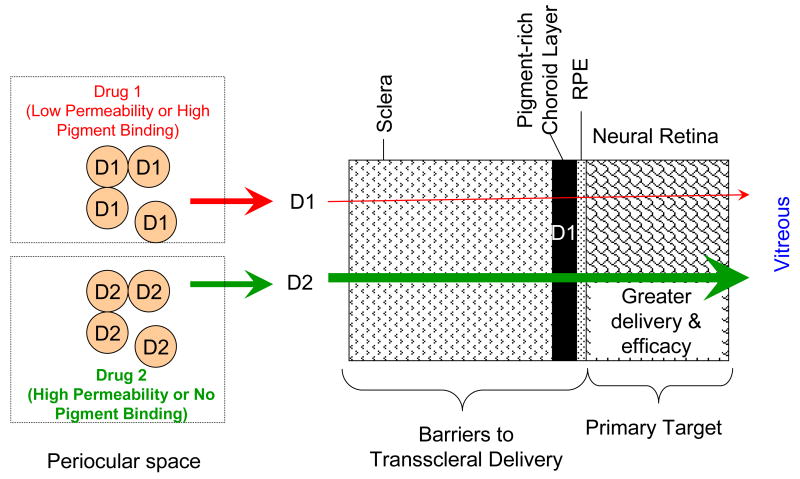
Areas covered in this review: This review discusses the pharmacological basis for using celecoxib, an anti-inflammatory drug capable of selectively inhibiting cycloxygenase 2, in treating AMD and DR. In addition, this article discusses the safety, delivery advantage and efficacy of celecoxib by transscleral retinal delivery, a periocular delivery approach that is less invasive to the globe compared with intravitreal injections.
What the reader will gain: The reader will gain insights into the development of a pharmacological agent and a sustained release delivery system for treating DR and AMD. Further, the reader will gain insights into the influence of eye physiology including pigmentation and disease states such as DR on retinal drug delivery.
Take home message: Transscleral sustained delivery of anti-inflammatory agents is a viable option for treating retinal disorders.
Conflict of interest statement
Figures
References
-
- Drug Therapy Guidelines: Pain/Arthritis Celebrex®(celecoxib) 2009. [cited 2009 November 3rd, 2009]; Available from: https://securews.bsneny.com/wps/wcm/connect/0cc10b804b0ebef28fea8f649fb4....
-
- Amrite AC, Kompella UB. Celecoxib inhibits proliferation of retinal pigment epithelial and choroid-retinal endothelial cells by a cyclooxygenase-2-independent mechanism. J Pharmacol Exp Ther. 2008 Feb;324(2):749–58. - PubMed
-
• This article demonstrates that celecoxib but not rofecoxib has anti-proliferative effects in retinal cells.
-
- Amrite AC, Ayalasomayajula SP, Cheruvu NP, Kompella UB. Single periocular injection of celecoxib-PLGA microparticles inhibits diabetes-induced elevations in retinal PGE2, VEGF, and vascular leakage. Invest Ophthalmol Vis Sci. 2006 Mar;47(3):1149–60. - PMC - PubMed
-
•• This is the first report demonstrating the safety and efficacy of celecoxib microparticles in treating diabetic vascular leakage.
-
- Congdon N, O'Colmain B, Klaver CC, Klein R, Munoz B, Friedman DS, et al. Causes and prevalence of visual impairment among adults in the United States. Arch Ophthalmol. 2004 Apr;122(4):477–85. - PubMed
-
- Shah CA. Diabetic retinopathy: A comprehensive review. Indian J Med Sci. 2008 Dec;62(12):500–19. - PubMed
Publication types
MeSH terms
Substances
Grants and funding
LinkOut - more resources
Full Text Sources
Other Literature Sources
Medical
