


Abscisic acid synergizes with rosiglitazone to improve glucose tolerance and down-modulate macrophage accumulation in adipose tissue: possible action of the cAMP/PKA/PPAR γ axis
- PMID: 20207056
- PMCID: PMC2888662
- DOI: 10.1016/j.clnu.2010.02.003
Abscisic acid synergizes with rosiglitazone to improve glucose tolerance and down-modulate macrophage accumulation in adipose tissue: possible action of the cAMP/PKA/PPAR γ axis
Abstract
Background & aims: Abscisic acid (ABA) is effective in preventing insulin resistance and obesity-related inflammation through a PPAR γ-dependent mechanism. The objective of this study was to assess the efficacy ABA in improving glucose homeostasis and suppress inflammation when administered in combination with rosiglitazone (Ros) and to determine whether PPAR γ activation by ABA is initiated via cAMP/protein kinase A (PKA) signaling.
Methods: Obese db/db mice were fed high-fat diets containing 0, 10, or 70 mg/kg Ros with and without racemic ABA (100 mg/kg) for 60 days. Glucose tolerance and fasting insulin levels were assessed at 6 and 8 weeks, respectively, and adipose tissue macrophage (ATM) infiltration was examined by flow cytometry. Gene expression was examined on white adipose tissue (WAT) and stromal vascular cells (SVCs) cultured with ABA, Ros, or an ABA/Ros combination.
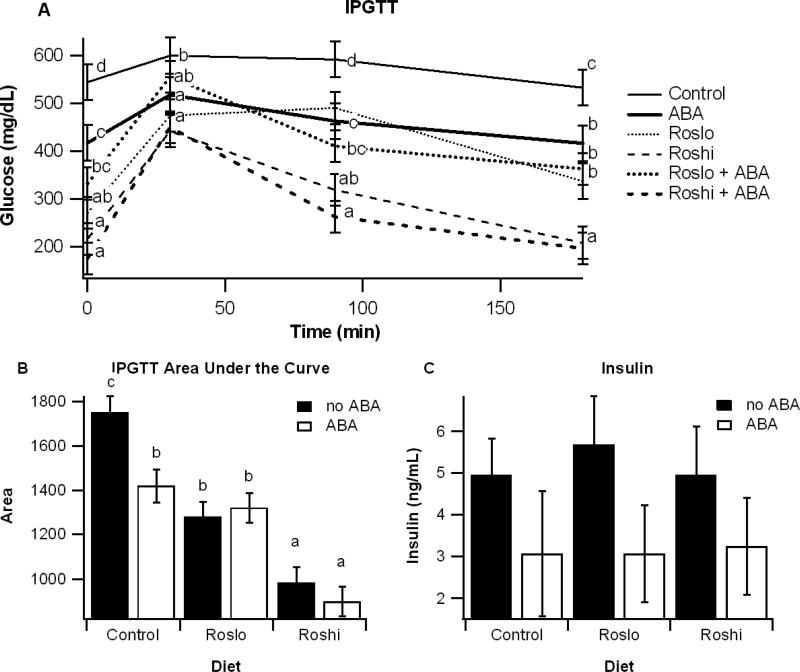
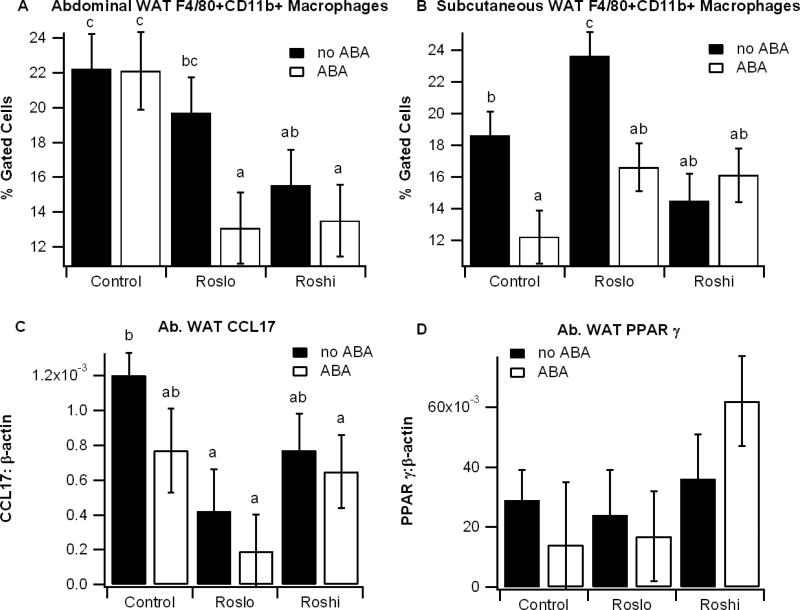
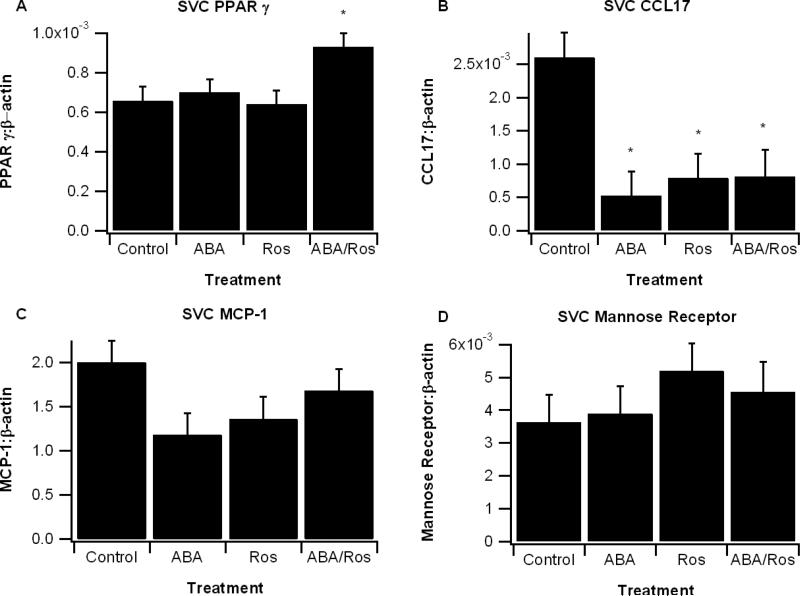
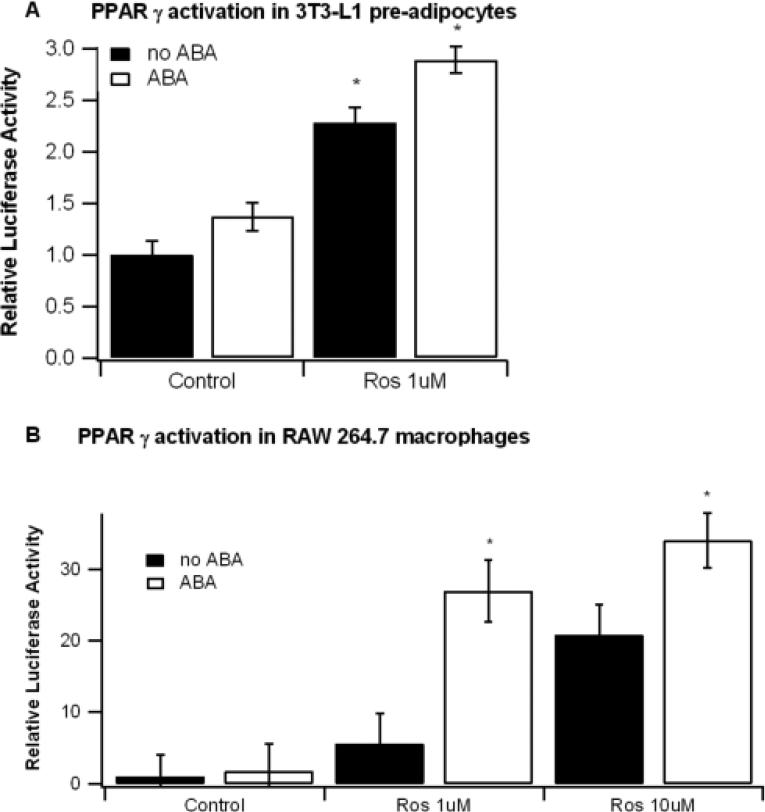
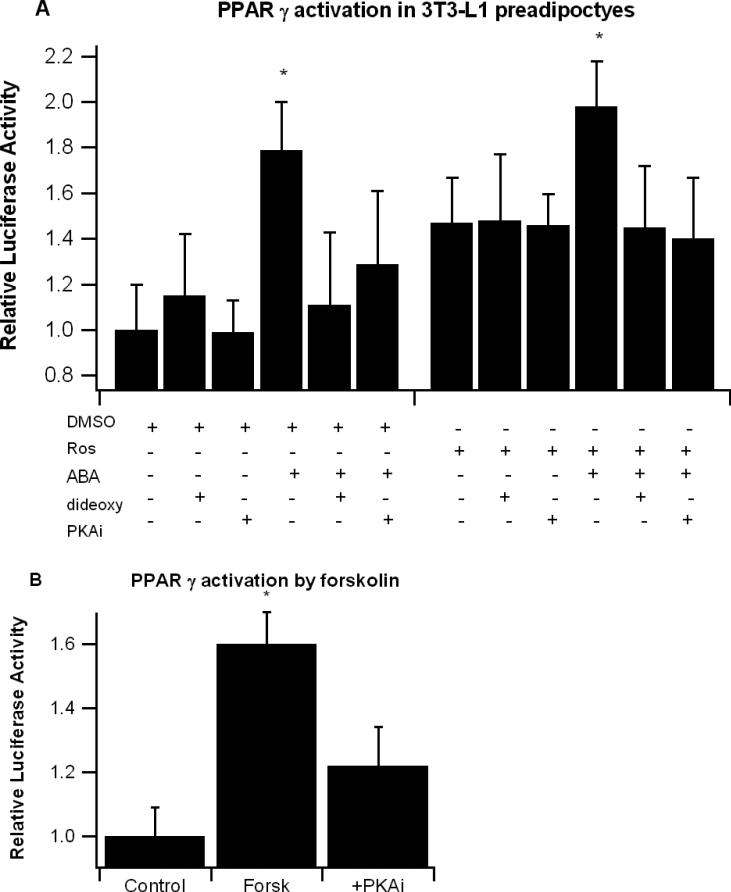
Results: Both Ros and ABA improved glucose tolerance, and ABA decreased plasma insulin levels while having no effect on Ros-induced weight gain. ABA in combination with low-dose Ros (10 mg/kg; Roslo) synergistically inhibited ATM infiltration. Treatment of SVCs with Ros, ABA or ABA/Ros suppressed expression of the M1 marker CCL17. ABA and Ros synergistically increased PPAR γ activity and pretreatment with a cAMP-inhibitor or a PKA-inhibitor abrogated ABA-induced PPAR γ activation.
Conclusions: ABA and Ros act synergistically to modulate PPAR γ activity and macrophage accumulation in WAT and ABA enhances PPAR γ activity through a membrane-initiated mechanism dependent on cAMP/PKA signaling.
Copyright © 2010 Elsevier Ltd and European Society for Clinical Nutrition and Metabolism. All rights reserved.
Figures
References
-
- Ogden CL, Carroll MD, Curtin LR, McDowell MA, Tabak CJ, Flegal KM. Prevalence of overweight and obesity in the united states, 1999-2004. JAMA. 2006;295:1549–55. - PubMed
-
- Finkelstein EA, Trogdon JG, Cohen JW, Dietz W. Annual medical spending attributable to obesity: Payer- and service-specific estimates. Health Aff (Millwood) 2009 - PubMed
-
- Bassaganya-Riera J, Skoneczka J, Kingston DGJ, et al. Mechanisms of action and medicinal applications of abscisic acid. Current Medicinal Chemistry. 2009 In press. - PubMed
-
- Guri AJ, Hontecillas R, Si H, Liu D, Bassaganya-Riera J. Dietary abscisic acid ameliorates glucose tolerance and obesity-related inflammation in db/db mice fed high-fat diets. Clin Nutr. 2007;26:107–16. - PubMed
Publication types
MeSH terms
Substances
Grants and funding
LinkOut - more resources
Full Text Sources
Other Literature Sources
Research Materials
Miscellaneous
