Microbiological effectiveness of disinfecting water by boiling in rural Guatemala
- PMID: 20207876
- PMCID: PMC2829912
- DOI: 10.4269/ajtmh.2010.09-0320
Microbiological effectiveness of disinfecting water by boiling in rural Guatemala
Abstract
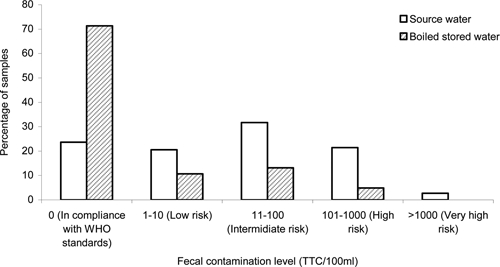
Boiling is the most common means of treating water in the home and the benchmark against which alternative point-of-use water treatment options must be compared. In a 5-week study in rural Guatemala among 45 households who claimed they always or almost always boiled their drinking water, boiling was associated with a 86.2% reduction in geometric mean thermotolerant coliforms (TTC) (N = 206, P < 0.0001). Despite consistent levels of fecal contamination in source water, 71.2% of stored water samples from self-reported boilers met the World Health Organization guidelines for safe drinking water (0 TTC/100 mL), and 10.7% fell within the commonly accepted low-risk category of (1-10 TTC/100 mL). As actually practiced in the study community, boiling significantly improved the microbiological quality of drinking water, though boiled and stored drinking water is not always free of fecal contaminations.
Figures
References
-
- Sobsey MD. Managing Water in the Home: Accelerated Health Gains from Improved Water Supply. Geneva: The World Health Organization (WHO/SDE/WSH/02.07); 2002.
-
- WHO . Guidelines for Drinking Water Quality. Third edition. Geneva: World Health Organization; 2008.
-
- Wright J, Gundry S, Conroy R. Household drinking water in developing countries: a systematic review of microbiological contamination between source and point-of-use. Trop Med Int Health. 2004;9:106–117. - PubMed
-
- Clasen TF, Thao do H, Boisson S, Shipin O. Microbiological effectiveness and cost of boiling to disinfect drinking water in rural Vietnam. Environ Sci Technol. 2008;42:4255–4260. - PubMed
MeSH terms
LinkOut - more resources
Full Text Sources
Medical
Research Materials
Miscellaneous