


p53 is required for chloroquine-induced atheroprotection but not insulin sensitization
- PMID: 20208057
- PMCID: PMC2882736
- DOI: 10.1194/jlr.M003681
p53 is required for chloroquine-induced atheroprotection but not insulin sensitization
Abstract
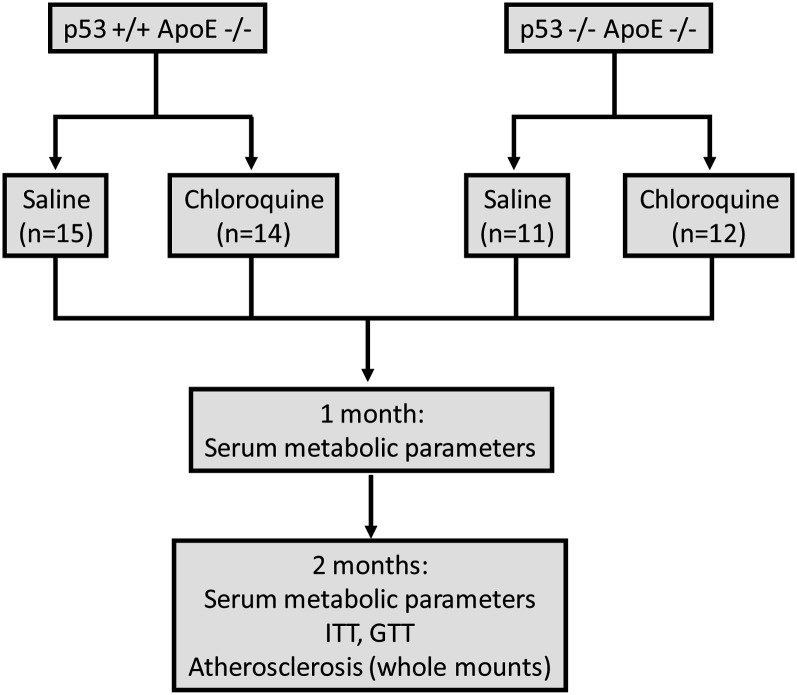
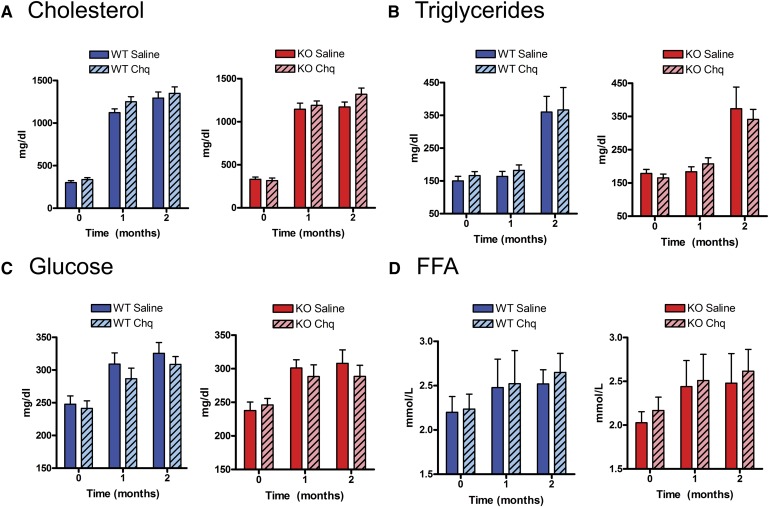
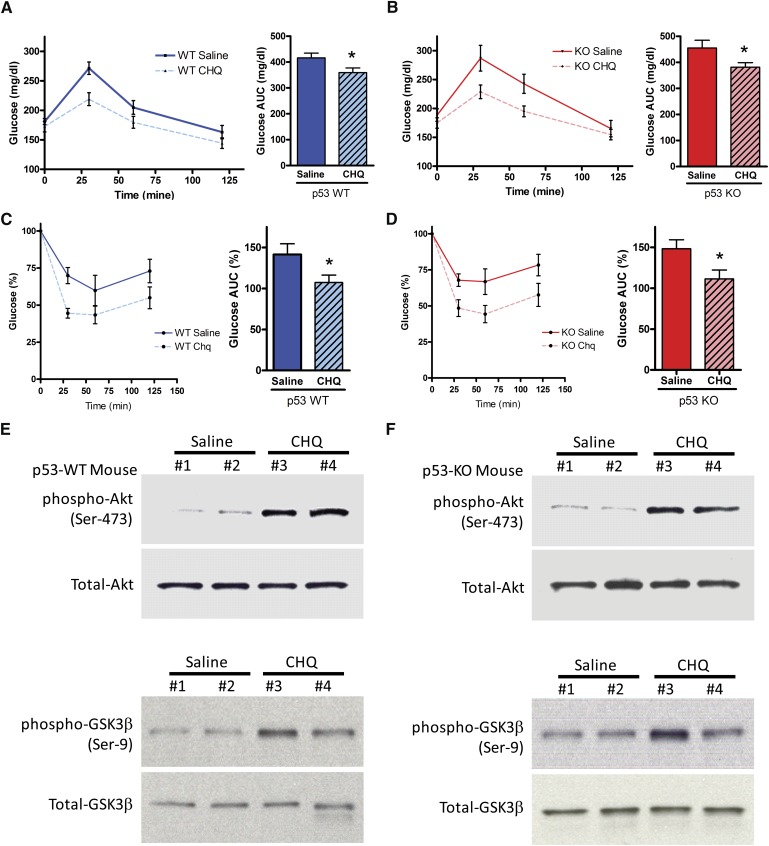
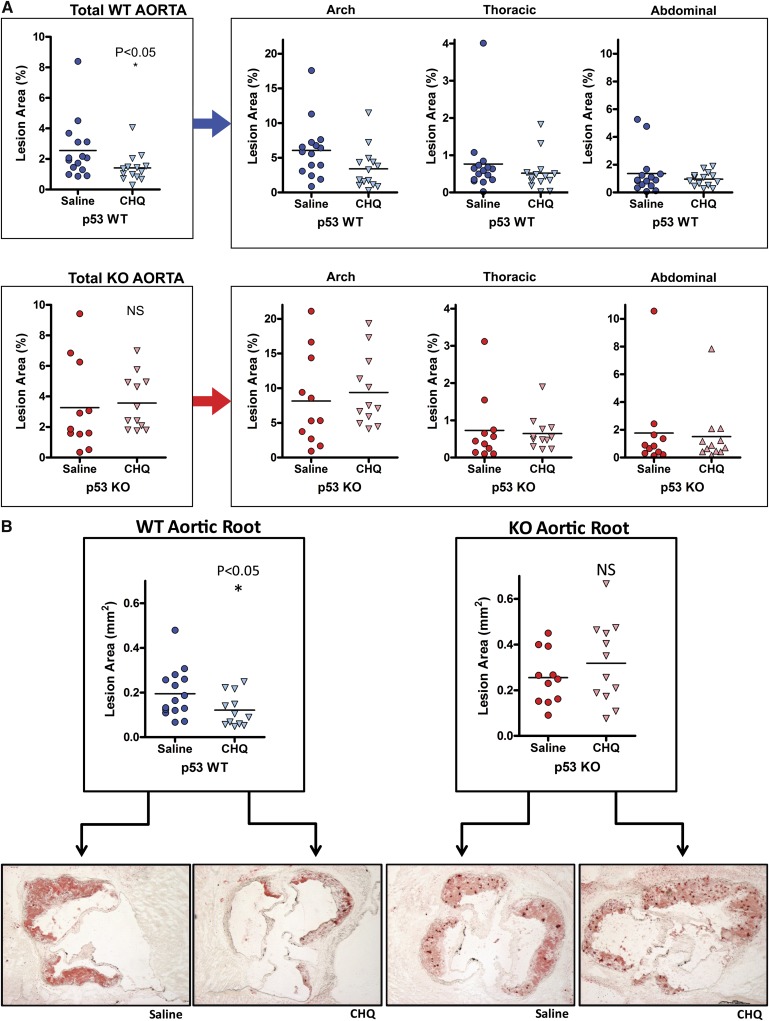
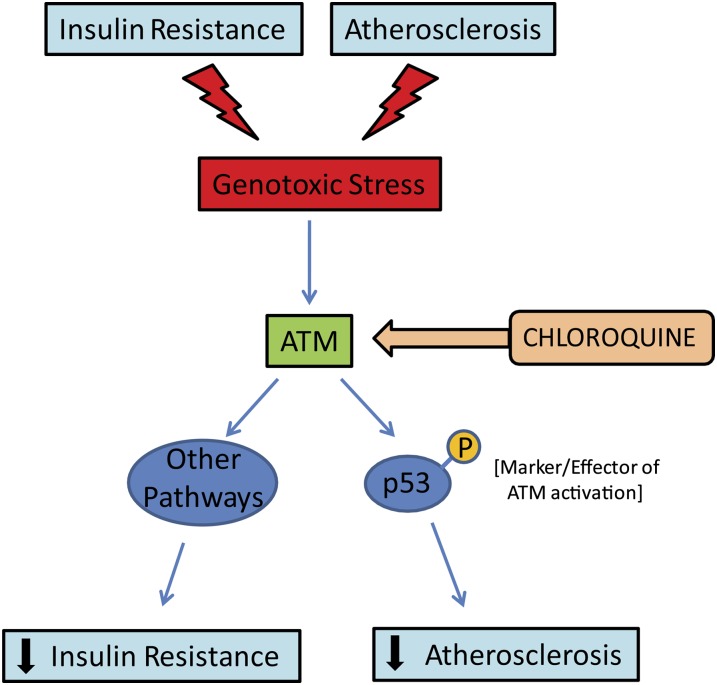
An intact genotoxic stress response appears to be atheroprotective and insulin sensitizing. ATM, mutated in ataxia telangiectasia, is critical for the genotoxic stress response, and its deficiency is associated with accelerated atherosclerosis and insulin resistance in humans and mice. The antimalarial drug chloroquine activates ATM signaling and improves metabolic phenotypes in mice. p53 is a major effector of ATM signaling, but it is unknown if p53 is required for the beneficial effects of chloroquine. We tested the hypothesis that the cardiometabolic effects of chloroquine are p53-dependent. ApoE-null mice with or without p53 were treated with low-dose chloroquine or saline in the setting of a Western diet. After 8 weeks, there was no p53-dependent or chloroquine-specific effect on serum lipids or body weight. Chloroquine reduced plaque burden in mice wild-type for p53, but it did not decrease lesion extent in p53-null mice. However, chloroquine improved glucose tolerance, enhanced insulin sensitivity, and increased hepatic Akt signaling regardless of the p53 genotype. These results indicate that atheroprotection induced by chloroquine is p53-dependent but the insulin-sensitizing effects of this agent are not. Discrete components of the genotoxic stress response might be targeted to treat lipid-driven disorders, such as diabetes and atherosclerosis.
Trial registration: ClinicalTrials.gov NCT00455325 NCT00455403.
Figures
References
-
- Malik S., Wong N. D., Franklin S. S., Kamath T. V., L'Italien G. J., Pio J. R., Williams G. R. 2004. Impact of the metabolic syndrome on mortality from coronary heart disease, cardiovascular disease, and all causes in United States adults. Circulation. 110: 1245–1250. - PubMed
-
- Kastan M. B. 2008. DNA damage responses: mechanisms and roles in human disease: 2007 G.H.A. Clowes Memorial Award Lecture. Mol. Cancer Res. 6: 517–524. - PubMed
-
- Houstis N., Rosen E. D., Lander E. S. 2006. Reactive oxygen species have a causal role in multiple forms of insulin resistance. Nature. 440: 944–948. - PubMed
-
- Van Gaal L. F., Mertens I. L., De Block C. E. 2006. Mechanisms linking obesity with cardiovascular disease. Nature. 444: 875–880. - PubMed
Publication types
MeSH terms
Substances
Associated data
Grants and funding
LinkOut - more resources
Full Text Sources
Medical
Research Materials
Miscellaneous
