


Erythroid progenitor cells expanded from peripheral blood without mobilization or preselection: molecular characteristics and functional competence
- PMID: 20209110
- PMCID: PMC2830487
- DOI: 10.1371/journal.pone.0009496
Erythroid progenitor cells expanded from peripheral blood without mobilization or preselection: molecular characteristics and functional competence
Abstract
Background: Continued development of in-vitro procedures for expansion and differentiation of erythroid progenitor cells (EPC) is essential not only in hematology and stem cell research but also virology, in light of the strict erythrotropism of the clinically important human parvovirus B19.
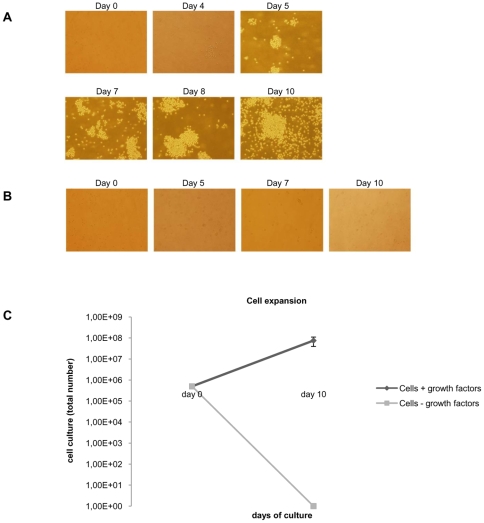
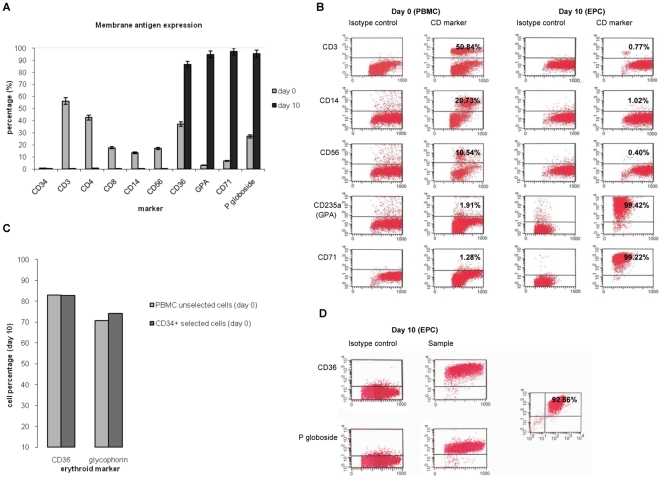
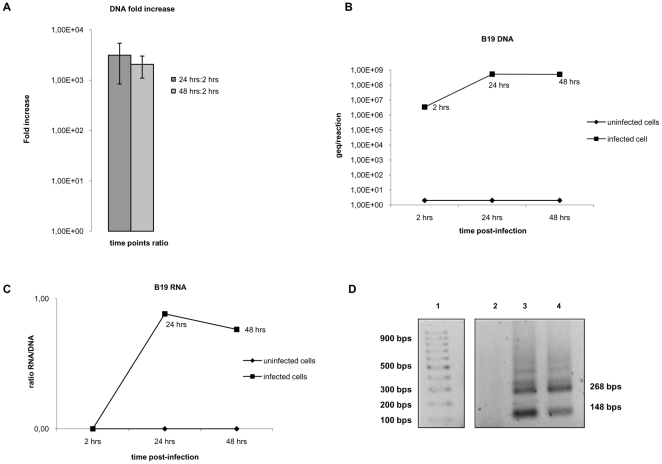
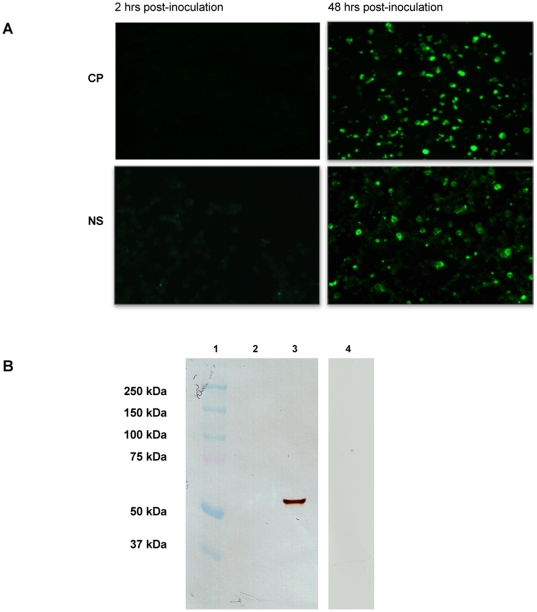
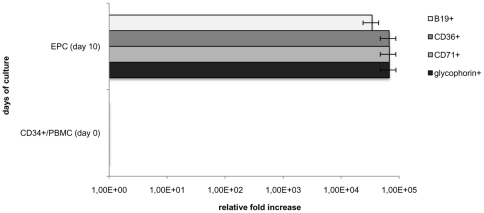
Methodology/principal findings: We cultured EPC directly from ordinary blood samples, without ex vivo stem cell mobilization or CD34+ cell in vitro preselection. Profound increase in the absolute cell number and clustering activity were observed during culture. The cells obtained expressed the EPC marker combination CD36, CD71 and glycophorin, but none of the lymphocyte, monocyte or NK markers. The functionality of the generated EPC was examined by an in vitro infection assay with human parvovirus B19, tropic for BFU-E and CFU-E cells. Following infection (i) viral DNA replication and mRNA production were confirmed by quantitative PCR, and (ii) structural and nonstructural proteins were expressed in >50% of the cells. As the overall cell number increased 100-200 fold, and the proportion of competent EPC (CD34+ to CD36+) rose from <0.5% to >50%, the in vitro culture procedure generated the EPC at an efficiency of >10,000-fold. Comparative culturing of unselected PBMC and ex vivo-preselected CD34+ cells produced qualitatively and quantitatively similar yields of EPC.
Conclusions/significance: This approach yielding EPC directly from unmanipulated peripheral blood is gratifyingly robust and will facilitate the study of myeloid infectious agents such as the B19 virus, as well as the examination of erythropoiesis and its cellular and molecular mechanisms.
Conflict of interest statement
Figures
References
-
- Correa PN, Axelrad AA. Production of erythropoietic bursts by progenitor cells from adult human peripheral blood in an improved serum-free medium: role of insulinlike growth factor 1. Blood. 1991;78:2823–2833. - PubMed
-
- de Wolf JT, Muller EW, Hendriks DH, Halie RM, Vellenga E. Mast cell growth factor modulates CD36 antigen expression on erythroid progenitors from human bone marrow and peripheral blood associated with ongoing differentiation. Blood. 1994;84:59–64. - PubMed
-
- Emerson SG, Thomas S, Ferrara JL, Greenstein JL. Developmental regulation of erythropoiesis by hematopoietic growth factors: analysis on populations of BFU-E from bone marrow, peripheral blood, and fetal liver. Blood. 1989;74:49–55. - PubMed
-
- Fibach E, Manor D, Oppenheim A, Rachmilewitz EA. Proliferation and maturation of human erythroid progenitors in liquid culture. Blood. 1989;73:100–103. - PubMed
-
- Freyssinier JM, Lecoq-Lafon C, Amsellem S, Picard F, Ducrocq R, et al. Purification, amplification and charaterization of a population of human erythroid progenitors. Br J Haematol. 1999;106:912–922. - PubMed
Publication types
MeSH terms
Substances
LinkOut - more resources
Full Text Sources
Other Literature Sources
