


Mitochondria regulate the unfolded protein response leading to cancer cell survival under glucose deprivation conditions
- PMID: 20210797
- PMCID: PMC11158048
- DOI: 10.1111/j.1349-7006.2010.01525.x
Mitochondria regulate the unfolded protein response leading to cancer cell survival under glucose deprivation conditions
Abstract
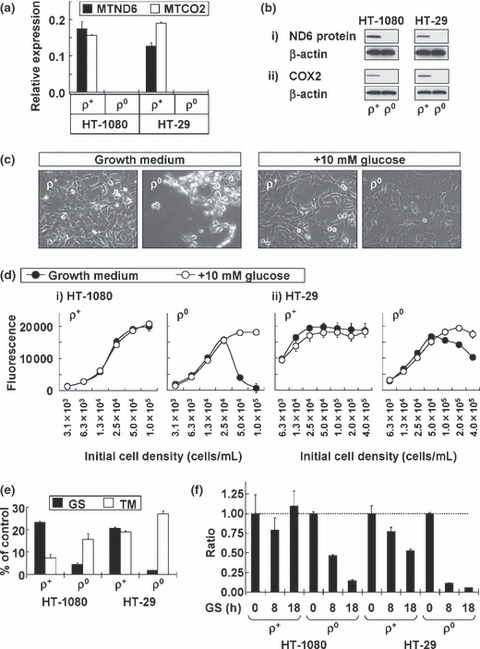
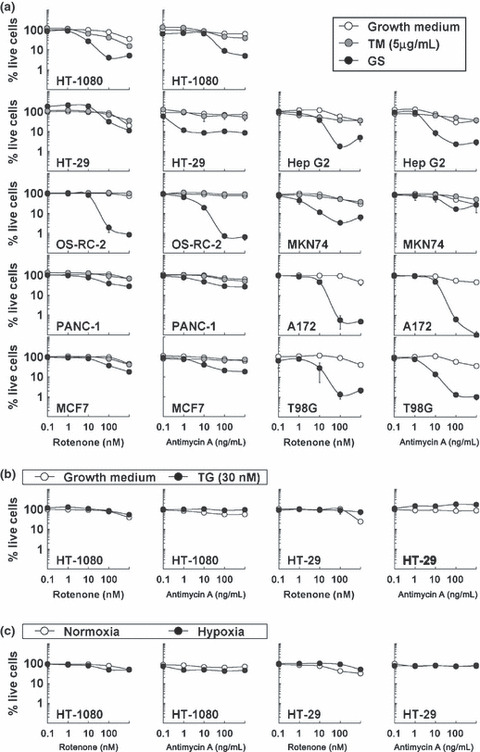
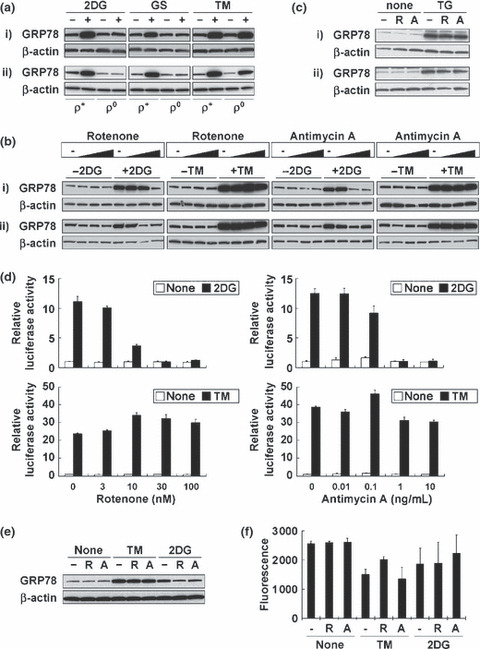
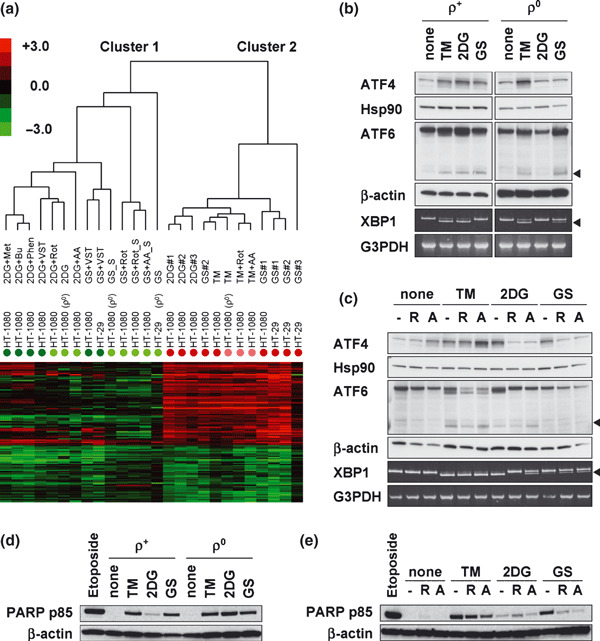
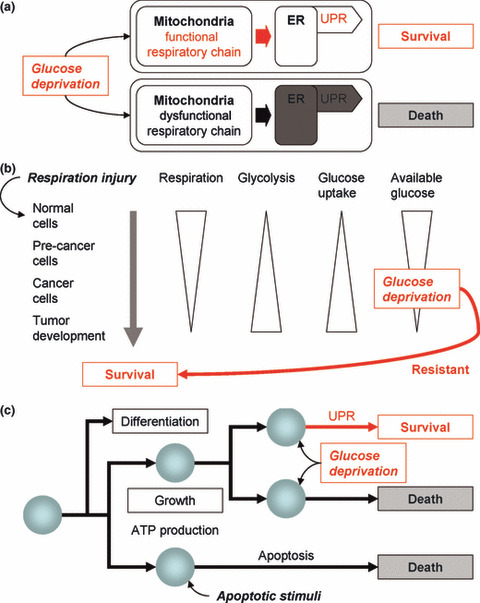
Cancer cells consume large amounts of glucose because of their specific metabolic pathway. However, cancer cells exist in tumor tissue where glucose is insufficient. To survive, cancer cells likely have the mechanism to elude their glucose addiction. Here we show that functional mitochondria are essential if cancer cells are to avoid glucose addiction. Cancer cells with dysfunctional mitochondria, such as mitochondrial DNA-deficient rho(0) cells and electron transport chain blocker-treated cells, were highly sensitive to glucose deprivation. Our data demonstrated that this sensitization was associated with failure of the unfolded protein response (UPR), an adaptive response mediated by the endoplasmic reticulum (ER). This study suggests a link between mitochondria and the ER during the UPR under glucose deprivation conditions and that mitochondria govern cell fate, not only through ATP production and apoptosis regulation, but also through modulating the UPR for cell survival.
Figures
References
-
- Haga N, Fujita N, Tsuruo T. Mitochondrial aggregation precedes cytochrome c release from mitochondria during apoptosis. Oncogene 2003; 22: 5579–85. - PubMed
-
- Kroemer G, Reed JC. Mitochondrial control of cell death. Nat Med 2000; 6: 513–9. - PubMed
-
- Warburg O. On the origin of cancer cells. Science 1956; 123: 309–14. - PubMed
Publication types
MeSH terms
Substances
LinkOut - more resources
Full Text Sources
Molecular Biology Databases
