


The impact of subacromial impingement syndrome on muscle activity patterns of the shoulder complex: a systematic review of electromyographic studies
- PMID: 20214817
- PMCID: PMC2846868
- DOI: 10.1186/1471-2474-11-45
The impact of subacromial impingement syndrome on muscle activity patterns of the shoulder complex: a systematic review of electromyographic studies
Abstract
Background: Subacromial impingement syndrome (SIS) is a commonly reported cause of shoulder pain. The purpose of this study was to systematically review the literature to examine whether a difference in electromyographic (EMG) activity of the shoulder complex exists between people with SIS and healthy controls.
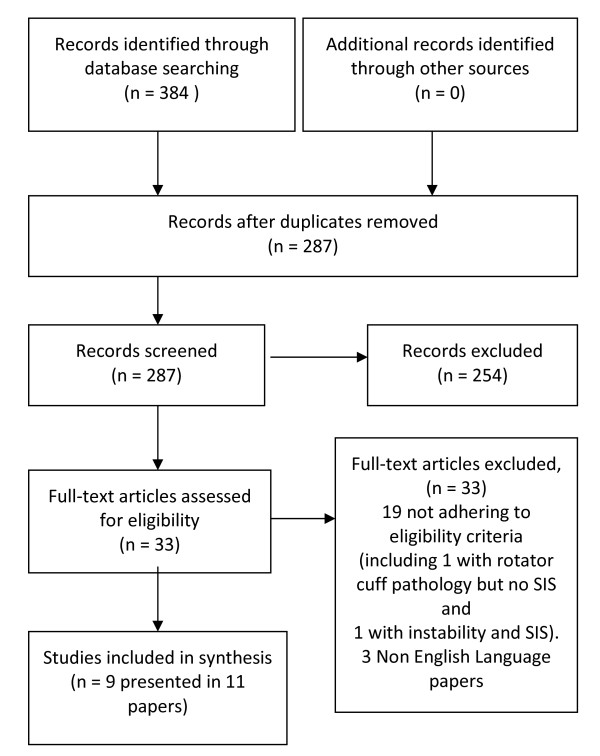
Methods: Medline, CINAHL, AMED, EMBASE, and grey literature databases were searched from their inception to November 2008. Inclusion, data extraction and trial quality were assessed in duplicate.
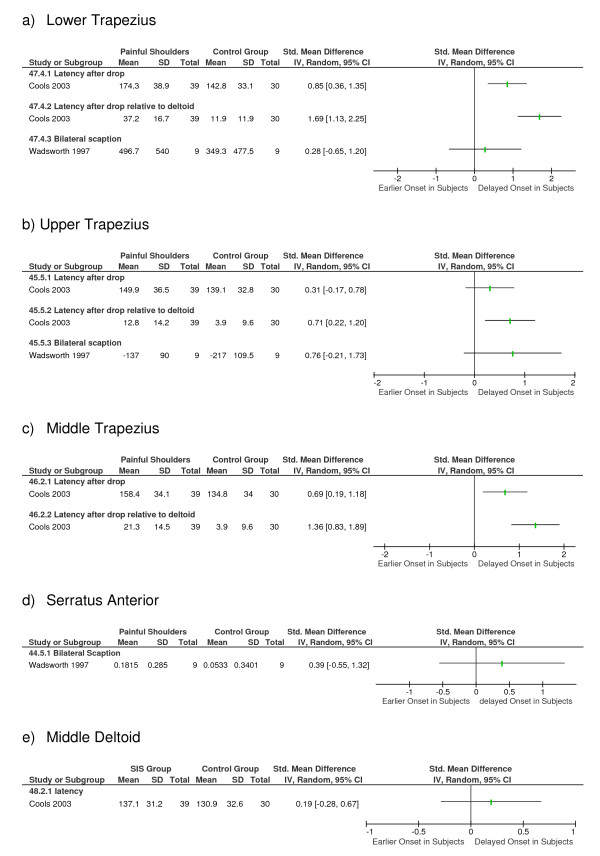
Results: Nine studies documented in eleven papers, eight comparing EMG intensity and three comparing EMG onset timing, representing 141 people with SIS and 138 controls were included. Between one and five studies investigated each muscle totalling between 20 and 182 participants. The two highest quality studies of five report a significant increase in EMG intensity in upper trapezius during scaption in subjects with SIS. There was evidence from 2 studies of a delayed activation of lower trapezius in patients with SIS. There was otherwise no evidence of a consistent difference in EMG activity between the shoulders of subjects with painful SIS and healthy controls.
Conclusions: A difference may exist in EMG activity within some muscles, in particular upper and lower trapezius, between people with SIS and healthy controls. These muscles may be targets for clinical interventions aiding rehabilitation for people with SIS. These differences should be investigated in a larger, high quality survey and the effects of therapeutically targeting these muscles in a randomised controlled trial.
Figures
References
-
- Heijden GJ Van der. Shoulder disorders: A state of the art review. Ballieres Clinical Rheumatology. 1999;13:287–309. - PubMed
-
- MacFarlane GJ, Hunt IM, Silman AJ. Predictors of chronic shoulder pain: a population based prospective study. Journal of Rheumatology. 1998;25:1612–1615. - PubMed
-
- Neer C, Walch RP. The shoulder in sports. Orthopaedic Clinic of North America. 1977;8:583–591. - PubMed
Publication types
MeSH terms
LinkOut - more resources
Full Text Sources
Medical
Molecular Biology Databases
