. 2010 Mar 15;70(6):2485-94.
doi: 10.1158/0008-5472.CAN-09-3145. Epub 2010 Mar 9.

An ErbB3 antibody, MM-121, is active in cancers with ligand-dependent activation

Affiliations

An ErbB3 antibody, MM-121, is active in cancers with ligand-dependent activation

Birgit Schoeberl et al. Cancer Res. .

Abstract

ErbB3 is a critical activator of phosphoinositide 3-kinase (PI3K) signaling in epidermal growth factor receptor (EGFR; ErbB1), ErbB2 [human epidermal growth factor receptor 2 (HER2)], and [hepatocyte growth factor receptor (MET)] addicted cancers, and reactivation of ErbB3 is a prominent method for cancers to become resistant to ErbB inhibitors. In this study, we evaluated the in vivo efficacy of a therapeutic anti-ErbB3 antibody, MM-121. We found that MM-121 effectively blocked ligand-dependent activation of ErbB3 induced by either EGFR, HER2, or MET. Assessment of several cancer cell lines revealed that MM-121 reduced basal ErbB3 phosphorylation most effectively in cancers possessing ligand-dependent activation of ErbB3. In those cancers, MM-121 treatment led to decreased ErbB3 phosphorylation and, in some instances, decreased ErbB3 expression. The efficacy of single-agent MM-121 was also examined in xenograft models. A machine learning algorithm found that MM-121 was most effective against xenografts with evidence of ligand-dependent activation of ErbB3. We subsequently investigated whether MM-121 treatment could abrogate resistance to anti-EGFR therapies by preventing reactivation of ErbB3. We observed that an EGFR mutant lung cancer cell line (HCC827), made resistant to gefitinib by exogenous heregulin, was resensitized by MM-121. In addition, we found that a de novo lung cancer mouse model induced by EGFR T790M-L858R rapidly became resistant to cetuximab. Resistance was associated with an increase in heregulin expression and ErbB3 activation. However, concomitant cetuximab treatment with MM-121 blocked reactivation of ErbB3 and resulted in a sustained and durable response. Thus, these results suggest that targeting ErbB3 with MM-121 can be an effective therapeutic strategy for cancers with ligand-dependent activation of ErbB3.


Figures

Figure 1
Figure 1. MM-121 inhibits ligand induced ErbB3 phosphorylation by blocking ligand activation and by receptor downregulation
A, CHO cells were transiently transfected with vectors expressing ErbB3 (FLAG tagged) and either GFP (control), EGFR, MET, or HER2. The transfected cells were treated with +/− 170 μg/ml MM-121 overnight and then treated with the indicated ligands for 10 min prior to lysis. The cell lysates were probed with the indicated antibodies (top two panels) and were immunoprecipitated with an anti-FLAG antibody and probed with an anti-phosphotyrosine antibody. B, Three representative cell lines ACHN (renal), NCI-N87 (gastric) and BT-474 (mammary) where treated with MM-121 for the indicated times and immunoblotted for total ErbB3 and phospho-ErbB3 expression levels. C, Densiometric analysis was performed on the Western blots presented in B.
Figure 2
Figure 2. MM-121 blocks ligand-induced activation of ErbB3 and demonstrates activity in vivo
A, Cells were cultured in 96-well plates and synchronized by 20–24 h serum starvation. The cells were then treated with MM-121 for 30 min and subsequently stimulated with 25 nM heregulin (HRG1-β) for 10 min, washed once with cold PBS prior and lysed. ELISA analysis of the cell lysates demonstrated that MM-121 inhibited heregulin-induced ErbB3, AKT, and ERK phosphorylation (solid squares) in comparison to the 25 nM heregulin control without MM-121 (black dotted line). Inhibitor IC50 values were calculated by least-squares fitting the dose response data with a sigmoidal curve (solid black line). In most cases, maximal inhibition of pErbB3, pAKT and pERK with MM121 occurred near or below basal signaling levels as measured by the unstimulated control cells (gray dotted line). Data represents the mean ± SD of two separate experiments. B, Efficacy of MM-121 on human cancer cell lines in vivo. ACHN, DU145, OvCAR8, NCI-ADRr were injected s.c. as a Matrigel suspension into nude mice and allowed to grow to at least 150 mm3. Groups of 10 animals were each treated with vehicle control (PBS) or MM-121 every three days. Standard error (SE) is shown for each point on the graph. Statistics were performed by Student’s t-test and significance relative to control is noted in the graph (*p<0.05).
Figure 3
Figure 3. MM-121 demonstrates in vivo efficacy in tumors with evidence of ligand-dependent activation of ErbB3
A,B, Immunohistochemisty of ErbB3 and pErbB3 in ACHN (responder) and BT-474 (non-responder) tumors at the end of the efficacy studies are shown in Figure S6. Magnification is 200×. C, MM-121 responsive and non-responsive xenografts were classified based on a single feature of ErbB receptor and ligand (BTC and heregulin) expression values. MM-121 responders (red) and partial responders (green) had higher levels of ErbB1, BTC, and heregulin (HRG1-β1) than non-responders (blue). Receptor and ligand values are listed in Table S1. D, Separating planes (gray) were determined with the Support Vector Machine (SVM) algorithm using HRG1-β1 and BTC as predictor variables.
Figure 4
Figure 4. MM-121 overcomes heregulin-induced resistance to anti-EGFR therapies
A, HCC827 cells were engineered to overexpress GFP (control) or ErbB3 using retrovirally encoded ErbBB3 as described previously (2). GFP and ErbB3 overexpressing HCC827 cells were treated with increasing concentrations of gefitinib and cell survival was determined using a syto60 assay. Survival assays were done in the presence of heregulin (50 ng/ml) where indicated. Lapatinib was used in addition to gefitinib where indicated. Lapatinib shifts the survival curve to negate the effect of heregulin. B, Western blots of the parental and ErbB3 overexpressing cells in the presence or absence of heregulin. C, ErbB3 overexpressing HCC827 cells were treated with +/− heregulin in the presence or absence of MM-121 (170 μg/ml) for a 72 h cell survival syto60 assay. D, Western blots of ErbB3 overexpressing HCC827 cells treated with heregulin in the presence of either the MET inhibitor, PHA-665,752 (1 μM), gefitinib (1 μM) or lapatinib (1 μM) or in the indicated combinations for 6 h (left panel). The same cells were treated with gefitinib (1 μM) +/− heregulin (50 ng/ml) +/− MM-121 (170 μg/ml) for 6 h (right panel). The lysates were probed with the indicated antibodies.
Figure 5
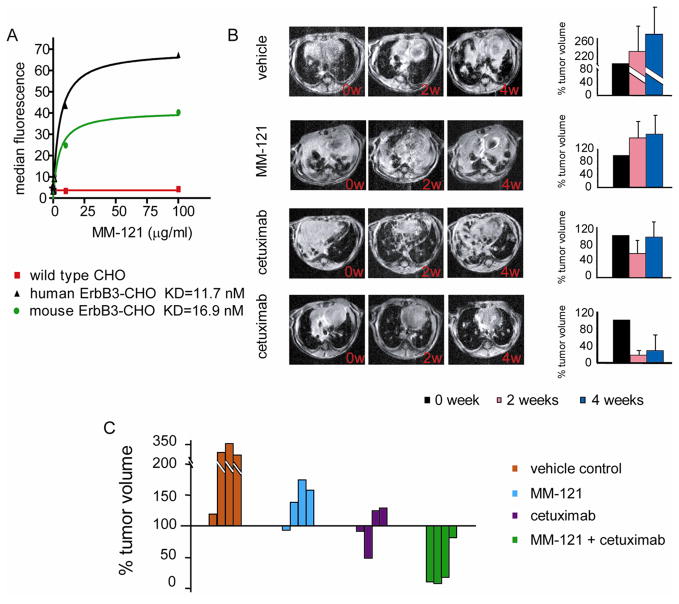
Figure 5. MM-121 and cetuximab combination induces durable tumor regression in EGFR T790M-L858R (TL) mouse lung cancers driven by doxycycline inducible EGFR TL
A, CHO cells transfected with mouse or human ErbB3 bind MM-121 with a similar affinity. B, Each EGFR T790M-L858R (TL) mouse with lung cancer was either treated with placebo, 1 mg of MM-121, 1 mg of cetuximab or combination of both antibodies through i.p. injection every three days. MR images of a representative mouse from indicated groups at two weeks and four weeks of treatment were shown in each row, to the right of corresponding MR images. Relative tumor regression of all of the four mice in each group is shown in the bar graph on right (initial tumor volume of each mouse was normalized to 100%). C, Relative tumor regression rate of each individual mouse at 4 weeks of indicated treatments are shown.
Figure 6
Figure 6. MM-121 blocks re-activation of ErbB3 upon development of resistance to cetuximab
Mice were treated as indicated in Fig. 5. At the end of the 4 week treatment, the mouse lungs were harvested and protein lysates were A probed with the indicated antibodies and B subjected to an ELISA to determine heregulin levels.

References

    1. Bianco R, Shin I, Ritter CA, et al. Loss of PTEN/MMAC1/TEP in EGF receptor-expressing tumor cells counteracts the antitumor action of EGFR tyrosine kinase inhibitors. Oncogene. 2003;22:2812–22. - PubMed
    1. Engelman JA, Janne PA, Mermel C, et al. ErbB-3 mediates phosphoinositide 3-kinase activity in gefitinib-sensitive non-small cell lung cancer cell lines. Proc Natl Acad Sci U S A. 2005;102:3788–93. - PMC - PubMed
    1. Moulder SL, Yakes FM, Muthuswamy SK, Bianco R, Simpson JF, Arteaga CL. Epidermal growth factor receptor (HER1) tyrosine kinase inhibitor ZD1839 (Iressa) inhibits HER2/neu (erbB2)-overexpressing breast cancer cells in vitro and in vivo. Cancer Res. 2001;61:8887–95. - PubMed
    1. Yakes FM, Chinratanalab W, Ritter CA, King W, Seelig S, Arteaga CL. Herceptin-induced inhibition of phosphatidylinositol-3 kinase and Akt Is required for antibody-mediated effects on p27, cyclin D1, and antitumor action. Cancer Res. 2002;62:4132–41. - PubMed
    1. Engelman JA, Zejnullahu K, Mitsudomi T, et al. MET amplification leads to gefitinib resistance in lung cancer by activating ERBB3 signaling. Science. 2007;316:1039–43. - PubMed

Publication types

MeSH terms