Germline BRCA mutations denote a clinicopathologic subset of prostate cancer
- PMID: 20215531
- PMCID: PMC3713614
- DOI: 10.1158/1078-0432.CCR-09-2871
Germline BRCA mutations denote a clinicopathologic subset of prostate cancer
Abstract
Purpose: Increased prostate cancer risk has been reported for BRCA mutation carriers, but BRCA-associated clinicopathologic features have not been clearly defined.
Experimental design: We determined BRCA mutation prevalence in 832 Ashkenazi Jewish men diagnosed with localized prostate cancer between 1988 and 2007 and 454 Ashkenazi Jewish controls and compared clinical outcome measures among 26 BRCA mutation carriers and 806 noncarriers. Kruskal-Wallis tests were used to compare age of diagnosis and Gleason score, and logistic regression models were used to determine associations between carrier status, prostate cancer risk, and Gleason score. Hazard ratios (HR) for clinical end points were estimated using Cox proportional hazards models.
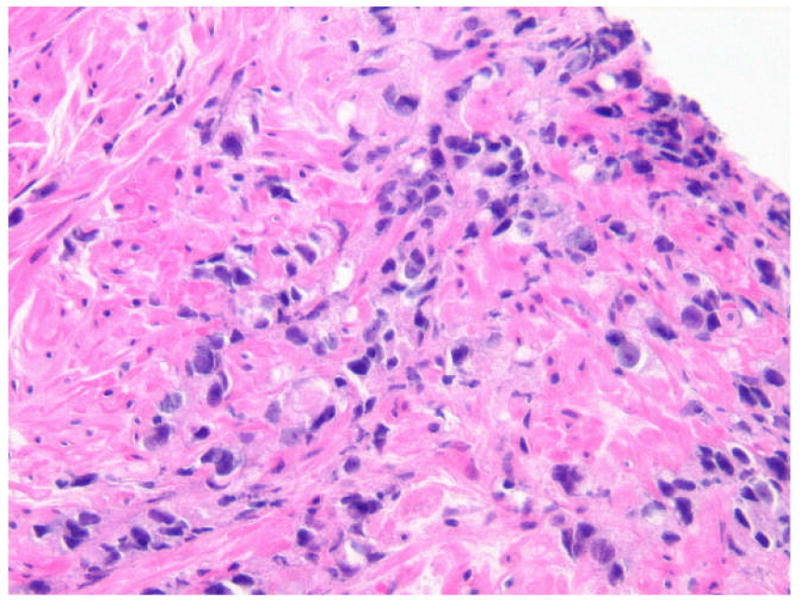
Results: BRCA2 mutations were associated with a 3-fold risk of prostate cancer [odds ratio, 3.18; 95% confidence interval (95% CI), 1.52-6.66; P = 0.002] and presented with more poorly differentiated (Gleason score > or =7) tumors (85% versus 57%; P = 0.0002) compared with non-BRCA-associated prostate cancer. BRCA1 mutations conferred no increased risk. After 7,254 person-years of follow-up, and adjusting for clinical stage, prostate-specific antigen, Gleason score, and treatment, BRCA2 and BRCA1 mutation carriers had a higher risk of recurrence [HR (95% CI), 2.41 (1.23-4.75) and 4.32 (1.31-13.62), respectively] and prostate cancer-specific death [HR (95% CI), 5.48 (2.03-14.79) and 5.16 (1.09-24.53), respectively] than noncarriers.
Conclusions: BRCA2 mutation carriers had an increased risk of prostate cancer and a higher histologic grade, and BRCA1 or BRCA2 mutations were associated with a more aggressive clinical course. These results may have implications for tailoring clinical management of this subset of hereditary prostate cancer.
Copyright 2010 AACR.
Figures

References
-
- Thompson D, Easton DF. Cancer Incidence in BRCA1 mutation carriers. J Natl Cancer Inst. 2002;94:1358–65. - PubMed
-
- Struewing JP, Hartge P, Wacholder S, et al. The risk of cancer associated with specific mutations of BRCA1 and BRCA2 among Ashkenazi Jews. N Engl J Med. 1997;336:1401–8. - PubMed
-
- Warner E, Foulkes W, Goodwin P, et al. Prevalence and penetrance of BRCA1 and BRCA2 gene mutations in unselected Ashkenazi Jewish women with breast cancer. J Natl Cancer Inst. 1999;91:1241–7. - PubMed
-
- Robson M, Offit K. Clinical practice. Management of an inherited predisposition to breast cancer. New England Journal of Medicine. 2007;357:154–62. - PubMed
Publication types
MeSH terms
Grants and funding
LinkOut - more resources
Full Text Sources
Other Literature Sources
Medical
Miscellaneous