


Minimal limb volume change has a significant impact on breast cancer survivors
- PMID: 20218084
- PMCID: PMC2882028
Minimal limb volume change has a significant impact on breast cancer survivors
Abstract
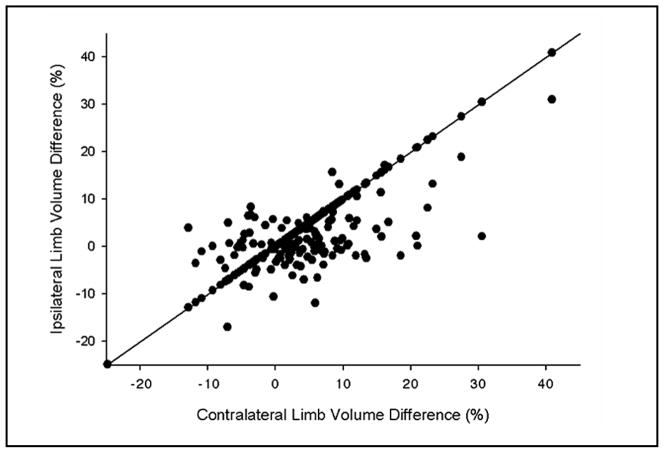
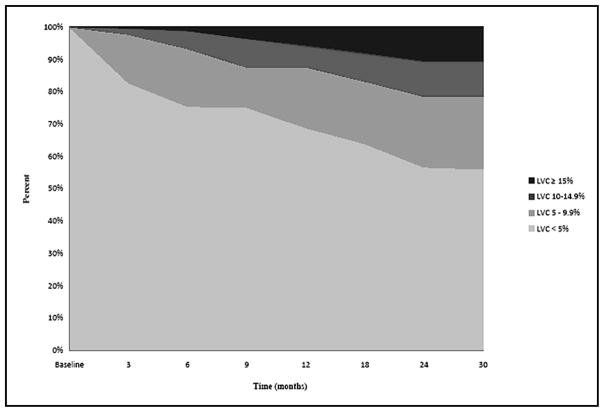
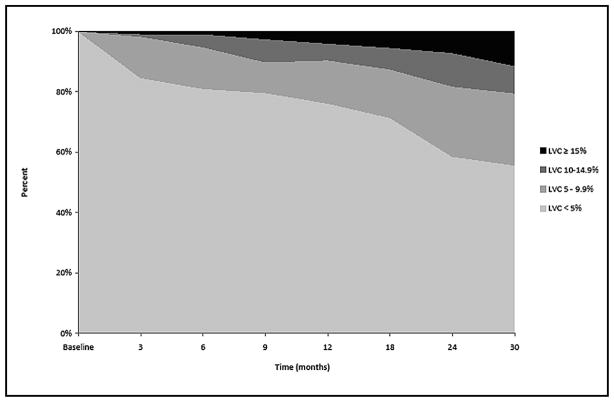
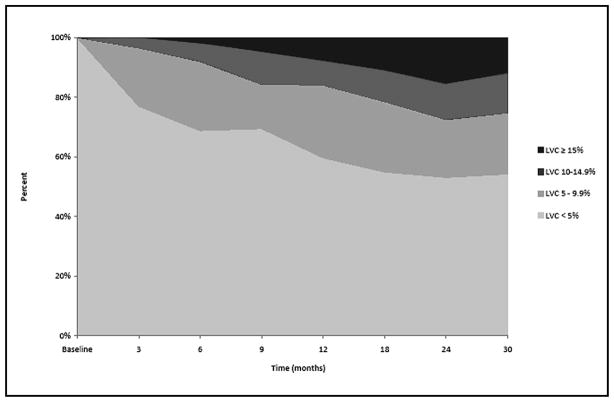
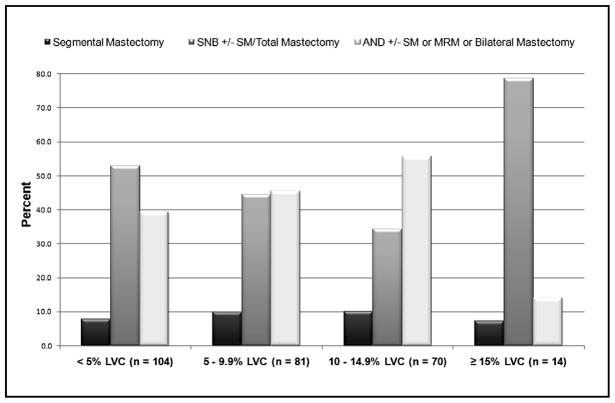
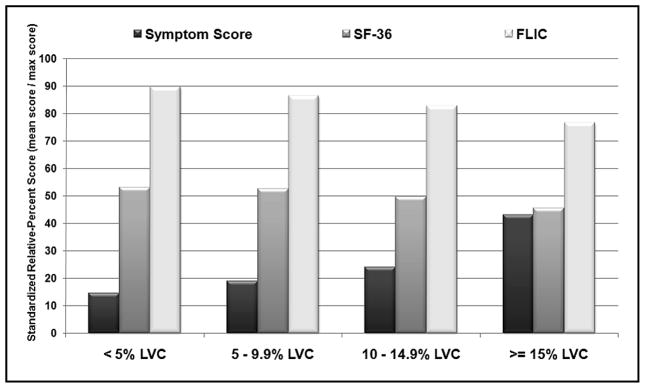
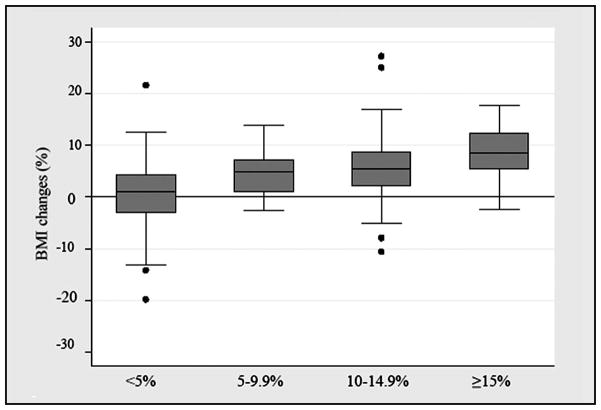
We sought to define the incidence, risk factors, symptoms, and quality of life (QOL) outcomes associated with various degrees of postoperative limb volume change (LVC). A prospective cohort study was performed obtaining serial limb volume measurements using a perometer on 269 women undergoing surgery for breast cancer. Four groups were created based on maximum LVC: none < 5.0%, mild 5.0-9.9%, moderate 10.0-14.9%, and severe 15.0%. Symptoms and QOL were assessed. 81 (30.1%), 70 (26.0%), and 14 (5.2%) women developed mild, moderate, and severe LVC, respectively. Increases in body mass index (p < 0.001) and post-operative complications (p = 0.002) were associated with increasing LVC. Lower QOL scores were associated with a moderate LVC (OR = 3.72, 95% CI, 1.29-10.73, p = 0.015) and postoperative infections (OR = 5.04, 95% CI, 1.73-14.70, p = 0.003). LVC at 5.0% occurs in up to 61.3% of breast cancer survivors and is associated with a significant increase in symptoms and a change in reported quality of life.
Conflict of interest statement
CONFLICTS OF INTEREST
None reported. JNC had full access to all the data in this study and had final responsibility for the decision to submit for publication.
Figures
References
-
- Meek AG. Breast radiotherapy and lymphedema. Cancer. 1998;83(12 Suppl American):2788–2797. - PubMed
-
- Rockson SG. Precipitating factors in lymphedema: Myths and realities. Cancer. 1998;83(12 Suppl American):2814–2816. - PubMed
-
- Passik SD, McDonald MV. Psychosocial aspects of upper extremity lymphedema in women treated for breast carcinoma. Cancer. 1998;83(12 Suppl American):2817–2820. - PubMed
-
- Petrek JA, Heelan MC. Incidence of breast carcinoma-related lymphedema. Cancer. 1998;83(12 Suppl American):2776–2781. - PubMed
-
- Hull MM. Functional and psychosocial aspects of lymphedema in women treated for breast cancer. Innov Breast Cancer Care 3. 1998:117–118.
Publication types
MeSH terms
Grants and funding
LinkOut - more resources
Full Text Sources
Other Literature Sources
Medical