


Genetic control of de novo lipogenesis: role in diet-induced obesity
- PMID: 20218765
- PMCID: PMC2874080
- DOI: 10.3109/10409231003667500
Genetic control of de novo lipogenesis: role in diet-induced obesity
Abstract
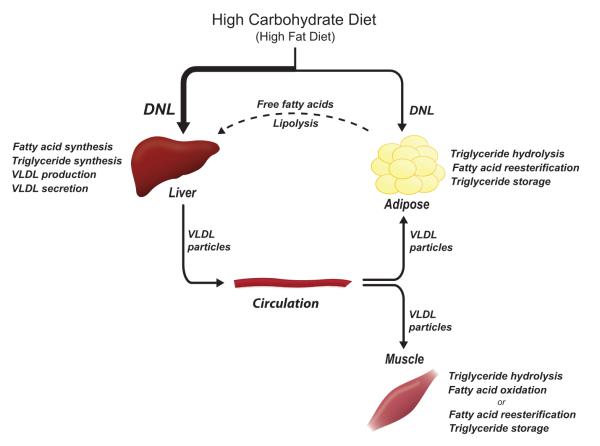
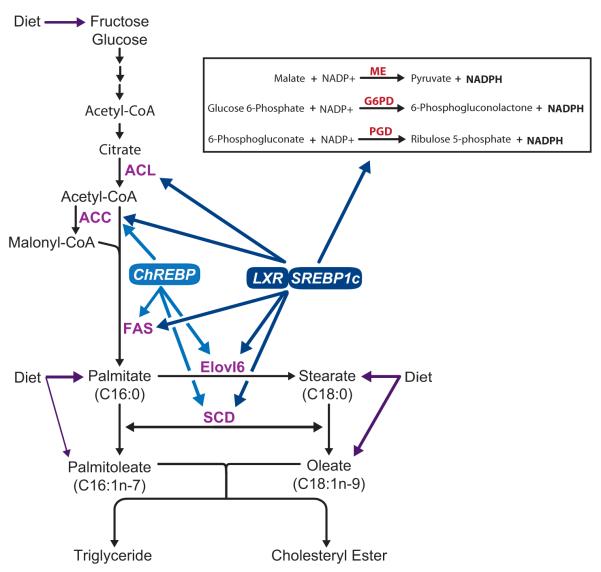
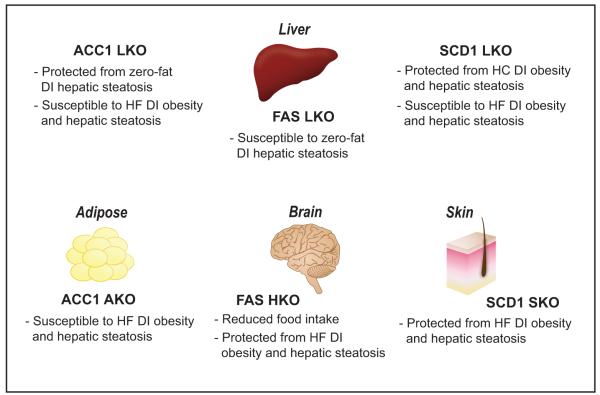
De novo lipogenesis (DNL) is a complex yet highly regulated metabolic pathway, and transcription factors such as liver X receptor (LXR), sterol regulatory element-binding protein-1c (SREBP-1c), and carbohydrate response element binding protein (ChREBP) exert significant control over the de novo synthesis of fatty acids. An increase in de novo lipogenesis (DNL) is an important contributor to increased fat mass, while a reduction in lipogenesis may be protective against the development of obesity. In this review, we explore fatty acid synthesis in the context of new insights gleaned from global and tissue-specific gene knockout mouse models of enzymes involved in fatty acid synthesis, namely acetyl-CoA carboxylase, fatty acid synthase, fatty acid elongase 6, and stearoyl-CoA desaturase 1. A disruption in fatty acid synthesis, induced by the deficiency of any one of these enzymes, affects lipid metabolism and in some cases may protect against obesity in a tissue and gene-specific manner, as discussed in detail in this review.
Figures
References
-
- Abu-Elheiga L, Matzuk MM, Abo-Hashema KAH, Wakil SJ. Continuous fatty acid oxidation and reduced fat storage in mice lacking acetyl-CoA Carboxylase 2. Science. 2001;291:2613–2616. - PubMed
-
- Barrows BR, Parks EJ. Contributions of different fatty acid sources to very low-density lipoprotein-triacylglycerol in the fasted and fed states. J Clin Endocrinol Metab. 2006;91:1446–1452. - PubMed
Publication types
MeSH terms
Substances
Grants and funding
LinkOut - more resources
Full Text Sources
Other Literature Sources
Medical
