Role of matrix metalloproteinase-9 in the development of diabetic retinopathy and its regulation by H-Ras
- PMID: 20220057
- PMCID: PMC2910650
- DOI: 10.1167/iovs.09-4851
Role of matrix metalloproteinase-9 in the development of diabetic retinopathy and its regulation by H-Ras
Abstract
Purpose: Diabetes activates a small molecular weight G-protein, H-Ras, in the retina and its capillary cells, and H-Ras activation is implicated in the apoptosis of retinal capillary cells. Matrix metalloproteinase (MMP)-9 is regulated by H-Ras, and in diabetes its activation is associated with increased vascular permeability. The goal of this study was to investigate the role of sustained activation of MMP-9 in the pathogenesis of diabetic retinopathy and to illustrate the mechanism through which it is upregulated in diabetes.
Methods: Retinal MMP-9 activation and its tissue inhibitor, TIMP-1, were quantified in streptozotocin-induced diabetic rats. Inhibition of H-Ras by simvastatin on diabetes-induced activation of H-Ras was evaluated. The mechanism by which diabetes regulates retinal MMP-9 was confirmed by determining the effect of genetic or pharmacologic regulation of H-Ras on its activation in retinal endothelial cells.
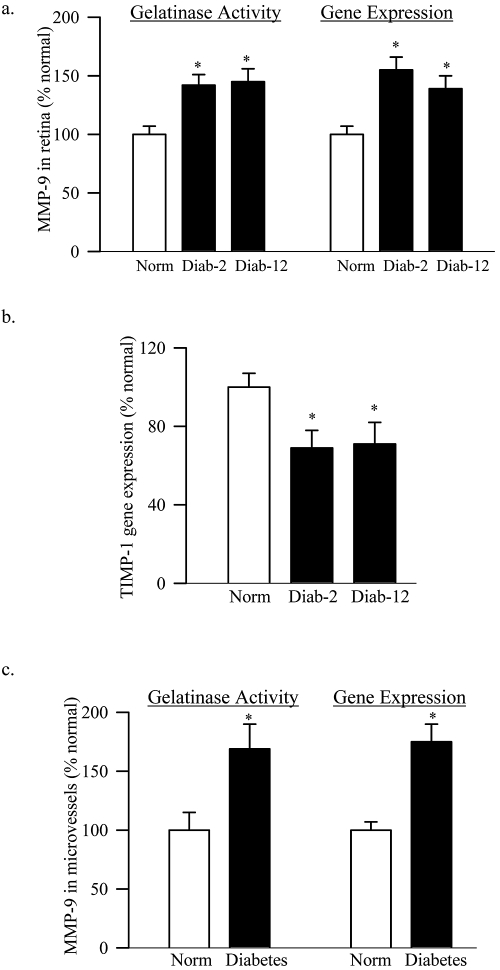
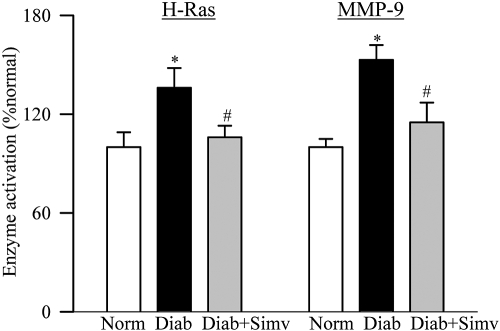
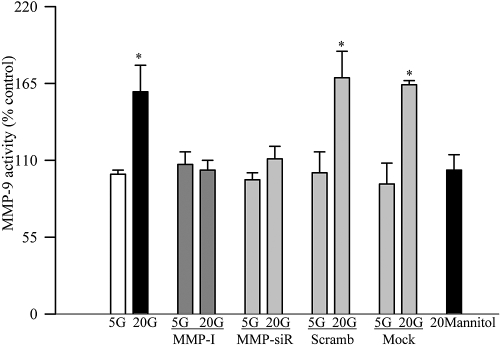
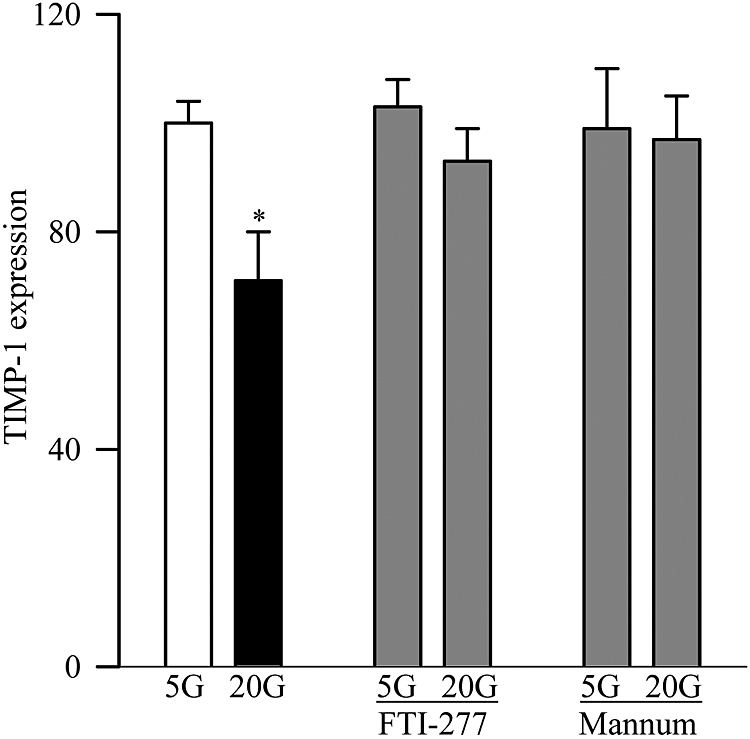
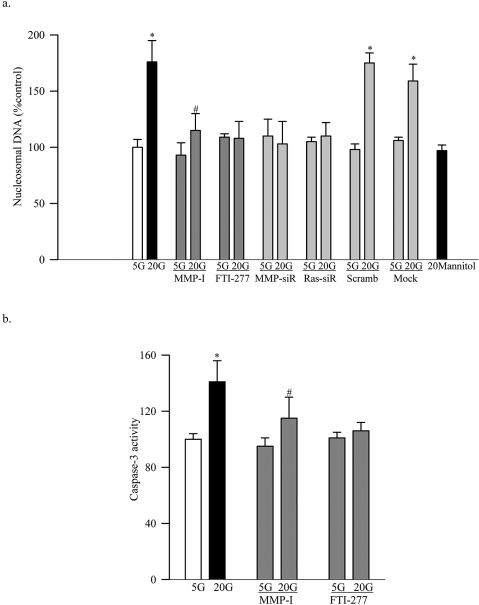
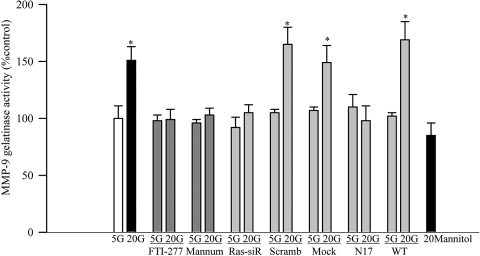
Results: In rats, MMP-9 was activated and expression of TIMP-1 was decreased in the retina and its microvasculature at both 2 months and 12 months of diabetes. In retinal endothelial cells, high glucose activated MMP-9, and inhibition of its activation (by pharmacologic inhibitor or siRNA) ameliorated accelerated apoptosis. Inhibition of H-Ras, both in diabetic rats (simvastatin) and in isolated endothelial cells (H-Ras siRNA), abrogated the activation of MMP-9 and prevented the reduction of TIMP-1.
Conclusions: Hyperglycemia-induced activation of MMP-9 accelerates apoptosis of retinal capillary cells, a phenomenon that predicts the development of diabetic retinopathy, and the activation of MMP-9 is downstream of H-Ras. Characterizing the role of MMP-9 in the development of diabetic retinopathy will help explore novel molecular targets for future pharmacological interventions.
Figures
References
-
- Kern TS, Tang J, Mizutani M, Kowluru R, Nagraj R, Lorenzi M. Response of capillary cell death to aminoguanidine predicts the development of retinopathy: comparison of diabetes and galactosemia. Invest Ophthalmol Vis Sci 2000;41:3972–3978 - PubMed
-
- Kowluru RA, Abbas SN. Diabetes-induced mitochondrial dysfunction in the retina. Invest Ophthalmol Vis Sci 2003;44:5327–5334 - PubMed
Publication types
MeSH terms
Substances
Grants and funding
LinkOut - more resources
Full Text Sources
Other Literature Sources
Medical
Research Materials
Miscellaneous