


Improving antidepressant adherence and depression outcomes in primary care: the treatment initiation and participation (TIP) program
- PMID: 20220604
- PMCID: PMC3039212
- DOI: 10.1097/JGP.0b013e3181cdeb7d
Improving antidepressant adherence and depression outcomes in primary care: the treatment initiation and participation (TIP) program
Abstract
Objective: To test the impact of a novel psychosocial intervention to improve antidepressant adherence and depression outcomes among older adults prescribed pharmacotherapy by their primary care physician (PCP).
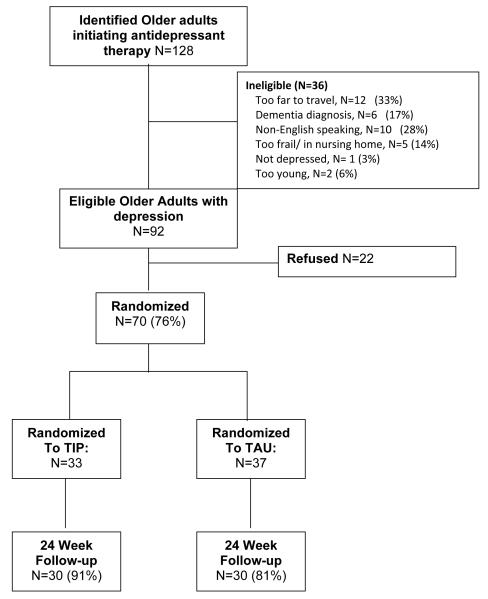
Design: A randomized controlled pilot study was conducted to examine the usefulness of the Treatment Initiation and Participation (TIP) program as an intervention to improve antidepressant adherence and depression outcomes.
Setting: The study was conducted at two primary care clinics in New York city: one clinic served geriatric adults and the second clinic served a diverse group of mixed aged adults.
Participants: The sample consisted of adults aged 60 years and older with major depression who were recommended antidepressant therapy by their PCPs.
Intervention: All participants were prescribed antidepressant therapy and randomly assigned to either the intervention (TIP) or the treatment as usual (TAU) group. The TIP intervention identifies and targets psychological barriers to depression care, especially stigma, as well as fears and misconceptions of depression and its treatment. TIP participants are encouraged to develop a treatment goal and create an adherence strategy.
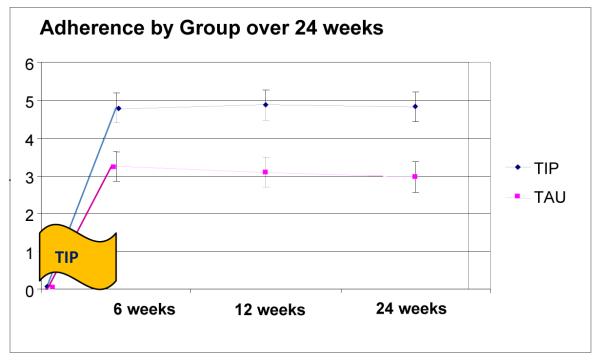
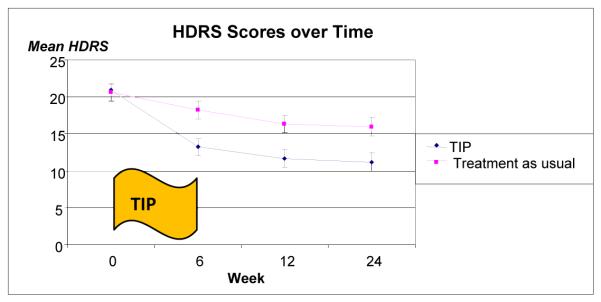
Measurement: Study participants were assessed at entry, 6, 12, and 24 weeks later. Adherence was measured based on self-report with chart verification. Depression severity was measured using the Hamilton Depression Rating Scale.
Results: Participants in TIP were significantly more adherent to their antidepressant pharmacotherapy at all assessment time points and had a significantly greater decrease in depressive symptoms than older adults who received TAU.
Conclusion: The results provide support for the usefulness of TIP as a brief intervention to improve adherence to depression medication treatment provided in primary care settings.
Figures

References
-
- Murray CJL, Lopez AD. Alternative projections of mortality and disability by cause 1990-2020: Global Burden of Disease Study. The Lancet. 1997;349(9064):1498–1504. - PubMed
-
- Bruce ML. Depression and disability in late life: directions for future research. Am J Geriatr Psychiatry. 2001;9(2):102–12. - PubMed
-
- USDHHS . Mental Health: A Report of the Surgeon General. United States Department of Health and Human Services, Substance Abuse and Mental Health Services Administration, Center for Mental Health Services, National Institutes of Health, National Institute of Mental Health; Rockville, MD: 1999.
-
- Sheeran T, et al. Does depression predict falls among home health patients? Using a clinical-research partnership to improve the quality of geriatric care. Home Healthc Nurse. 2004;22(6):384–9. quiz 390-1. - PubMed
Publication types
MeSH terms
Substances
Grants and funding
LinkOut - more resources
Full Text Sources
Medical
