


Cutaneous induction of corticotropin releasing hormone by Propionibacterium acnes extracts
- PMID: 20224691
- PMCID: PMC2835898
- DOI: 10.4161/derm.1.2.8102
Cutaneous induction of corticotropin releasing hormone by Propionibacterium acnes extracts
Abstract
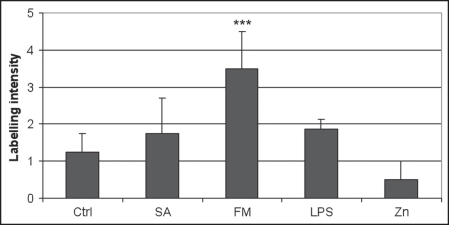
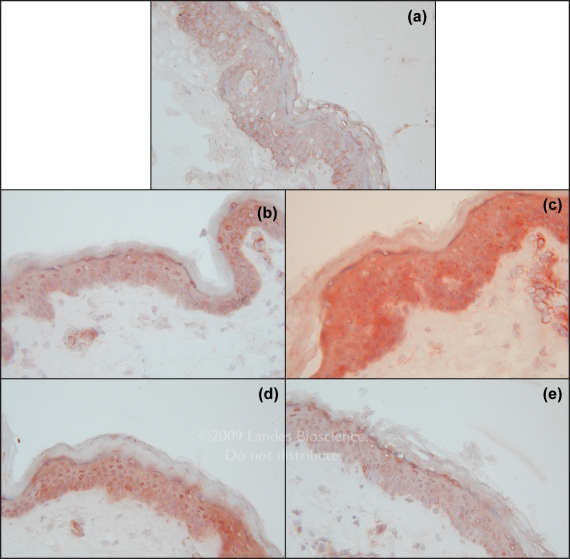
The skin commensal bacillus Propionibacterium acnes is known to play a major role in the development of acne vulgaris and it is established that this bacteria is involved both in the induction and maintenance of the inflammatory phase of acne. The corticotropin releasing hormone (CRH), a neuropeptide originally isolated from the hypothalamus, is also produced by the skin. CRH has been reported to play a role in the inflammation, the production of sebum and finally the differentiation of keratinocytes. At the therapeutic level, zinc is known to act specifically on inflammatory lesions with still partially known mechanisms and thus could play an important role in the development of inflammatory acne lesions. Our objective was to study the modulation of CRH expression by keratinocytes induced by P. acnes extracts. CRH expression was examined using immunohistochemistry technique on deep-frozen sections of normal human skin explants incubated with two different extracts of P. acnes and with or without zinc salts. We observed that the membrane fraction (FM) of P. acnes increased the CRH expression in the epidermis. This result indicates that P. acnes, by stimulating the production of CRH, can both modulate the differentiation of keratinocytes and increase the local inflammation, arguing that this bacterium plays a role not only in the development of inflammatory acne lesions but also in the formation of the microcomedo in the early stages of acne.
Keywords: Propionibacterium acnes; acne; corticotropin releasing hormone; stress; zinc.
Figures
References
-
- Zouboulis CC, Eady A, Philpott M, Goldsmith LA, Orfanos C, Cunliffe WC, Rosenfield R. What is the pathogenesis of acne? Exp Dermatol. 2005;14:143–152. - PubMed
-
- Chrousos GP. The hypothalamic-pituitary-adrenal axis and immune-mediated inflammation. N Engl J Med. 1995;332:1351–1362. - PubMed
-
- Chakraborty AK, Funasaka Y, Slominski A, Ermak G, Hwang J, Pawelek JM, Ichihashi M. Production and release of proopiomelanocortin (POMC) derived peptides by human melanocytes and keratinocytes in culture: Regulation by ultraviolet B. Biochim Biophys Acta. 1996;1313:130–138. - PubMed
-
- Wakamatsu K, Graham A, Cook D, Thody AJ. Characterisation of ACTH peptides in human skin and their activation of the melanocortin-1 receptor. Pigment Cell Res. 1997;10:288–297. - PubMed
-
- Slominski A, Wortsman J, Luger T, Paus R, Solomon S. Corticotropin releasing hormone and proopiomelanocortin involvement in the cutaneous response to stress. Physiol Rev. 2000;80:979–1020. - PubMed
LinkOut - more resources
Full Text Sources
