


Cardiac abnormalities and facial anthropometric measurements in children from the Free State and Northern Cape provinces of South Africa with chromosome 22q11.2 microdeletion
- PMID: 20224843
- PMCID: PMC3721302
Cardiac abnormalities and facial anthropometric measurements in children from the Free State and Northern Cape provinces of South Africa with chromosome 22q11.2 microdeletion
Abstract
Introduction: Microdeletions of chromosome 22 are common and have a prevalence of at least 1/4 000. Cardiac abnormalities, abnormal facial features and palatal abnormalities are frequently present in these patients.
Aim: To describe the cardiac lesions and selected measurable facial features in children from the Free State and Northern Cape presenting at the Cardiology Unit of the Universitas Academic Hospital complex in Bloemfontein.
Methods: This was a prospective study in which patients with abnormal facial characteristics were tested using a fluorescence in situ hybridisation (FISH) probe for the 22q11.2 microdeletion. Forty children tested positive for the microdeletion. All patients underwent an echocardiogram and where possible, facial anthropometric measurements were performed.
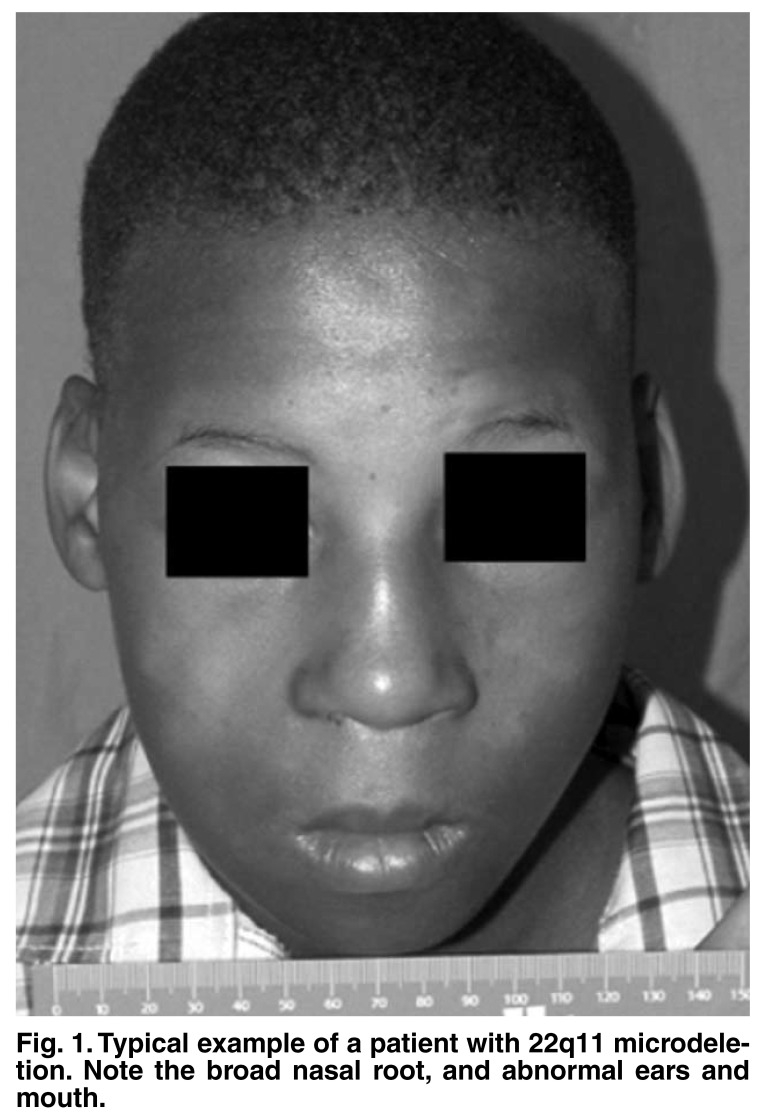
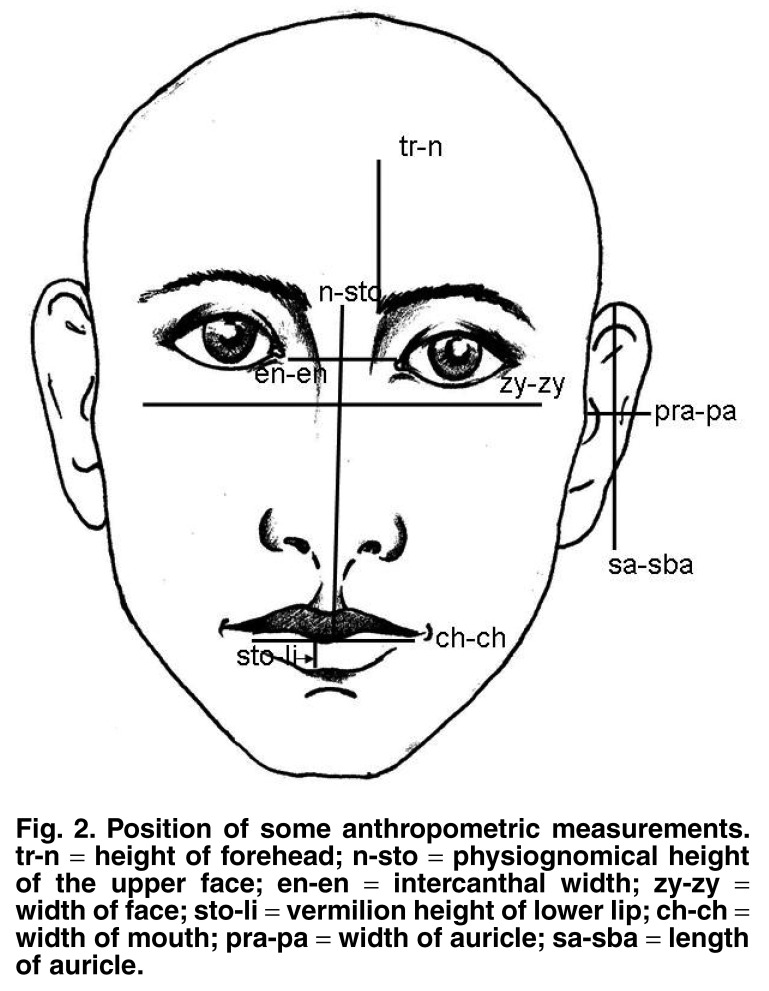
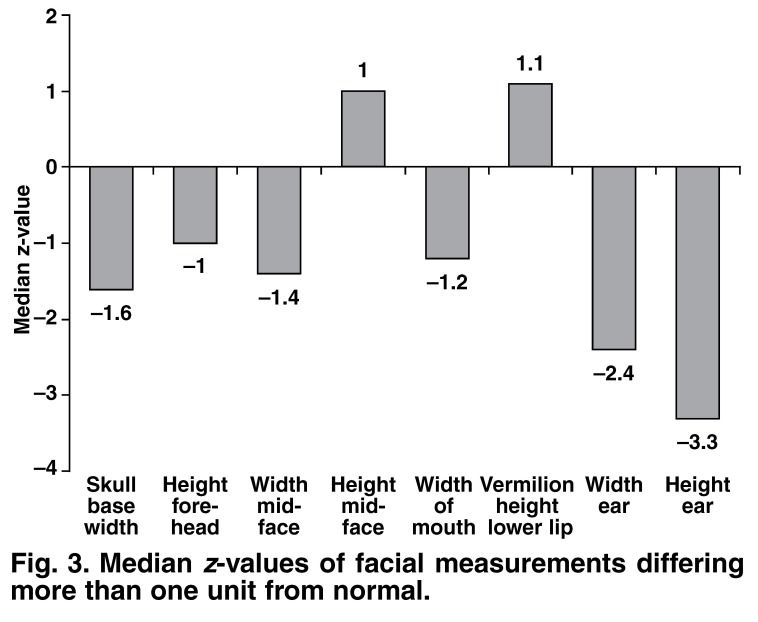
Results: The median age at diagnosis was 3.6 years (range 0.04 years, i.e. 2 weeks to 16.2 years). Tetralogy with or without pulmonary atresia was diagnosed in 43% (n = 17) of the children and truncus arteriosus in 20% (n = 8). A rightsided aortic arch was present in 43% (n = 17) of the patients. Mid-facial height was slightly longer (median = 1.0; range -0.5 to 3.3) and width narrower (median = -1.4; range -2.2 to 0.1) than normal. Ear height and width were notably small compared to normal, with median -scores = -3.3 (range -4.8 to -2.6) and = -2.4 (range -3.4 to -1.4), respectively.
Conclusions: Microdeletions of chromosome 22q11 are present in children from the Free State and Northern Cape. Conotruncal cyanotic heart lesions, especially tetralogy with or without pulmonary atresia and truncus arteriosus were the most frequent congenital cardiac diagnoses. A right-sided aortic arch was also commonly present in these children. Facial features varied and small ears were the most noteworthy anthropometric feature. A right-sided aortic arch with or without a congenital cardiac lesion, a long, narrow mid-face and small ears should alert the physician to the possibility of a microdeletion on the long arm of chromosome 22.
Figures
References
-
- Shprintzen RJ. Velo-cardio-facial syndrome. In: Cassidy SB, Allanson J, editors. Management of Genetic Syndromes. New York: John Wiley & Sons; 2001. pp. 495–517.
-
- Shprintzen RJ. Velo-cardio-facial syndrome. Prog Ped Cardiol. 2005;20(2):187–193.
-
- Kobrynski LJ, Sullivan KE. Velocardiofacial syndrome, DiGeorge syndrome: the chromosome 22q11.2 deletion syndromes. Lancet. 2007;370(9596):1443–1452. - PubMed
MeSH terms
LinkOut - more resources
Full Text Sources
Medical
