


Transposable elements in a marginal plant population: temporal fluctuations provide new insights into genome evolution of wild diploid wheat
- PMID: 20226076
- PMCID: PMC2836003
- DOI: 10.1186/1759-8753-1-6
Transposable elements in a marginal plant population: temporal fluctuations provide new insights into genome evolution of wild diploid wheat
Abstract
Background: How new forms arise in nature has engaged evolutionary biologists since Darwin's seminal treatise on the origin of species. Transposable elements (TEs) may be among the most important internal sources for intraspecific variability. Thus, we aimed to explore the temporal dynamics of several TEs in individual genotypes from a small, marginal population of Aegilops speltoides. A diploid cross-pollinated grass species, it is a wild relative of the various wheat species known for their large genome sizes contributed by an extraordinary number of TEs, particularly long terminal repeat (LTR) retrotransposons. The population is characterized by high heteromorphy and possesses a wide spectrum of chromosomal abnormalities including supernumerary chromosomes, heterozygosity for translocations, and variability in the chromosomal position or number of 45S and 5S ribosomal DNA (rDNA) sites. We propose that variability on the morphological and chromosomal levels may be linked to variability at the molecular level and particularly in TE proliferation.
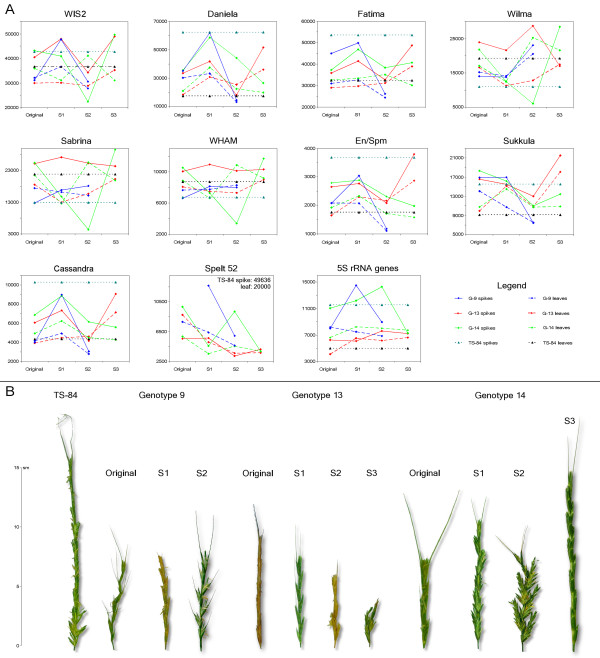
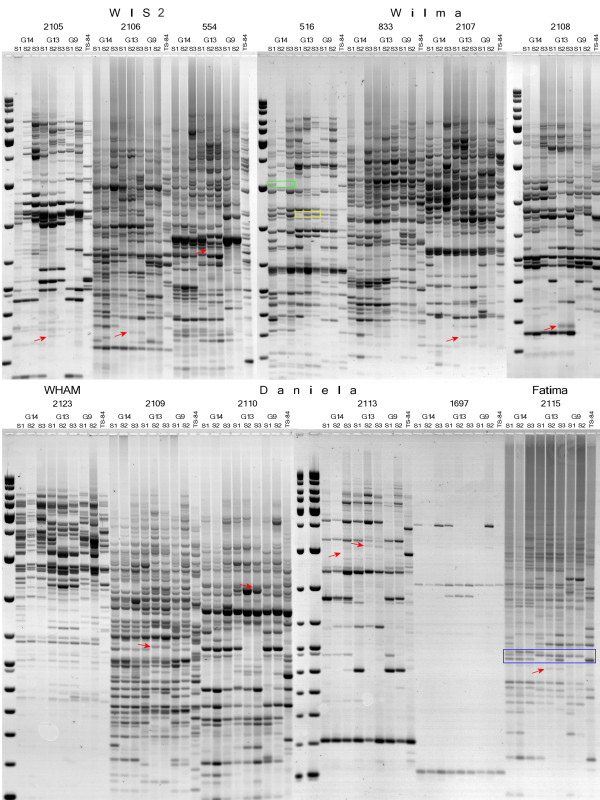
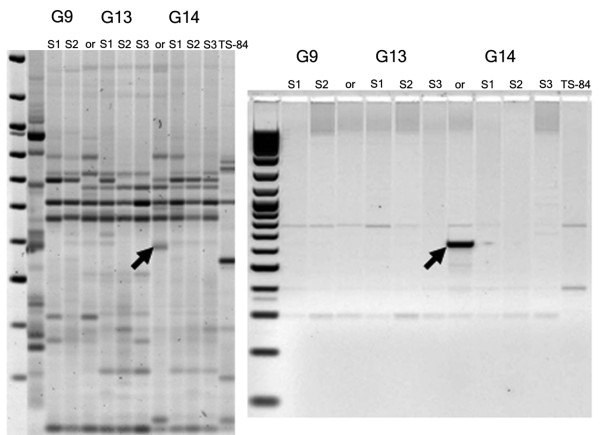
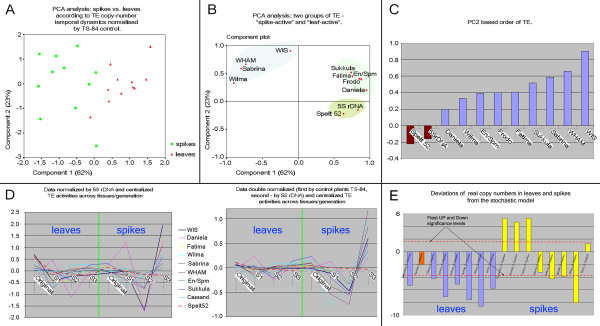
Results: Significant temporal fluctuation in the copy number of TEs was detected when processes that take place in small, marginal populations were simulated. It is known that under critical external conditions, outcrossing plants very often transit to self-pollination. Thus, three morphologically different genotypes with chromosomal aberrations were taken from a wild population of Ae. speltoides, and the dynamics of the TE complex traced through three rounds of selfing. It was discovered that: (i) various families of TEs vary tremendously in copy number between individuals from the same population and the selfed progenies; (ii) the fluctuations in copy number are TE-family specific; (iii) there is a great difference in TE copy number expansion or contraction between gametophytes and sporophytes; and (iv) a small percentage of TEs that increase in copy number can actually insert at novel locations and could serve as a bona fide mutagen.
Conclusions: We hypothesize that TE dynamics could promote or intensify morphological and karyotypical changes, some of which may be potentially important for the process of microevolution, and allow species with plastic genomes to survive as new forms or even species in times of rapid climatic change.
Figures
Similar articles
-
Intraspecific and intraorganismal copy number dynamics of retrotransposons and tandem repeat in Aegilops speltoides Tausch (Poaceae, Triticeae).Protoplasma. 2018 Jul;255(4):1023-1038. doi: 10.1007/s00709-018-1212-6. Epub 2018 Jan 27. Protoplasma. 2018. PMID: 29374788
-
Diversity of long terminal repeat retrotransposon genome distribution in natural populations of the wild diploid wheat Aegilops speltoides.Genetics. 2012 Jan;190(1):263-74. doi: 10.1534/genetics.111.134643. Epub 2011 Oct 31. Genetics. 2012. PMID: 22042572 Free PMC article.
-
Copy number variation of transposable elements in Triticum-Aegilops genus suggests evolutionary and revolutionary dynamics following allopolyploidization.Plant Cell Rep. 2013 Oct;32(10):1615-24. doi: 10.1007/s00299-013-1472-8. Epub 2013 Jun 27. Plant Cell Rep. 2013. PMID: 23807536
-
Impact of transposable elements on polyploid plant genomes.Ann Bot. 2017 Aug 1;120(2):195-207. doi: 10.1093/aob/mcx078. Ann Bot. 2017. PMID: 28854566 Free PMC article. Review.
-
Mammalian transposable elements and their impacts on genome evolution.Chromosome Res. 2018 Mar;26(1-2):25-43. doi: 10.1007/s10577-017-9570-z. Epub 2018 Feb 1. Chromosome Res. 2018. PMID: 29392473 Free PMC article. Review.
Cited by
-
Transposable elements in phytopathogenic Verticillium spp.: insights into genome evolution and inter- and intra-specific diversification.BMC Genomics. 2012 Jul 16;13:314. doi: 10.1186/1471-2164-13-314. BMC Genomics. 2012. PMID: 22800085 Free PMC article.
-
iPBS: a universal method for DNA fingerprinting and retrotransposon isolation.Theor Appl Genet. 2010 Nov;121(8):1419-30. doi: 10.1007/s00122-010-1398-2. Epub 2010 Jul 10. Theor Appl Genet. 2010. PMID: 20623102
-
Supernumerary B Chromosomes and Plant Genome Changes: A Snapshot of Wild Populations of Aegilops speltoides Tausch (Poaceae, Triticeae).Int J Mol Sci. 2020 May 26;21(11):3768. doi: 10.3390/ijms21113768. Int J Mol Sci. 2020. PMID: 32466617 Free PMC article.
-
Construction of a linkage map based on retrotransposon insertion polymorphisms in sweetpotato via high-throughput sequencing.Breed Sci. 2015 Mar;65(2):145-53. doi: 10.1270/jsbbs.65.145. Epub 2015 Mar 1. Breed Sci. 2015. PMID: 26069444 Free PMC article.
-
Genetic diversity of Alternaria species associated with black point in wheat grains.PeerJ. 2020 May 5;8:e9097. doi: 10.7717/peerj.9097. eCollection 2020. PeerJ. 2020. PMID: 32411537 Free PMC article.
References
-
- Mayr E. Systematics and the origin of species. New York, USA: Columbia University Press; 1942.
-
- Grant V. Plant speciation. 2. New York, USA: Columbia University Press; 1981.
LinkOut - more resources
Full Text Sources
