


Evidence for diminished levels of epithelial psoriasin and calprotectin in chronic rhinosinusitis
- PMID: 20226301
- PMCID: PMC2841036
- DOI: 10.1016/j.jaci.2009.11.045
Evidence for diminished levels of epithelial psoriasin and calprotectin in chronic rhinosinusitis
Erratum in
- J Allergy Clin Immunol. 2010 Dec;126(6):1169. Carter, Roderick T [corrected to Carter, Roderick G]
Abstract
Background: Decreased epithelial expression of mRNA for S100A7 (psoriasin) and S100A8/A9 (calprotectin) has been reported in patients with chronic rhinosinusitis (CRS).
Objectives: We sought to assess whether the expression of S100 proteins is also altered in the sinonasal cavity of patients with CRS.
Methods: We determined levels of S100 proteins in nasal lavage fluid and sinonasal tissue extracts from patients with CRS using ELISA and immunohistochemical analysis of nasal polyp tissue from patients with CRS with nasal polyps and uncinate tissue from healthy control subjects, patients with CRSsNP, and patients with CRSwNP.
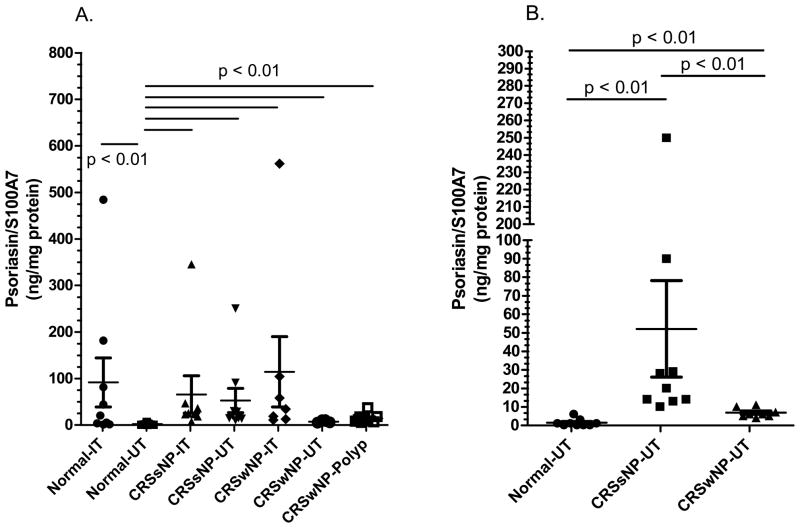
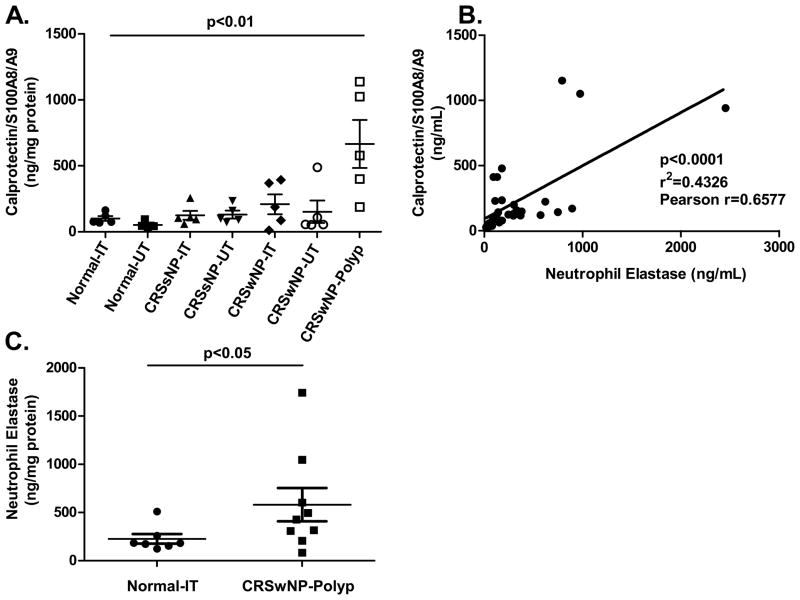
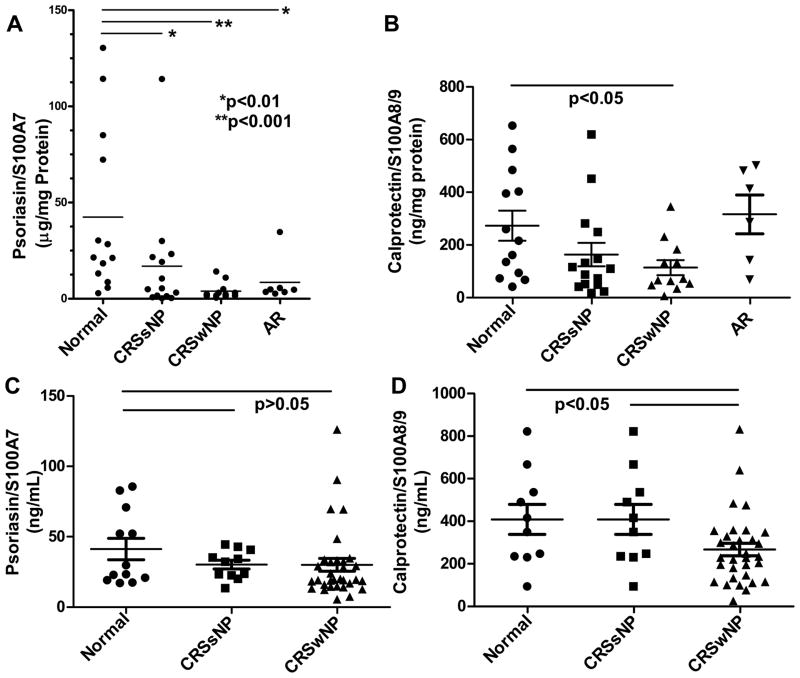
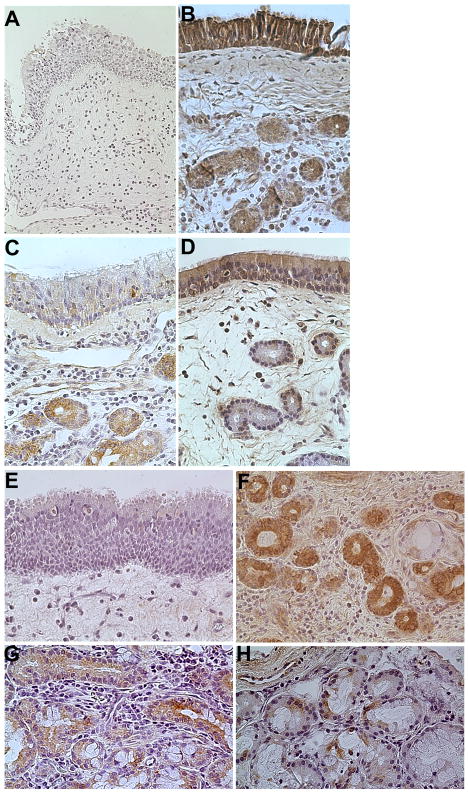
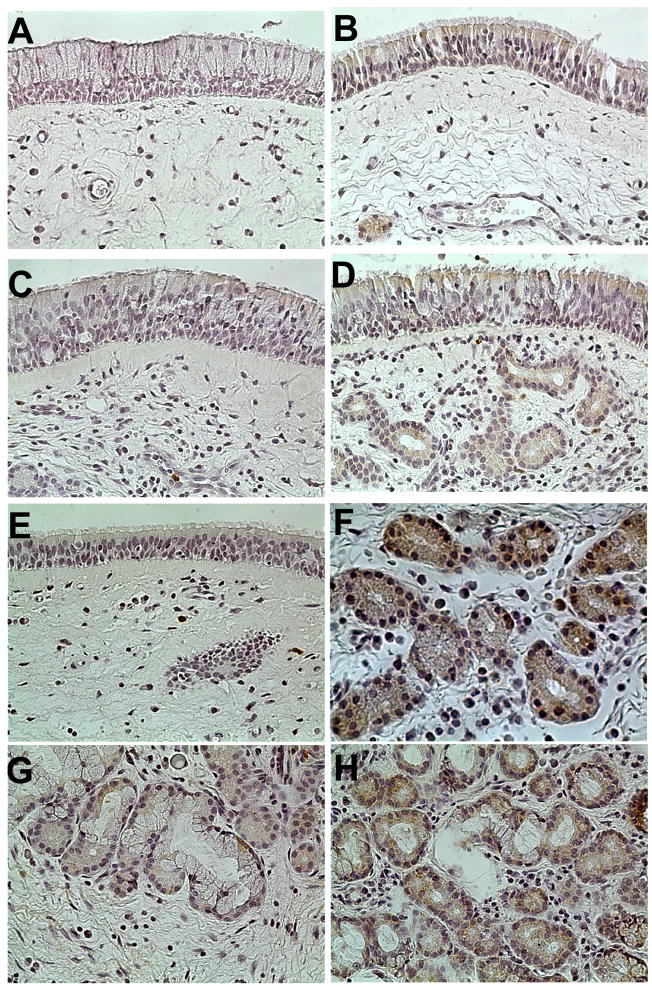
Results: Expression levels of S100 proteins were decreased compared with those seen in control subjects in nasal lavage fluid from both CRS groups (P < .05). Similarly, tissue expression of these proteins assessed by means of immunohistochemistry demonstrated clear reductions, primarily in the epithelial lining. Interestingly, levels of calprotectin were increased in nasal polyp tissue despite lower levels in lavage fluid. Levels of calprotectin in nasal tissues were correlated with levels of neutrophils, as assessed by means of quantification of neutrophil elastase.
Conclusions: Several S100 proteins are in the epidermal differentiation complex of genes and have been demonstrated to play a role in maintenance of barrier function and formation of an antimicrobial shield. We demonstrate significantly decreased levels of expression of S100 proteins in the epithelium of patients with CRS, which might lead to diminished innate immune responses and barrier function. Increased levels of calprotectin in nasal polyp tissue might reflect neutrophil recruitment and a compensatory mechanism. Future studies will be important to determine whether reduced levels of S100 proteins lead to decreased antimicrobial responses in the upper airways and sinuses and whether this reduction plays a causative role in CRS pathogenesis and susceptibility to infectious disease.
Figures
References
-
- Van Zele T, Claeys S, Gevaert P, Van Maele G, Holtappels G, Van Cauwenberge P, et al. Differentiation of chronic sinus diseases by measurement of inflammatory mediators. Allergy. 2006;61:1280–9. - PubMed
-
- Cookson W. The immunogenetics of asthma and eczema: a new focus on the epithelium. Nat Rev Immunol. 2004;4:978–88. - PubMed
-
- Avila PC, Schleimer RP. Allergy and Allergic Disease. 2. chapter 16. 2008. Airway Epithelium; pp. 366–97.
-
- Madsen P, Rasmussen HH, Leffers H, et al. Molecular cloning and expression of a novel keratinocyte protein (psoriasis-associated fatty acid-binding protein [PA-FABP]) that is highly up-regulated in psoriatic skin and that shares similarity to fatty acid-binding proteins. J Invest Dermatol. 1991;97 (4):701–712. - PubMed
Publication types
MeSH terms
Substances
Grants and funding
LinkOut - more resources
Full Text Sources
Other Literature Sources
Medical
Research Materials
