


Human ataxias: a genetic dissection of inositol triphosphate receptor (ITPR1)-dependent signaling
- PMID: 20226542
- PMCID: PMC4684264
- DOI: 10.1016/j.tins.2010.02.005
Human ataxias: a genetic dissection of inositol triphosphate receptor (ITPR1)-dependent signaling
Abstract
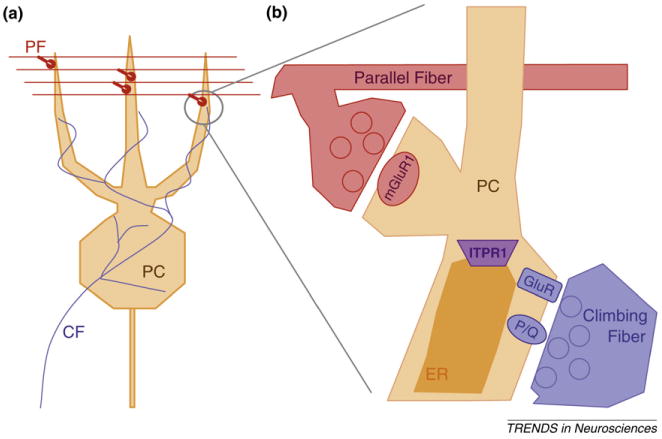
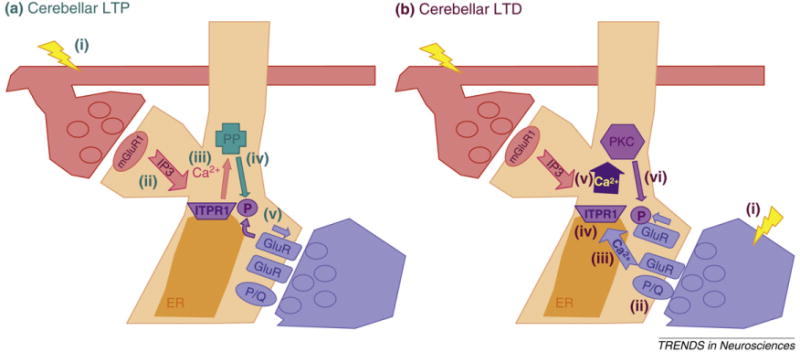
A persistent mystery about the ataxias has been why mutations in genes--many of which are expressed widely in the brain--primarily cause ataxia, and not, for example, epilepsy or dementia. Why should a polyglutamine stretch in the TATA-binding protein (that is important in all cells) particularly disrupt cerebellar coordination? We propose that advances in the genetics of cerebellar ataxias suggest a rational hypothesis for how so many different genes lead to predominantly cerebellar defects. We argue that the unifying feature of many genes involved in cerebellar ataxias is their impact on the signaling protein ITPR1 (inositiol 1,4,5-triphosphate receptor type 1), that underlies coincidence detection in Purkinje cells and could play an important role in cerebellar coordination.
Copyright 2010 Elsevier Ltd. All rights reserved.
Figures
References
-
- Manto M. The wide spectrum of spinocerebellar ataxias (SCAs) Cerebellum. 2005;4:2–6. - PubMed
-
- Yamada M, et al. CAG repeat disorder models and human neuropathology: similarities and differences. Acta Neuropathol. 2008;115:71–86. - PubMed
-
- Johnson J, et al. Clinical and genetic analysis of spinocerebellar ataxia type 11. Cerebellum. 2008;7:159–164. - PubMed
Publication types
MeSH terms
Substances
Grants and funding
LinkOut - more resources
Full Text Sources
Other Literature Sources
