


Ofd1, a human disease gene, regulates the length and distal structure of centrioles
- PMID: 20230748
- PMCID: PMC2841064
- DOI: 10.1016/j.devcel.2009.12.022
Ofd1, a human disease gene, regulates the length and distal structure of centrioles
Abstract
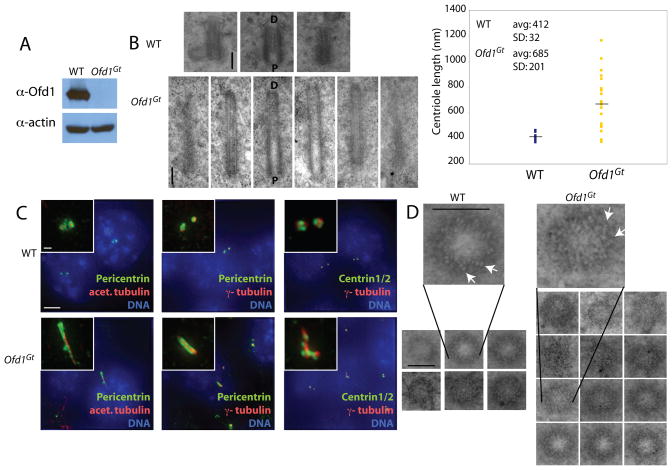
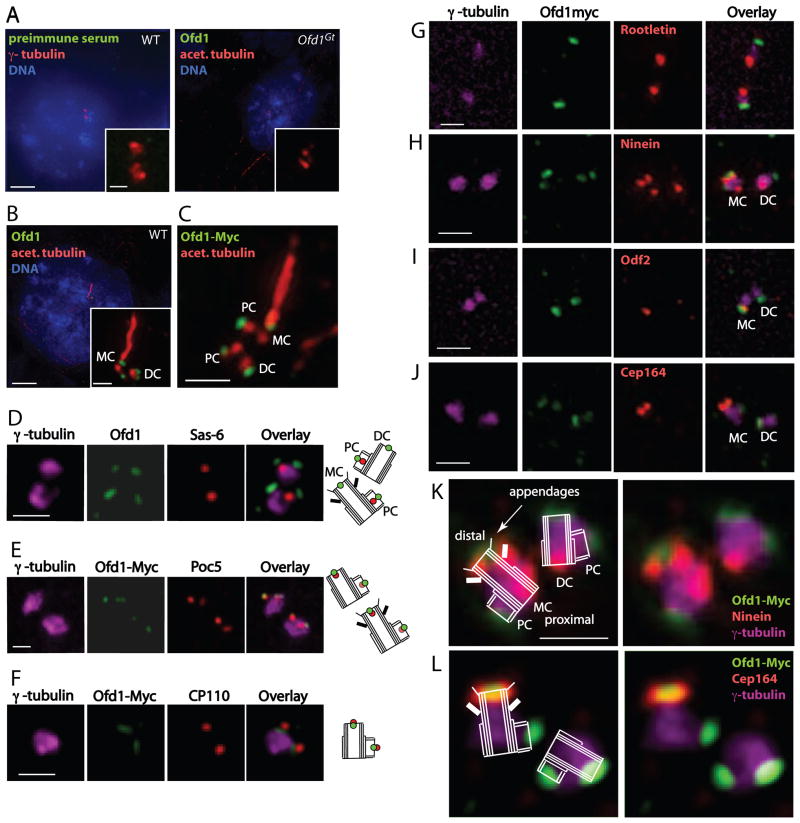
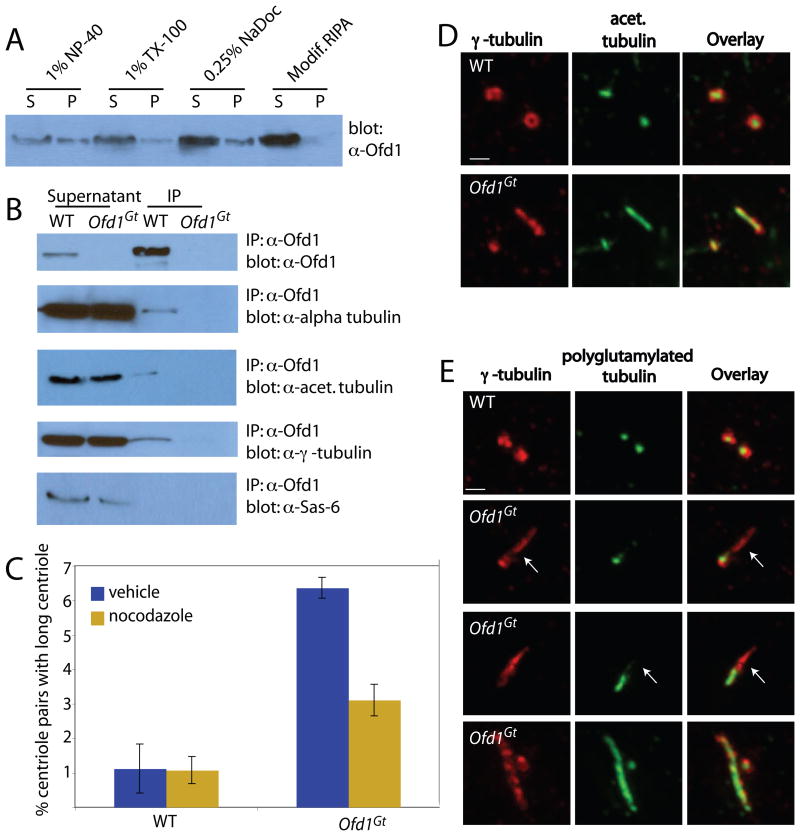
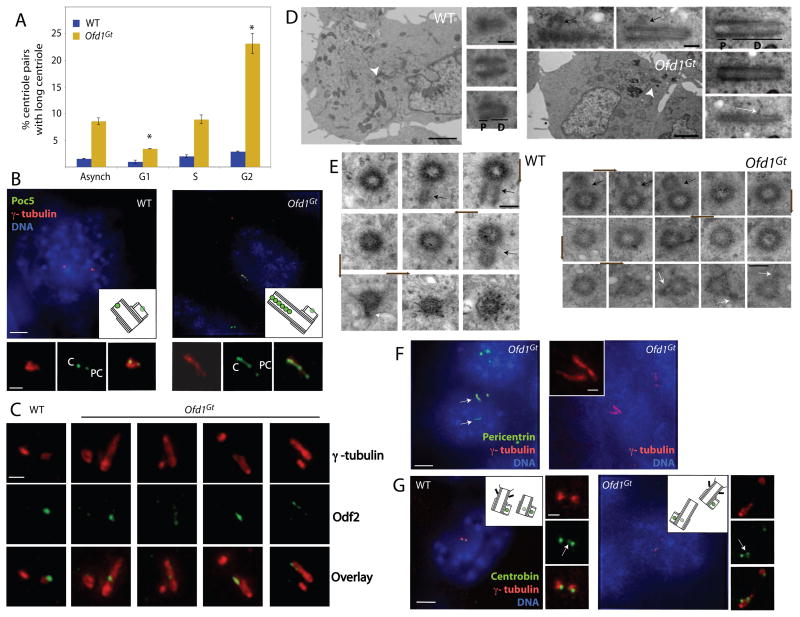
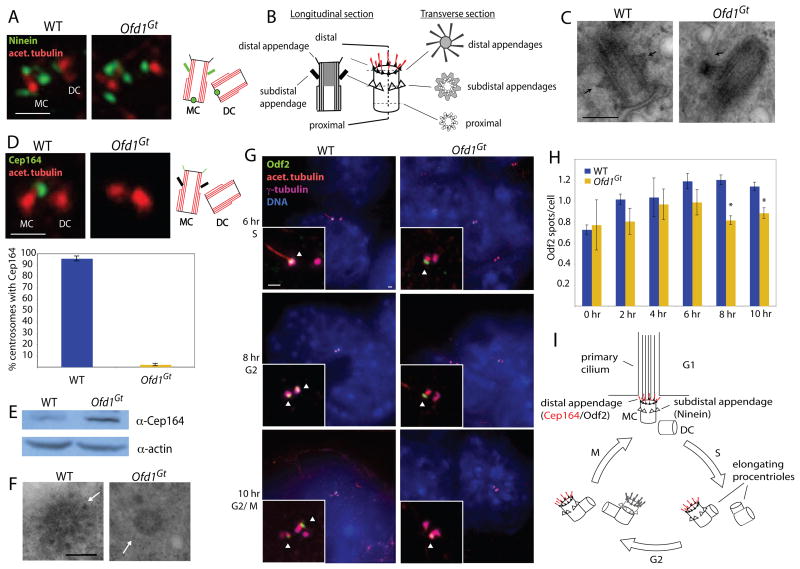
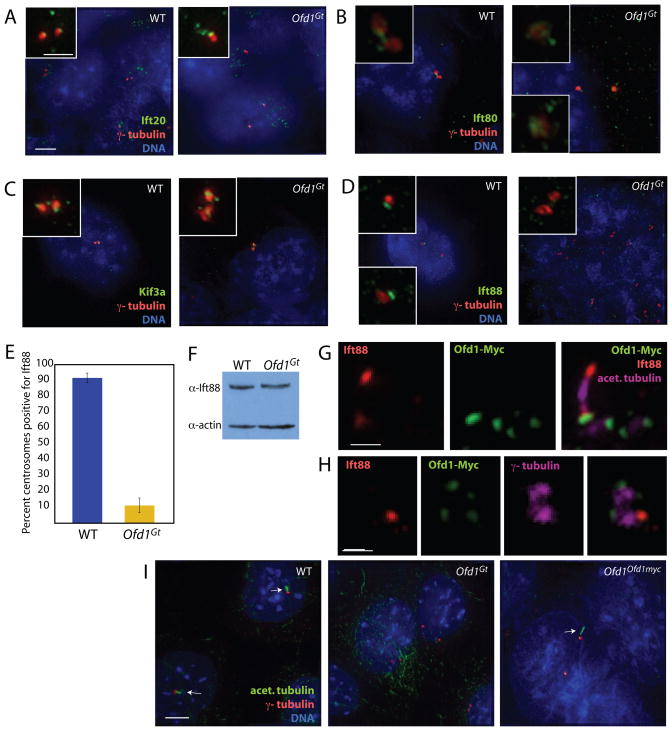
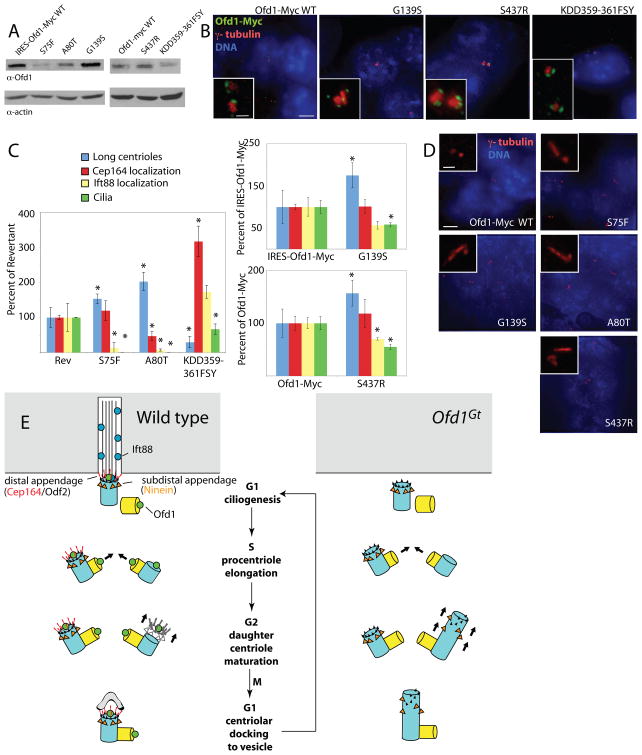
Centrosomes and their component centrioles represent the principal microtubule organizing centers of animal cells. Here, we show that the gene underlying orofaciodigital syndrome 1, Ofd1, is a component of the distal centriole that controls centriole length. In the absence of Ofd1, distal regions of centrioles, but not procentrioles, elongate abnormally. These long centrioles are structurally similar to normal centrioles but contain destabilized microtubules with abnormal posttranslational modifications. Ofd1 is also important for centriole distal appendage formation and centriolar recruitment of the intraflagellar transport protein Ift88. To model OFD1 syndrome in embryonic stem cells, we replaced the Ofd1 gene with missense alleles from human OFD1 patients. Distinct disease-associated mutations cause different degrees of excessive or decreased centriole elongation, all of which are associated with diminished ciliogenesis. Our results indicate that Ofd1 acts at the distal centriole to build distal appendages, recruit Ift88, and stabilize centriolar microtubules at a defined length.
Copyright 2010 Elsevier Inc. All rights reserved.
Figures
References
-
- Azimzadeh J, Bornens M. Structure and duplication of the centrosome. J Cell Sci. 2007;120:2139–2142. - PubMed
-
- Badano JL, Mitsuma N, Beales PL, Katsanis N. The ciliopathies: an emerging class of human genetic disorders. Annu Rev Genomics Hum Genet. 2006;7:125–148. - PubMed
-
- Badano JL, Teslovich TM, Katsanis N. The centrosome in human genetic disease. Nat Rev Genet. 2005;6:194–205. - PubMed
Publication types
MeSH terms
Substances
Grants and funding
LinkOut - more resources
Full Text Sources
Other Literature Sources
Molecular Biology Databases
Research Materials
