


Paramecium species ingest and kill the cells of the human pathogenic fungus Cryptococcus neoformans
- PMID: 20233022
- PMCID: PMC4294704
- DOI: 10.3109/13693780903451810
Paramecium species ingest and kill the cells of the human pathogenic fungus Cryptococcus neoformans
Abstract
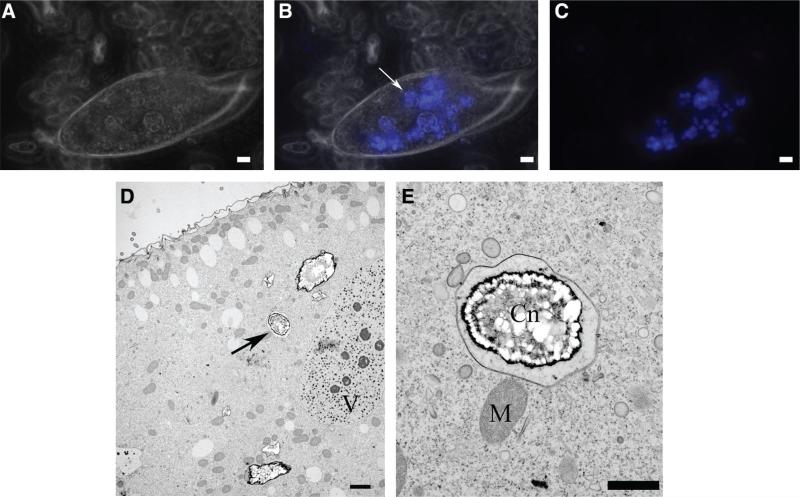
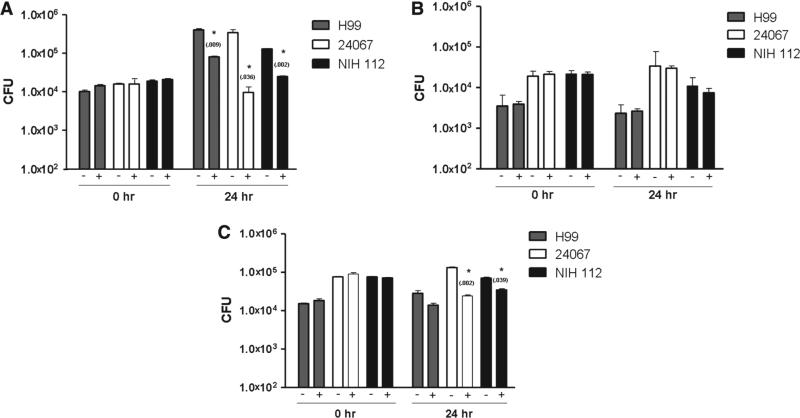
A fundamental question in the field of medical mycology is the origin of virulence in those fungal pathogens acquired directly from the environment. In recent years, it was proposed that the virulence of certain environmental animal-pathogenic microbes, such as Cryptococcus neoformans, originated from selection pressures caused by species-specific predation. In this study, we analyzed the interaction of C. neoformans with three Paramecium spp., all of which are ciliated mobile protists. In contrast to the interaction with amoebae, some Paramecium spp. rapidly ingested C. neoformans and killed the fungus. This study establishes yet another type of protist-fungal interaction supporting the notion that animal-pathogenic fungi in the environment are under constant selection by predation.
Figures
References
-
- Casadevall A, Perfect JR. Cryptococcus neoformans. ASM Press; Washington, DC: 1998.
-
- Steenbergen JN, Casadevall A. The origin and maintenance of virulence for the human pathogenic fungus Cryptococcus neoformans. Microbes Infect. 2003;5:667–675. - PubMed
-
- Ma H, May RC. Virulence in Cryptococcus species. Adv Appl Microbiol. 2009;67:131–190. - PubMed
-
- Goodchild LM, Dart AJ, Collins MB, et al. Cryptococcal meningitis in an alpaca. Aust Vet J. 1996;74:428–430. - PubMed
-
- McNamara TS, Cook RA, Behler JL, Ajello L, Padhye AA. Cryptococcosis in a common Anaconda (Eunectes murinus). J Zoo Wildlife Med. 1994;25:128–132.
Publication types
MeSH terms
Grants and funding
LinkOut - more resources
Full Text Sources
Miscellaneous
