One-year duration of immunity induced by vaccination with a canine Lyme disease bacterin
- PMID: 20237200
- PMCID: PMC2863397
- DOI: 10.1128/CVI.00524-09
One-year duration of immunity induced by vaccination with a canine Lyme disease bacterin
Abstract
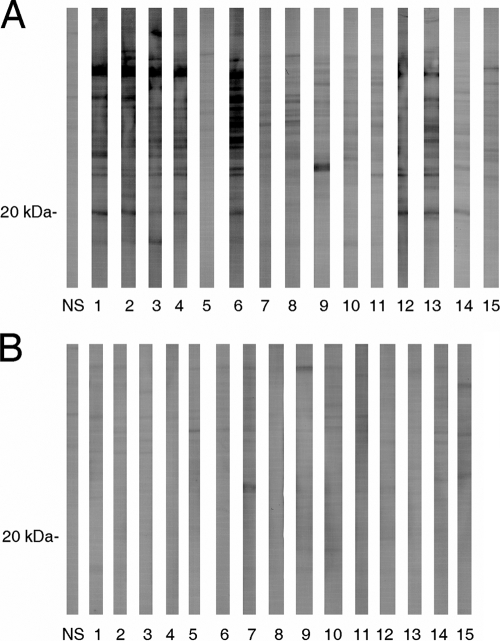
Laboratory-reared beagles were vaccinated with a placebo or a bacterin comprised of Borrelia burgdorferi S-1-10 and ospA-negative/ospB-negative B. burgdorferi 50772 and challenged after 1 year with B. burgdorferi-infected Ixodes scapularis ticks. For the placebo recipients, spirochetes were recovered from 9 (60%) skin biopsy specimens collected after 1 month, and the organisms persisted in the skin thereafter. Ten (67%) dogs also developed joint infection (3 dogs), lameness or synovitis (7 dogs), or B. burgdorferi-specific antibodies (8 dogs). For the vaccine recipients, spirochetes were recovered from 6 (40%) skin biopsy specimens collected after 1 month. However, subsequent biopsy specimens were negative, and the dogs failed to develop joint infection (P = 0.224), lameness/synovitis (P = 0.006), or Lyme disease-specific antibody responses (P = 0.002). The bacterin provided a high level of protection for 1 year after immunization, and the addition of the OspC-producing B. burgdorferi 50772 provided enhanced protection.
Figures
References
-
- Chu, H. J., L. G. Chavez, B. M. Blumer, R. W. Sebring, T. L. Wasmoen, and W. M. Acree. 1992. Immunogenicity and efficacy study of a commercial Borrelia burgdorferi bacterin. J. Am. Vet. Med. Assoc. 201:403-411. - PubMed
-
- Dambach, D. M., C. A. Smith, R. M. Lewis, and T. J. Van Wickle. 1997. Morphologic, immunohistochemical, and ultrastructural characterization of a distinctive renal lesion in dogs putatively associated with Borrelia burgdorferi infection: 49 cases (1987-1992). Vet. Pathol. 34:85-96. - PubMed
MeSH terms
Substances
LinkOut - more resources
Full Text Sources
Other Literature Sources
Medical