VEGF-A165b is cytoprotective and antiangiogenic in the retina
- PMID: 20237249
- PMCID: PMC2910648
- DOI: 10.1167/iovs.09-4296
VEGF-A165b is cytoprotective and antiangiogenic in the retina
Abstract
Purpose: A number of key ocular diseases, including diabetic retinopathy and age-related macular degeneration, are characterized by localized areas of epithelial or endothelial damage, which can ultimately result in the growth of fragile new blood vessels, vitreous hemorrhage, and retinal detachment. VEGF-A(165), the principal neovascular agent in ocular angiogenic conditions, is formed by proximal splice site selection in its terminal exon 8. Alternative splicing of this exon results in an antiangiogenic isoform, VEGF-A(165)b, which is downregulated in diabetic retinopathy. Here the authors investigate the antiangiogenic activity of VEGF(165)b and its effect on retinal epithelial and endothelial cell survival.
Methods: VEGF-A(165)b was injected intraocularly in a mouse model of retinal neovascularization (oxygen-induced retinopathy [OIR]). Cytotoxicity and cell migration assays were used to determine the effect of VEGF-A(165)b.
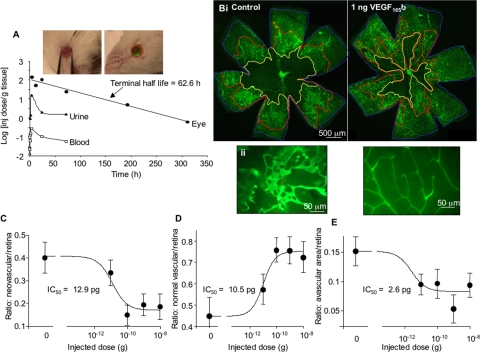
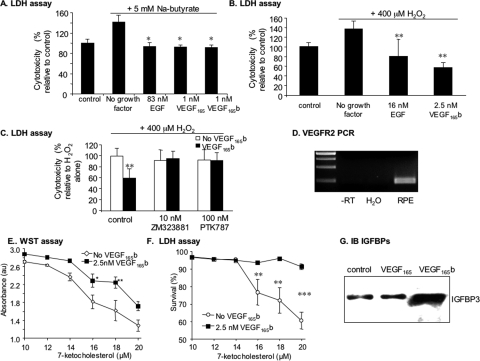
Results: VEGF-A(165)b dose dependently inhibited angiogenesis (IC(50), 12.6 pg/eye) and retinal endothelial migration induced by 1 nM VEGF-A(165) across monolayers in culture (IC(50), 1 nM). However, it also acts as a survival factor for endothelial cells and retinal epithelial cells through VEGFR2 and can stimulate downstream signaling. Furthermore, VEGF-A(165)b injection, while inhibiting neovascular proliferation in the eye, reduced the ischemic insult in OIR (IC(50), 2.6 pg/eye). Unlike bevacizumab, pegaptanib did not interact directly with VEGF-A(165)b.
Conclusions: The survival effects of VEGF-A(165)b signaling can protect the retina from ischemic damage. These results suggest that VEGF-A(165)b may be a useful therapeutic agent in ischemia-induced angiogenesis and a cytoprotective agent for retinal pigment epithelial cells.
Figures




References
-
- Roth F, Bindewald A, Holz FG. Key pathophysiologic pathways in age-related macular disease. Graefes Arch Clin Exp Ophthalmol 2004;242:710–716 - PubMed
-
- Kinose F, Roscilli G, Lamartina S, et al. Inhibition of retinal and choroidal neovascularization by a novel KDR kinase inhibitor. Mol Vis 2005;11:366–373 - PubMed
-
- Shweiki D, Itin A, Soffer D, Keshet E. Vascular endothelial growth factor induced by hypoxia may mediate hypoxia-initiated angiogenesis. Nature 1992;359:843–845 - PubMed
-
- Rosenfeld PJ, Brown DM, Heier JS, et al. Ranibizumab for neovascular age-related macular degeneration. N Engl J Med 2006;355:1419–1431 - PubMed
Publication types
MeSH terms
Substances
Grants and funding
LinkOut - more resources
Full Text Sources
Other Literature Sources
Miscellaneous