Review
. 1991 May;172(5):335-44.

The many faces of multivisceral transplantation

Affiliations
Review

The many faces of multivisceral transplantation

T E Starzl et al. Surg Gynecol Obstet. 1991 May.

Erratum in

  • Surg Gynecol Obstet 1991 Sep;173(3):242

Abstract

The transplantation of multiple abdominal viscera, including liver-duodenum-pancreas, liver-stomach-duodenum-pancreas and liver-intestine, is being performed with increasing frequency and success. These procedures and other variations are derived from a seldom used multivisceral operation in which all of the foregoing organs are transplanted en bloc. It is described herein how the full multivisceral transplantation and its less extensive derivatives are based on the same principles of procurement, preservation and postoperative management. With all of these multiple organ permutations and with intestinal transplantation alone, management is complicated by inclusion in the grafts of a large lymphoreticular component that is capable of causing graft versus host disease (GVHD). Because of a systematic error in therapeutic philosophy, past efforts have been directed at altering or damaging the lymphoreticular cells by pretreatment of the donor or of the organs with drugs, irradiation or other means. From recent observations, the alternative approach is suggested of keeping these lymphoid depots intact, which then become the site of two way cell traffic after transplantation. With the use of powerful immunosuppression, such as that provided with FK 506, the donor lymphoreticular cells can circulate in the recipient without causing clinical GVHD, and the lymphoreticular cells in the graft become those of the recipient (local chimerism) without causing rejection. Even with avoidance of rejection and GVHD, metabolic interrelations between the grafted organs, and also between the graft organs and retained recipient viscera can affect the fate of the individual transplanted organs or retained recipient organs. The best delineated of these metabolic influences are mediated by the endogenous splanchnic hepatotrophic factors, of which insulin has been the most completely studied. An understanding of these various immunologic and nonimmunologic factors combined with more potent immunosuppression that is now available is sure to stimulate efforts at transplantation of abdominal organs and particularly of the hollow viscera that have resisted such clinical efforts.


Figures
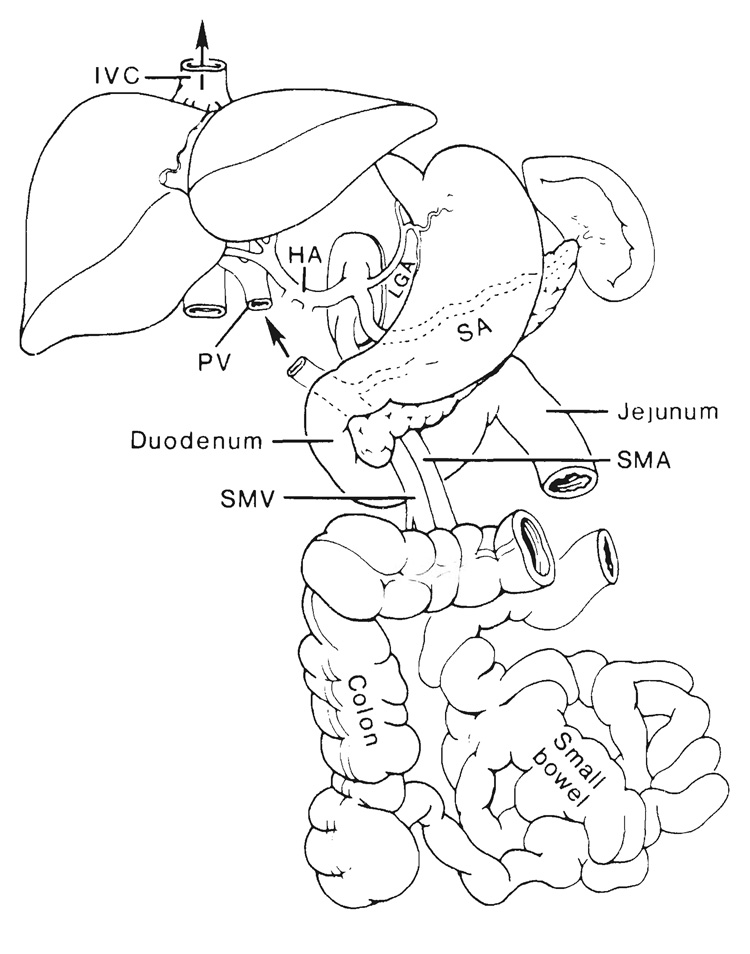
FIG. 1
FIG. 1
The arterial pedicles and venous outflow of multivisceral allografts. IVC, Inferior vena cava; HA, hepatic artery; PV, portal vein; SA, splenic artery, SMA, superior mesenteric artery, and SMV, superior mesenteric vein.
FIG. 2
FIG. 2
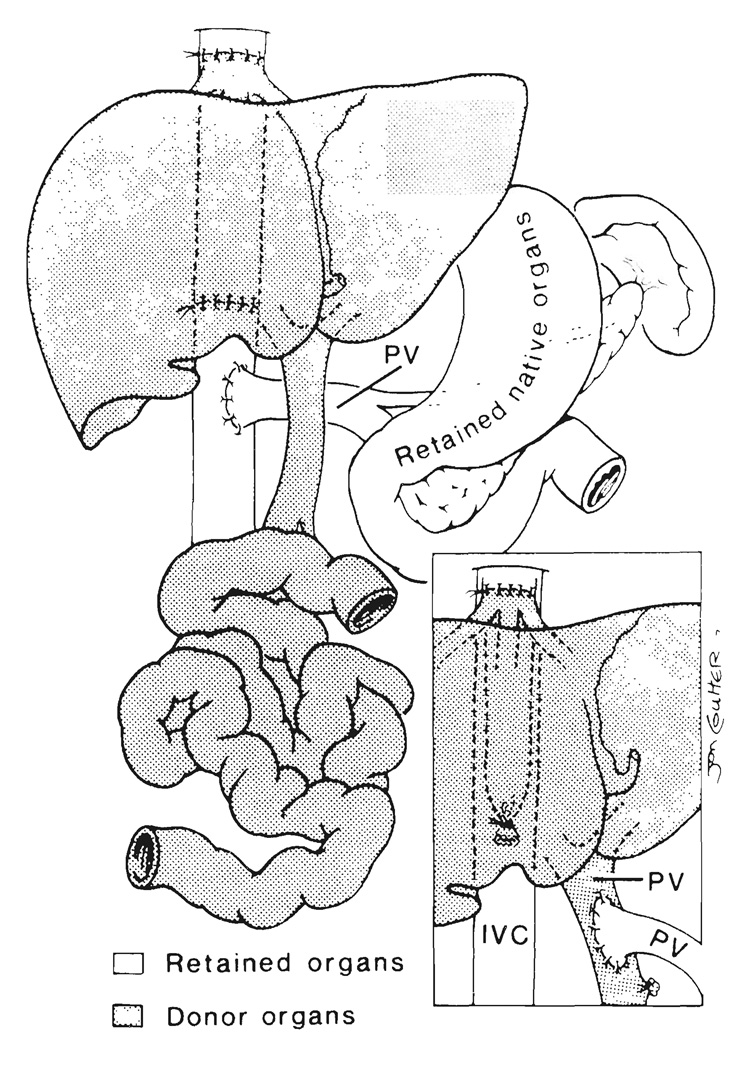
Liver-small intestinal transplantation in which a segment of donor retrohepatic vena cava is used to replace the excised recipient. Note that the venous outflow of the retained recipient viscera is directed into the recipient inferior vena cava (IVC) by portacaval shunt. Inset, “Piggyback” method of transplant venous drainage with anastomosis of the graft inferior vena cava to the anterior wall of the retained recipient inferior vena cava. Note the additional option of anastomosing the recipient portal vein (PV) to the graft portal vein, a maneuver designed to expose the hepatic allograft to hepatotrophic constituents from the retained viscera.
FIG. 3
FIG. 3
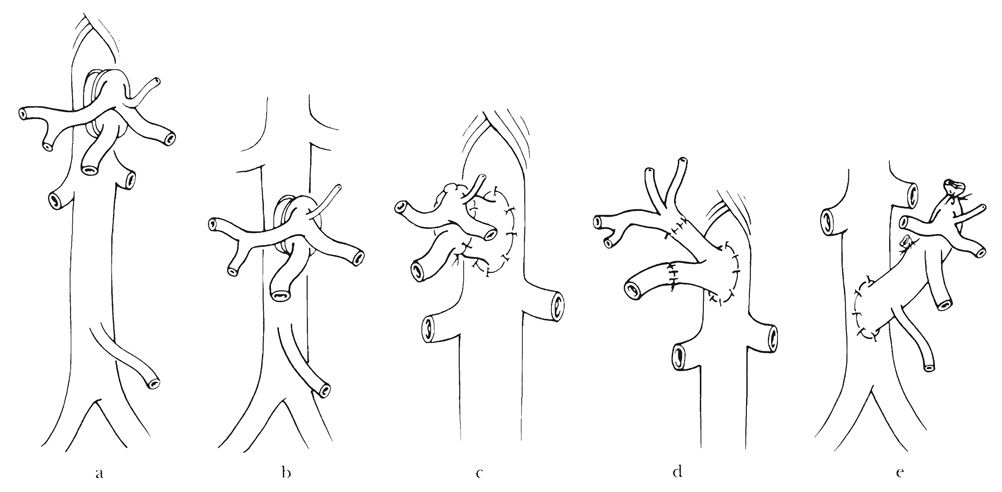
Anastomosis of Carrel patch of organ graft above (a and c) or below (b) the recipient renal arteries. An interposition vascular graft may (c and d) or may not (a and b) be needed. This is a less satisfactory technique because it spoils the arterial supply of potential renal graft in transplantation of the donor aorta in continuity with its celiac axis and superior mesenteric artery (e). e, The procedure was used in the original multivisceral operation in dogs and humans.
FIG. 4
FIG. 4
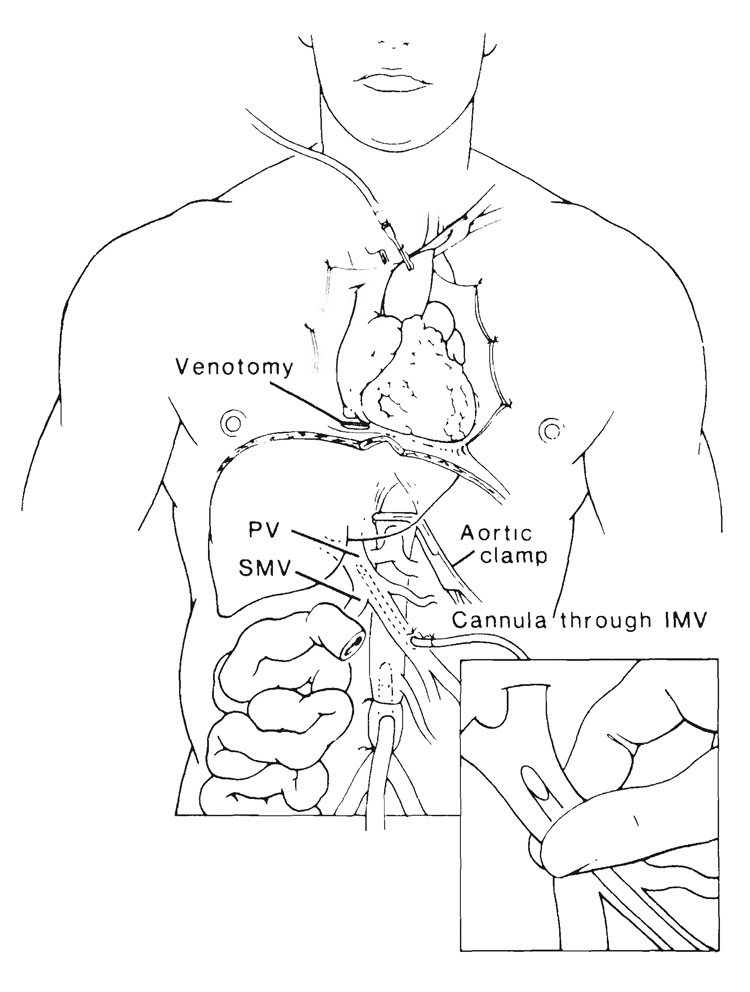
Procurement of composite abdominal organ grafts. The technique is similar for the different kinds of specimens with perfusion of a cold solution into an isolated segment of abdominal aorta. If desired, portal perfusion of the liver can be secondarily done through another cannula placed through a side branch, such as the inferior mesenteric vein (IMV) with the cannula tip compressed to prevent leakage (inset). Heart procurement can proceed simultaneously. PV, Portal vein, and SMV, superior mesenteric vein.
FIG. 5
FIG. 5
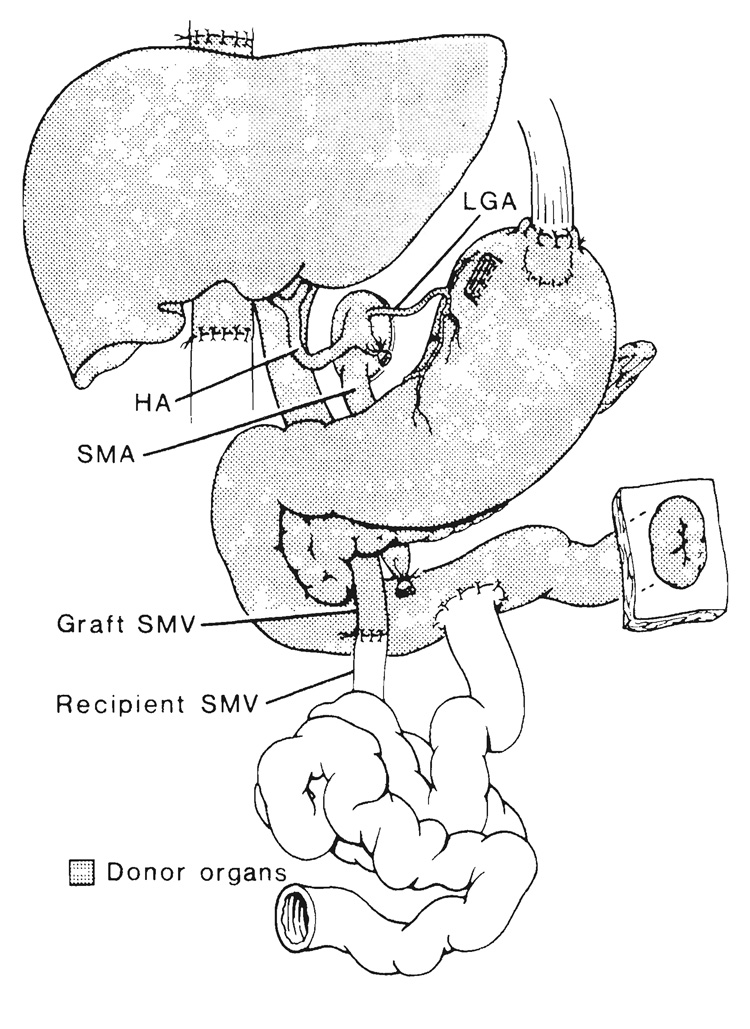
Complete multivisceral transplantation. HA, Hepatic artery; GDA, gastroduodenal artery; SMA, superior mesenteric artery, and LGA, left gastric artery of graft. Note that the host left gastric artery was retained to nourish a small recipient gastric remnant. Without this expedient, all of the recipient stomach must be removed as in Figure 7.
FIG. 6
FIG. 6
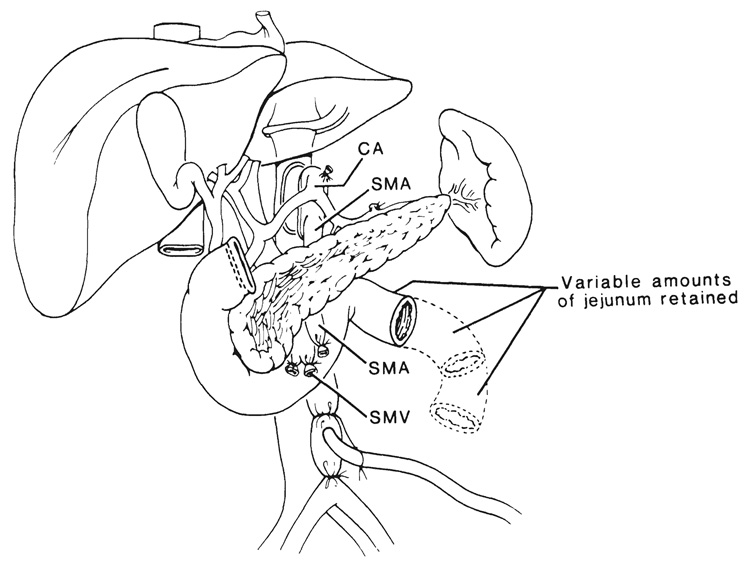
Cluster graft used to replace resected viscera after exenteration of the upper part of the abdomen. CA, celiac axis; SMA, superior mesenteric artery, and SMV, superior mesenteric vein.
FIG. 7
FIG. 7
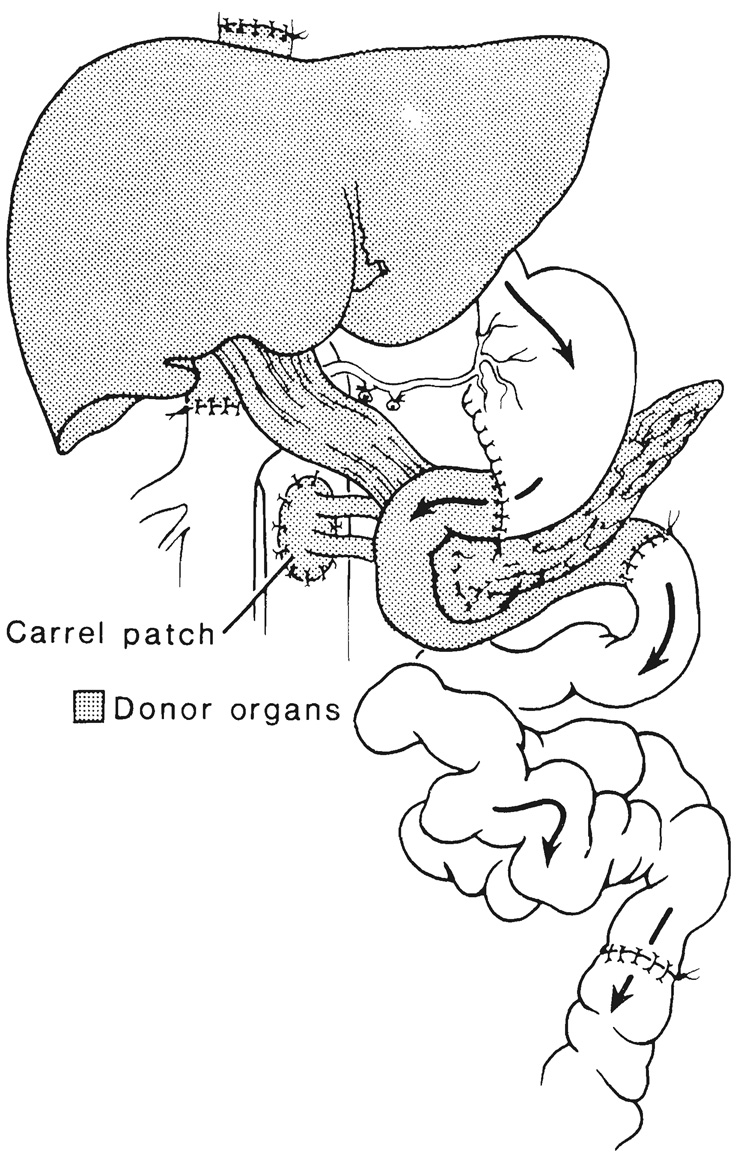
Cluster graft including stomach. This operation has been performed in a human (see text). Note jejunal chimney from graft for postoperative decompression. LGA, left gastric artery; HA, hepatic artery; SMA, superior mesenteric artery, and SMV, superior mesenteric vein.
FIG. 8
FIG. 8
Cluster graft in which a segment of the duodenum becomes part of the gastrointestinal main stream, and thus, a functioning segmental enteric graft as soon as the patient begins to eat. The longest follow-up period for this type of patient is 26 months after exenteration of the upper part of the abdomin for a massive duodenal sarcoma with hepatic metastases.
FIG. 9
FIG. 9
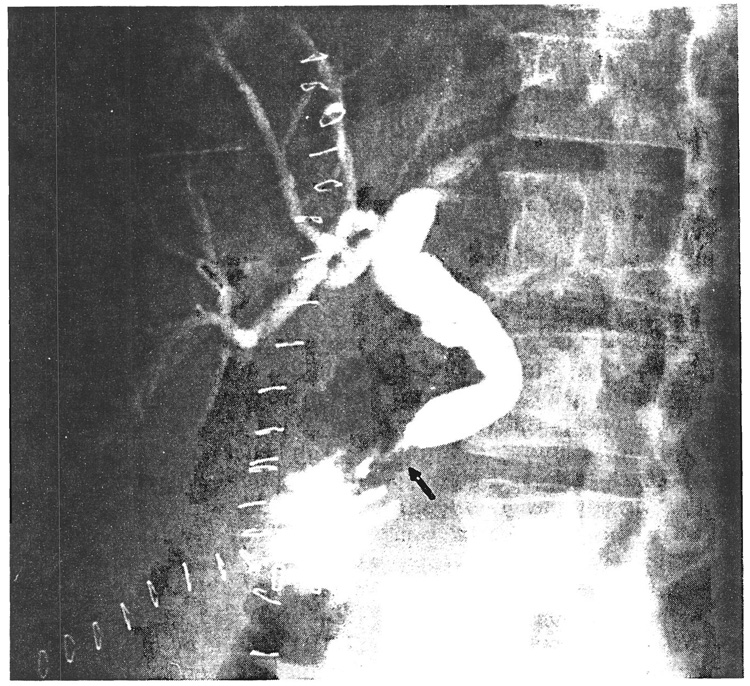
Ampullary dysfunction (arrow) in a cluster graft causing biliary obstruction and jaundice of the recipient after the operation depicted in Figure 8. The dilated distal common duct was detached from the allograft and anastomosed to a Roux-limb constructed from the jejunum of the recipient.
FIG. 10
FIG. 10
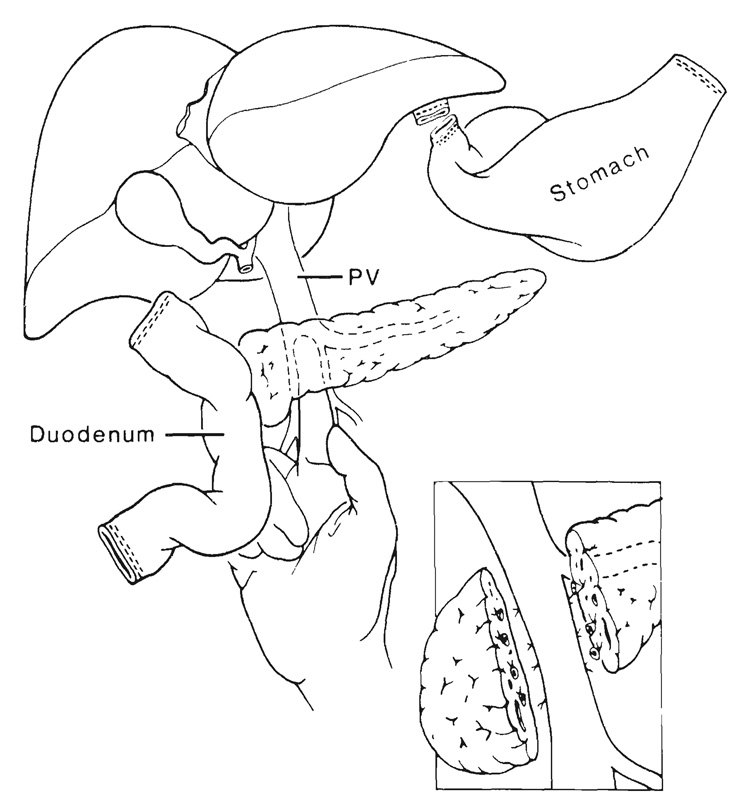
Removal of pancreas and other organs during trimming of viscera for liver-small intestinal transplantation. PV, Portal vein.

References

    1. Starzl TE, Kaupp HA., Jr Mass homotransplantation of abdominal organs in dogs. Surg. Forum. 1960;11:28–30. - PMC - PubMed
    1. Starzl TE, Kaupp HA, Jr, Brock DR, et al. Homotransplantation of multiple visceral organs. Am. J. Surg. 1962;103:219–229. - PMC - PubMed
    1. Jaffe BM. Visceral interchange. Am. J. Surg. 1989;157:2–5. - PubMed
    1. Murase N, Kim D, Todo S, et al. Induction of liver, heart, and multivisceral graft acceptance with a short course of FK 506. Transplant Proc. 1990;22:74–75. - PMC - PubMed
    1. Hoffman AL, Makowka L, Banner B, et al. The use of FK 506 for small intestine allotransplantation: Inhibition of acute rejection and prevention of fatal graft-versus-host disease. Transplantation. 1990;49:483–490. - PMC - PubMed

Publication types