


Grip force is part of the semantic representation of manual action verbs
- PMID: 20300535
- PMCID: PMC2838801
- DOI: 10.1371/journal.pone.0009728
Grip force is part of the semantic representation of manual action verbs
Abstract
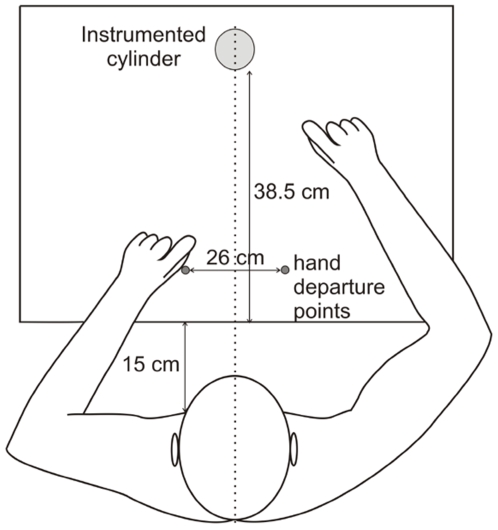
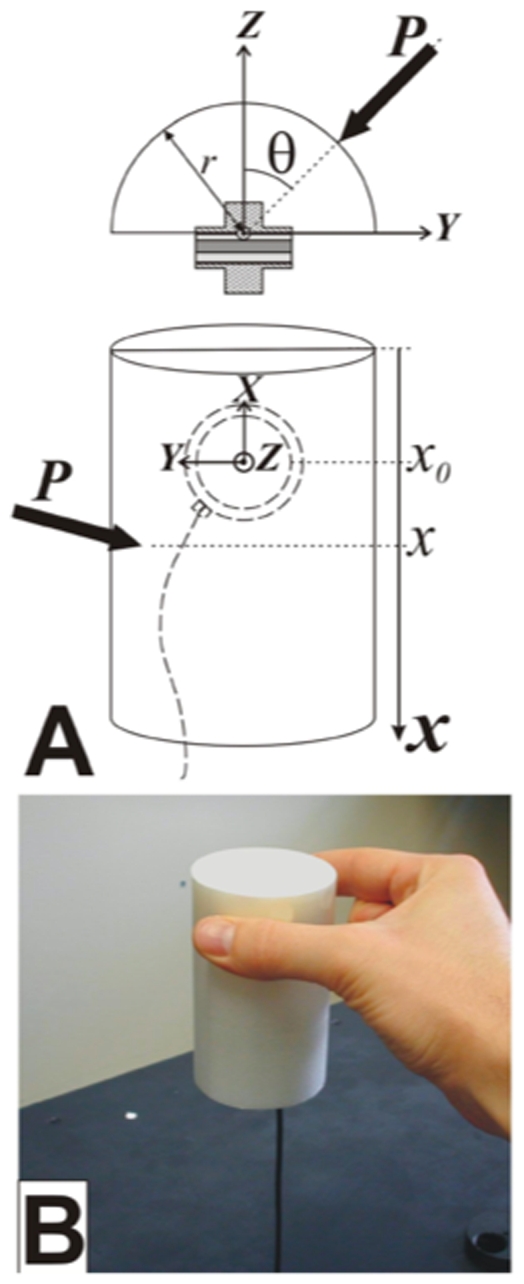
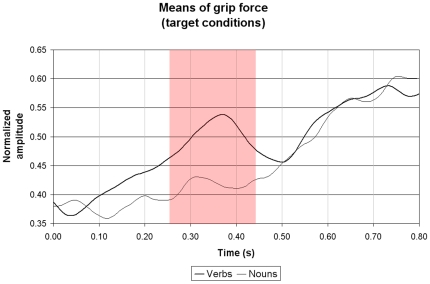
Motor actions and action verbs activate similar cortical brain regions. A functional interference can be taken as evidence that there is a parallel treatment of these two types of information and would argue for the biological grounding of language in action. A novel approach examining the relationship between language and grip force is presented. With eyes closed and arm extended, subjects listened to words relating (verbs) or not relating (nouns) to a manual action while holding a cylinder with an integrated force sensor. There was a change in grip force when subjects heard verbs that related to manual action. Grip force increased from about 100 ms following the verb presentation, peaked at 380 ms and fell abruptly after 400 ms, signalling a possible inhibition of the motor simulation evoked by these words. These observations reveal the intimate relationship that exists between language and grasp and show that it is possible to elucidate online new aspects of sensorimotor interaction.
Conflict of interest statement
Figures
References
-
- Liepmann H. Die linke Hemisphäre und das Handeln. Münch Med Wschr. 1905;49:2322–2326 and 2375–2378.
-
- Geschwind N. Disconnexion syndromes in animals and man II. Brain. 1965b;88:585–644. - PubMed
-
- Broca PP. Perte de la parole, ramollissement chronique et destruction partielle du lobe antérieur gauche du cerveau (Loss of speech, chronic softening and partial destruction of the anterior left lobe of the brain). Bulletin de la Société Anthropologique. 1861;2:235–238.
-
- Price CJ, Wise RJS, Watson JDG, Patterson K, Howard D, et al. Brain activity during reading The effects of exposure duration and task. Brain. 1994;117:1255–1269. - PubMed
Publication types
MeSH terms
LinkOut - more resources
Full Text Sources
