


The cyclic pattern of blood alcohol levels during continuous ethanol feeding in rats: the effect of feeding S-adenosylmethionine
- PMID: 20303346
- PMCID: PMC2888598
- DOI: 10.1016/j.yexmp.2010.03.004
The cyclic pattern of blood alcohol levels during continuous ethanol feeding in rats: the effect of feeding S-adenosylmethionine
Abstract
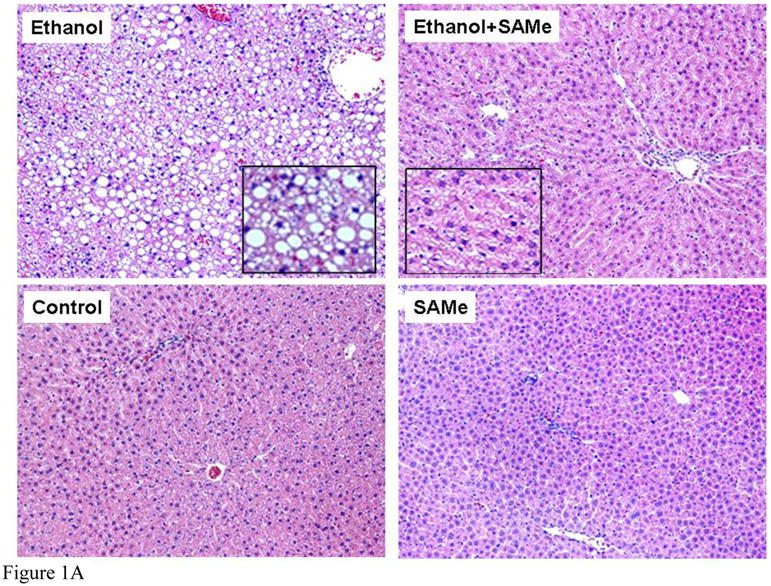
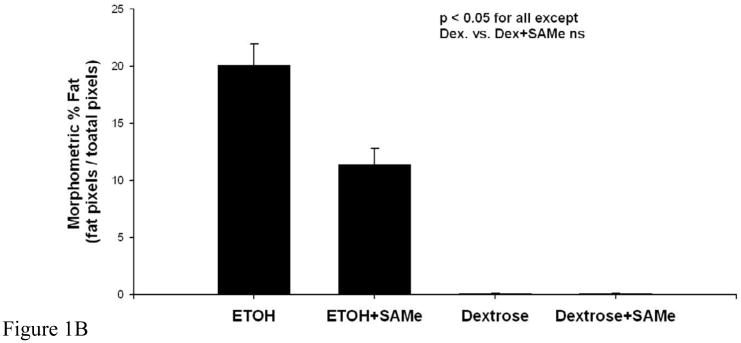
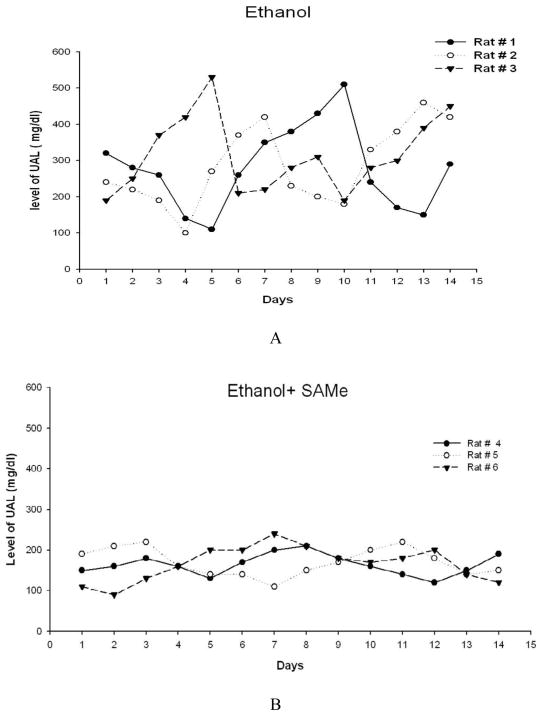
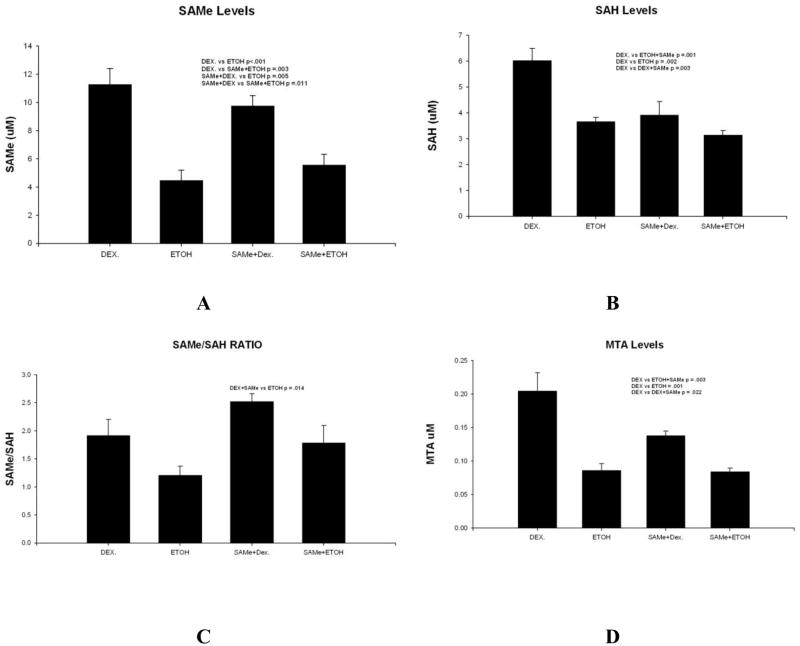
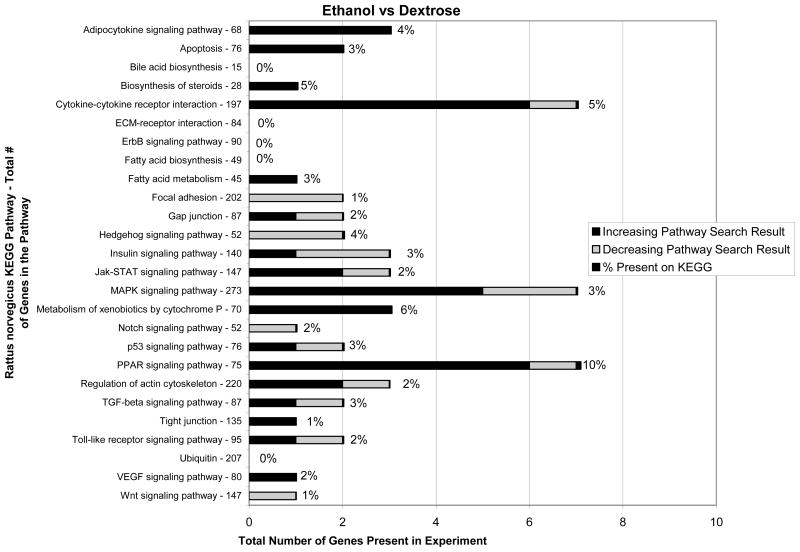
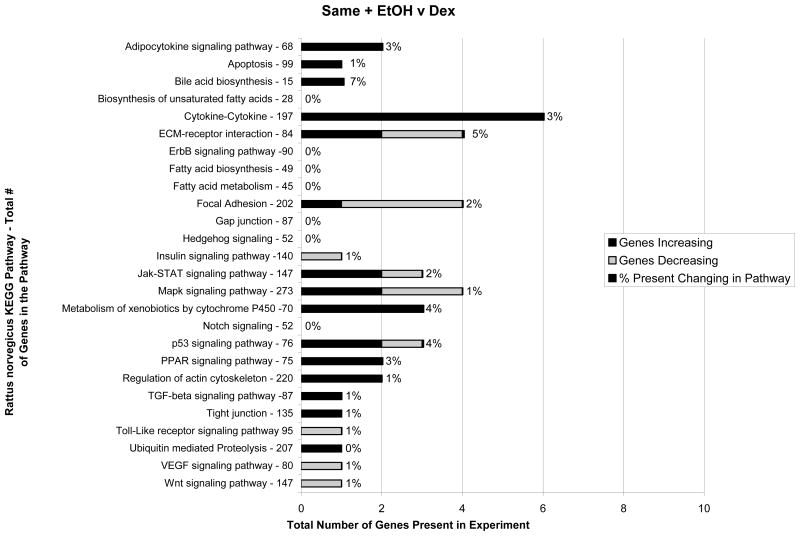
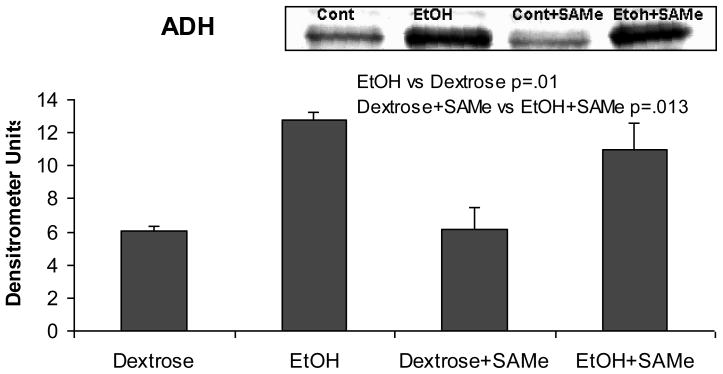
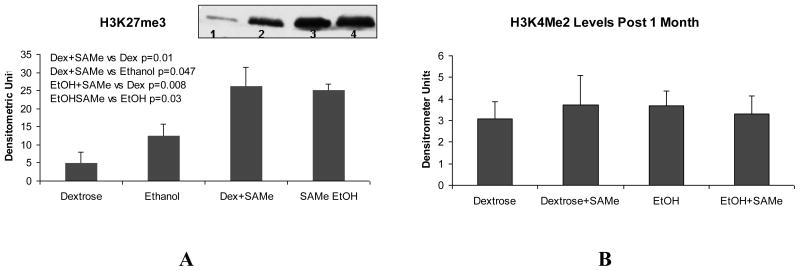
S-adenosylmethionine (SAMe), the major methyl donor for DNA and histone methylation was fed with ethanol for 1month in order to modify the effects of ethanol on rat liver. The following parameters were studied to determine the effects of SAMe; liver histology, the blood alcohol cycle (BAL), changes in gene expression mined from microarray analysis, changes in histone methylation, changes in liver SAMe levels and its metabolites and ADH. SAMe changed the type of fatty liver, reduced liver ALT levels and prevented the BAL cycle caused by intragastric ethanol feeding. Microarray analysis showed that SAMe feeding prevented most of the changes in gene expression induced by ethanol feeding, presumably by inducing H3K27me3 and gene silencing. H3K27me3 was significantly increased by SAMe with or without ethanol feeding. It is concluded that SAMe feeding stabilized global gene expression so that the changes in gene expression involved in the blood alcohol cycle were prevented.
Copyright 2010 Elsevier Inc. All rights reserved.
Figures
References
-
- Bardag-Gorce F, et al. The importance of cycling of blood alcohol levels in the pathogenesis of experimental alcoholic liver disease in rats. Gastroenterology. 2002;123:325–335. - PubMed
-
- Bradford MM. A rapid and sensitive method for the quantification of microgram quantities of protein utilizing the principle of protein-dye binding. Anal Biochem. 1976;72:248–254. - PubMed
Publication types
MeSH terms
Substances
Grants and funding
LinkOut - more resources
Full Text Sources
