


Identification of termite species and subspecies of the genus Zootermopsis using near-infrared reflectance spectroscopy
- PMID: 20307237
- PMCID: PMC2999414
- DOI: 10.1673/031.007.1801
Identification of termite species and subspecies of the genus Zootermopsis using near-infrared reflectance spectroscopy
Abstract
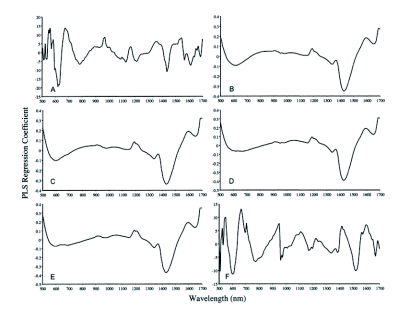
Dampwood termites of the genus Zootermopsis (Isoptera: Termopsidae) are an abundant group of basal termites found in temperate forests of western North America. Three species are currently recognized in the genus and one of these species is subdivided into two subspecies. Although morphological and genetic characters are useful in differentiating among the three species and the two subspecies, respectively, only hydrocarbon analysis can enable differentiation both among the three species and the two subspecies. Due to the limitations of hydrocarbon analysis, such as the need for fresh specimens, alternative methods that could rapidly and accurately identify Zootermopsis would be useful. Using a partial least squares analysis of near-infrared spectra, each of the Zootermopsis species and subspecies were identified with greater than 95% and 80% accuracy, respectively. Neural network analysis of the near-infrared spectra successfully enabled the identification of the species and subspecies with greater than 99% accuracy. The inexpensive, reproducible, and rapid nature of near-infrared spectroscopy makes it a viable alternative to morphological, hydrocarbon, or genetic analysis for identifying Zootermopsis.
Figures
References
-
- Abe T, Bignell DE, Higashi M. Termites: Evolution, Sociality, Symbioses, Ecology. Kluwer Academic Publishers; 2000.
-
- Cole TJ, Ram MS, Dowell FE, Omwega CO, Overholt WA, Ramaswamy SB. Near-infrared spectroscopic method to identify Cotesia flavipes and Cotesia sesamiae (Hymenoptera: Braconidae). Annals of the Entomological Society of America. 2003;96:865–869.
-
- Dowell FE, Throne JE, Wang D, Baker JE. Identifying stored-grain insects using near-infrared spectroscopy. Journal of Economic Entomology. 1999;92:165–169.
-
- Eggleton P. Global patterns of termite diversity. In: Abe T, Bignell DE, Higashi M, editors. Termites: Evolution, Sociality, Symbioses, Ecology. Kluwer Academic Publishers; 2000. pp. 25–51.
-
- Haverty Ml, Page M, Nelson LJ, Blomquist GJ. Cuticular hydrocarbons of dampwood termites, Zootermopsis: intra- and intercolony variation and potential as taxonomic characters. Journal of Chemical Ecology. 1988;14:1035–1058. - PubMed
Publication types
MeSH terms
LinkOut - more resources
Full Text Sources
