


Motivational incentives research in the National Drug Abuse Treatment Clinical Trials Network
- PMID: 20307797
- PMCID: PMC2866424
- DOI: 10.1016/j.jsat.2009.12.010
Motivational incentives research in the National Drug Abuse Treatment Clinical Trials Network
Abstract
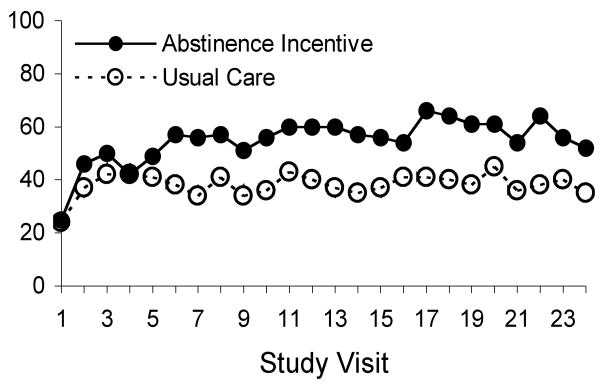
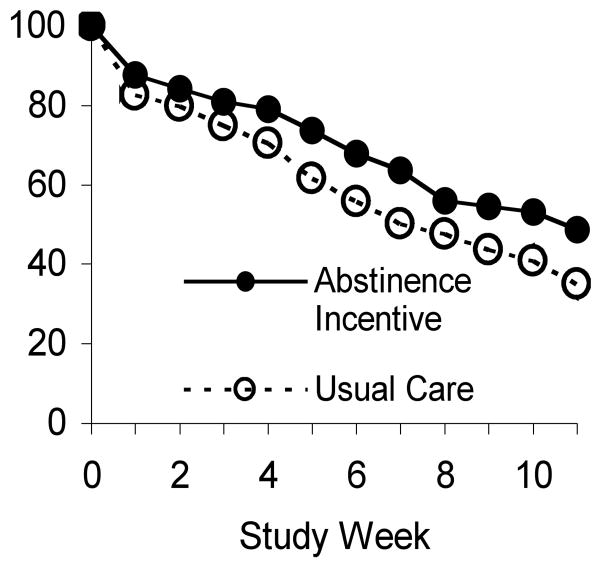
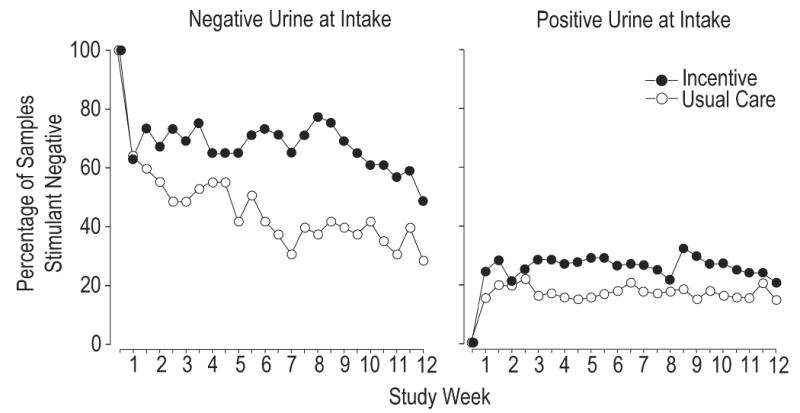
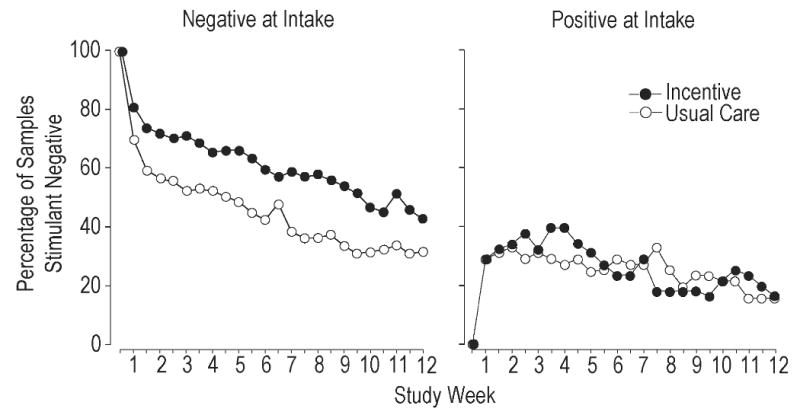
The purpose of this article is to review both main findings and secondary analyses from studies of abstinence incentives conducted in the National Drug Abuse Treatment Clinical Trials Network (CTN). Previous research has supported the efficacy of tangible incentives provided contingent on evidence of recent drug abstinence. CTN conducted the first multisite effectiveness trial of this novel intervention. Study participants were stimulant abusers (N = 803) participating in treatment at 14 clinical sites and randomly assigned to treatment as usual with or without a prize draw incentive program. Study participants could earn up to $400 over 3 months for submission of drug-free urine and breath (BAL) specimens. Three-month retention was significantly improved by incentives offered to psychosocial counseling clients (50% incentive vs. 35% control retained), whereas ongoing stimulant drug use was significantly reduced in methadone maintenance clients (54.4% incentive vs. 38.7% control samples testing stimulant-negative). In both settings, duration of continuous abstinence achieved was improved in the incentive condition. These studies support effectiveness of one abstinence incentive intervention and highlight the different outcomes that can be expected with application in methadone maintenance versus psychosocial counseling treatment settings. Secondary analyses have shown the importance of early treatment positive versus negative urine screens in moderating the outcome of abstinence incentives and have explored both safety and cost-effectiveness of the intervention. Implications for the use of motivational incentive methods in clinical practice are discussed.
Figures
References
-
- Alterman AI, Kampman K, Boardman CR, Cacciola JS, Rutherford MJ, McKay JR, Maany I. A cocaine-positive baseline urine predicts outpatient treatment attrition and failure to attain initial abstinence. Drug and Alcohol Dependence. 1997;46:79–85. - PubMed
-
- Alterman AI, McKay JR, Mulvaney FD, McLellan AT. Prediction of attrition from day hospital treatment in lower socioeconomic cocaine-dependent men. Drug and alcohol Dependence. 1996;40:227–233. - PubMed
-
- Carroll KM, Ball SA, Nich C, Martino S, Frankforter TL, Farentinos C, Kunkel LE, Mikulich-Gilbrtson SK, Morgenstern J, Obert JL, Polcin D, Snead N, Woody GE. Motivational interviewing to improve treatment engagement and outcome in individuals seeking treatment for substance abuse: A multisite effectiveness study. Drug and Alcohol Dependence. 2006;81:301–312. - PMC - PubMed
-
- Ehrman RN, Robbins SJ, Cornish JW. Results of a baseline urine test predict levels of cocaine use during treatment. Drug and Alcohol Dependence. 2001;62:1–7. - PubMed
Publication types
MeSH terms
Substances
Grants and funding
LinkOut - more resources
Full Text Sources
Medical
