


Review
doi: 10.1021/jm100054f.
Heat shock protein 70 (hsp70) as an emerging drug target
Affiliations
- PMID: 20334364
- PMCID: PMC2895966
- DOI: 10.1021/jm100054f
Item in Clipboard
Review
Heat shock protein 70 (hsp70) as an emerging drug target
J Med Chem.
.
No abstract available
Figures
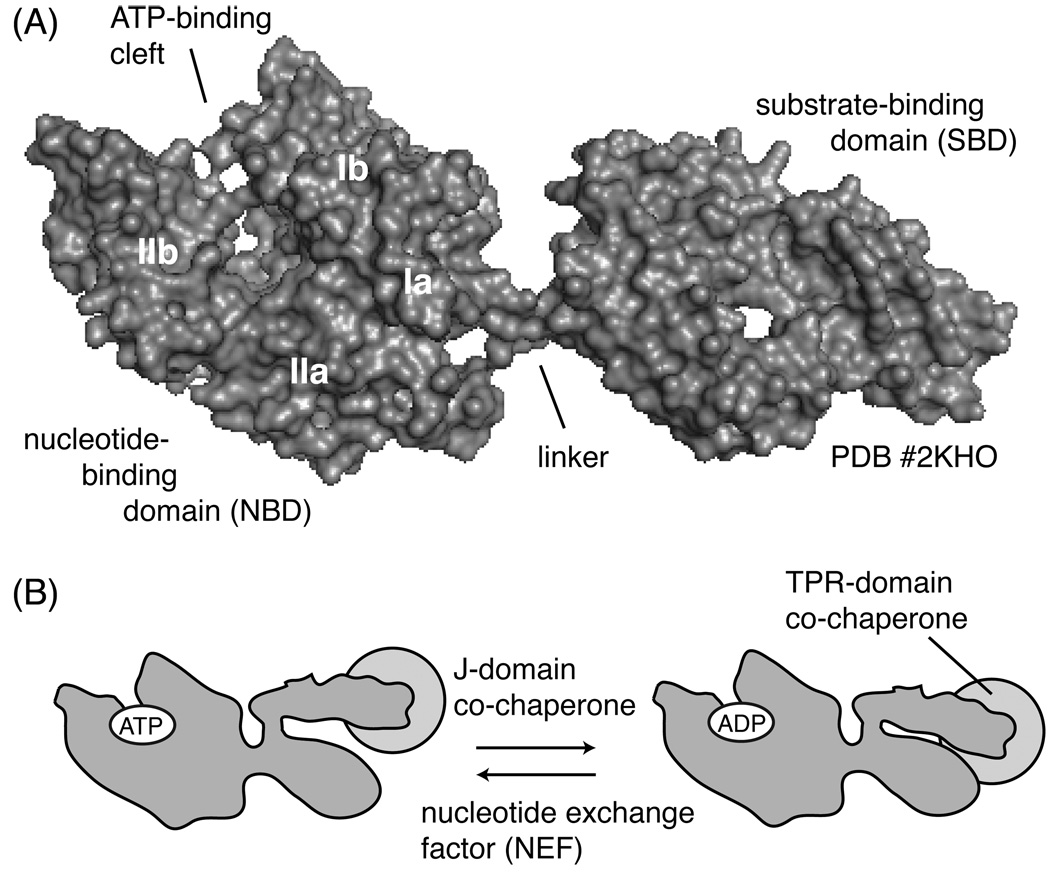
(A) Heat shock protein 70 is composed of a 45 kDa nucleotide-binding domain (NBD), connected to a 30kDa substrate-binding domain (SBD) by a short, hydrophobic linker. The SBD contains a beta-sandwich and a helical lid domain. The representative structure shown is of prokaryotic DnaK in complex with ADP and a peptide substrate (PDB # 2KHO). (B) Schematic of ATP hydrolysis and the role of co-chaperones.

Hsp70 is thought to promote survival and block apoptosis through interactions with multiple steps in the pathway. For some substrates, Hsp70’s role appears to be stabilization of the substrate, while it appears to mediate the degradation of other substrates. The regulatory mechanisms that govern these activities are not known. See the main text and Table 1 for references.
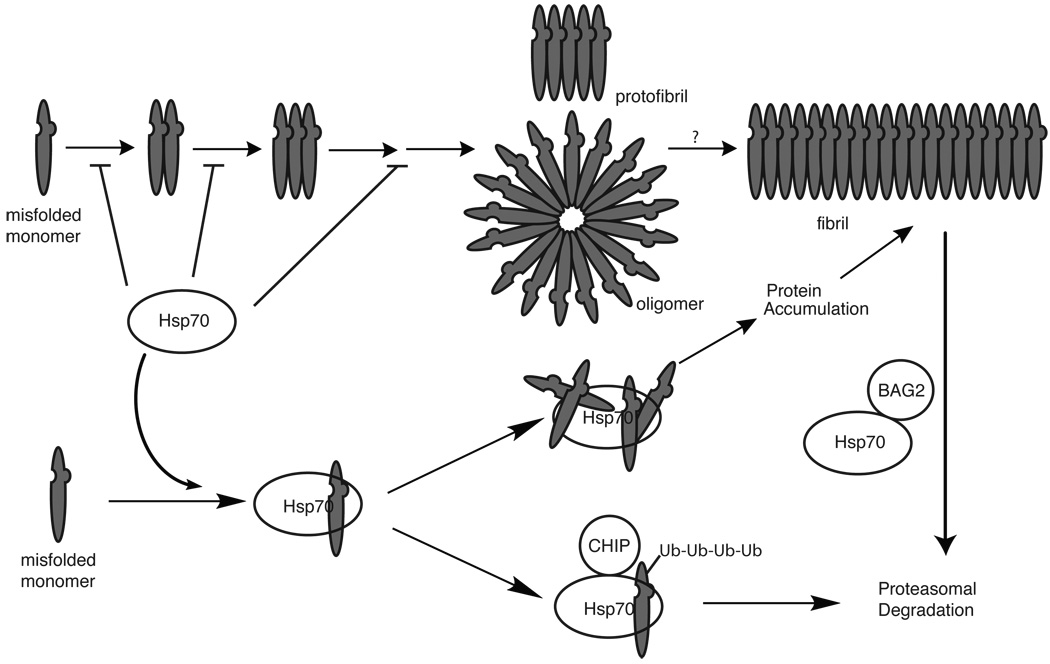
Hsp70 has been linked to multiple steps of the protein misfolding and aggregation pathway, including in preventing misfolding, blocking early stages of aggregation and in mediating the degradation of misfolded intermediates through coupling to the ubiquitin-proteasome system. The Hsp70 co-chaperones BAG2 and CHIP have both been linked to clearance of misfolded proteins. In some systems (including yeast prions), Hsp70 activity is required for fibril formation. For simplicity, this schematic encompasses broad aspects of the misfolding pathway of amyloid beta, polyglutamines and tau, although important differences likely exist. See the main text and Table 2 for references.
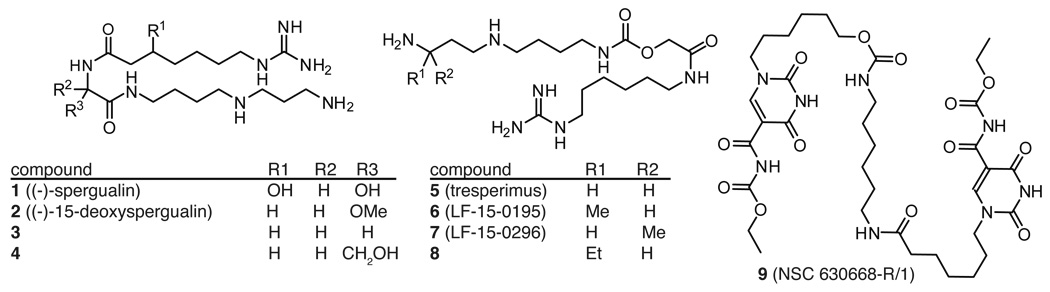
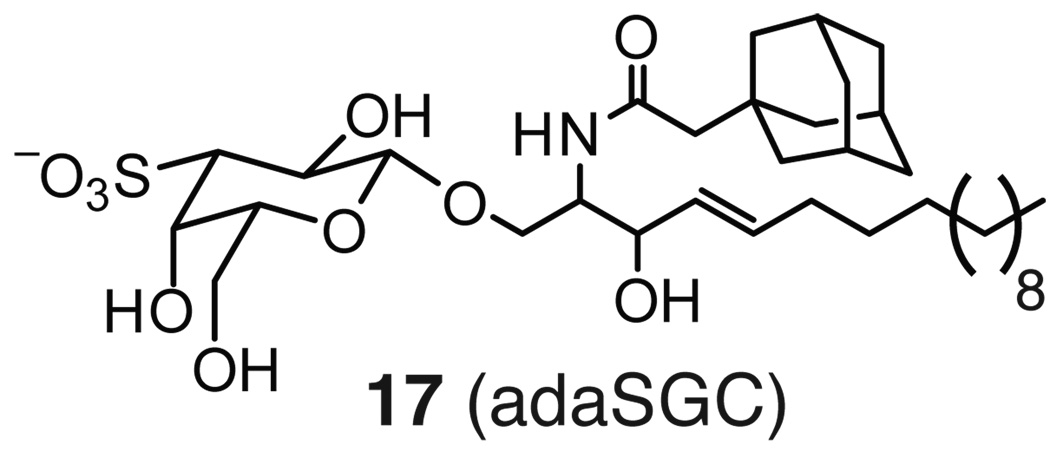
Select structures from larger series are shown for clarity. See the text for references.
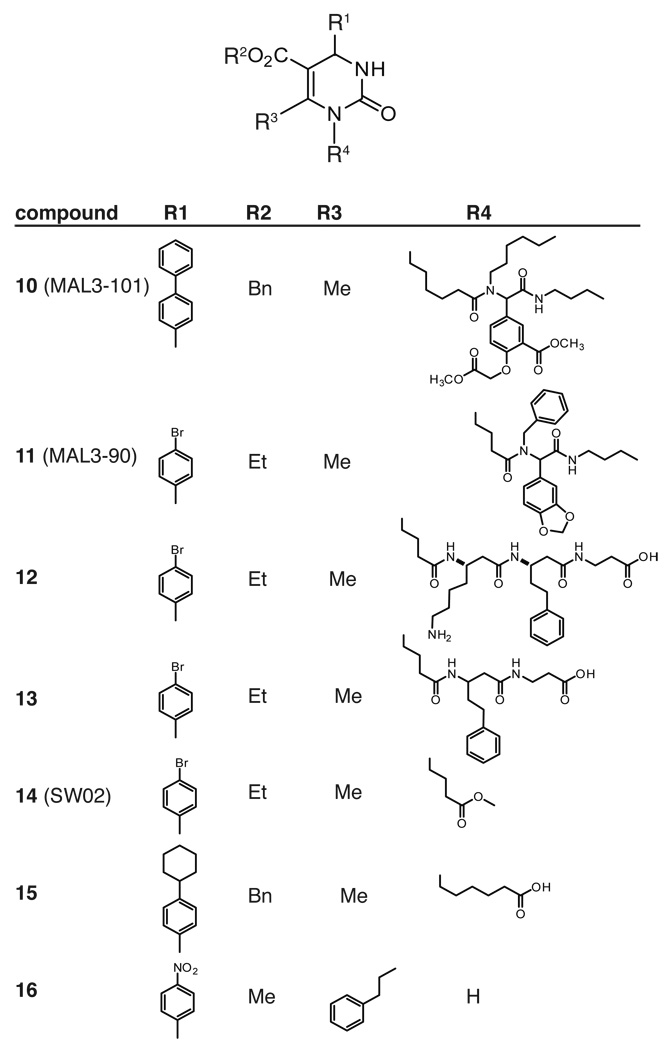
Select compounds from larger series are shown for clarity. See the text for references.
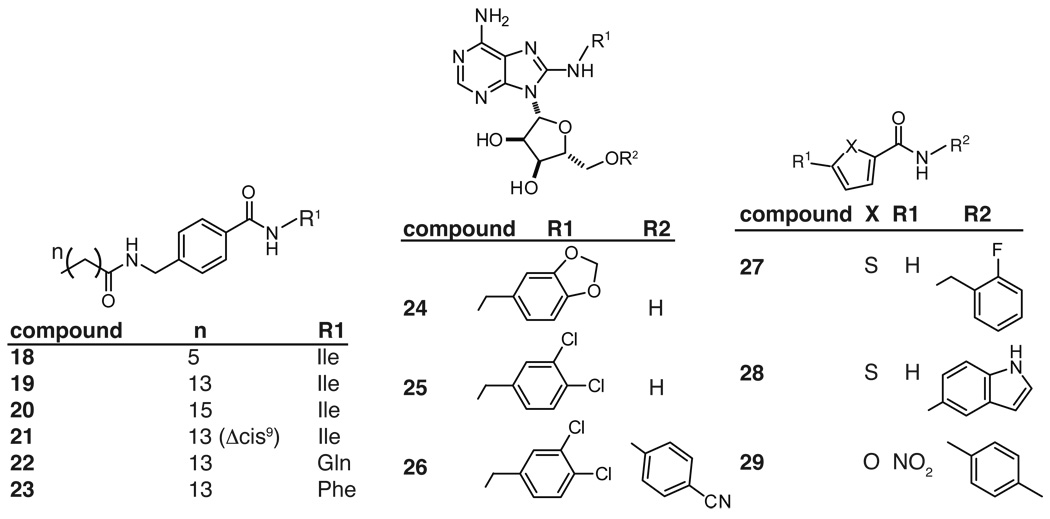
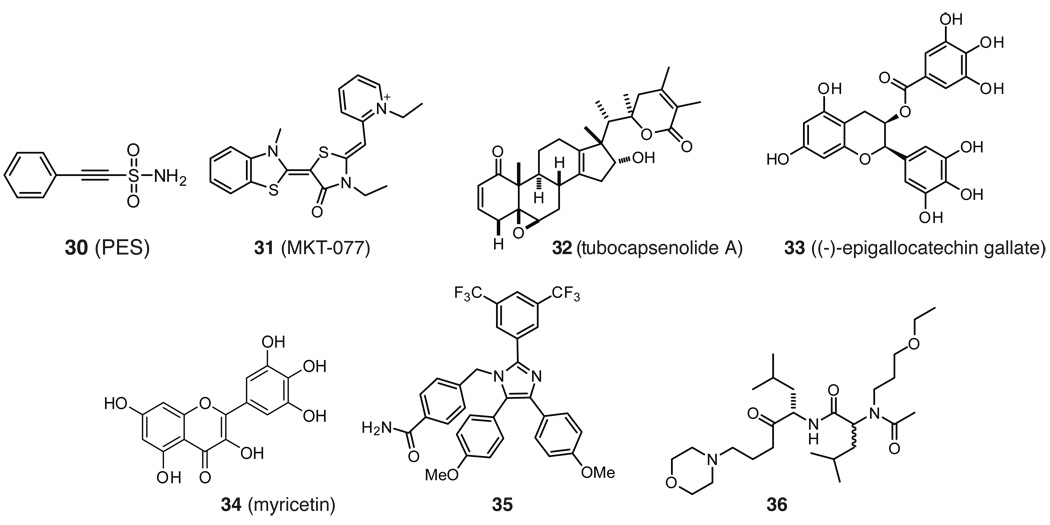
Select compounds from larger series are shown for clarity. See the text for references.
References
-
- Schaffitzel E, Rudiger S, Bukau B, Deuerling E. Functional dissection of trigger factor and DnaK: interactions with nascent polypeptides and thermally denatured proteins. Biol Chem. 2001;382:1235–1243. - PubMed
-
- Frydman J. Folding of newly translated proteins in vivo: the role of molecular chaperones. Annu Rev Biochem. 2001;70:603–647. - PubMed
-
- Pratt WB, Toft DO. Regulation of signaling protein function and trafficking by the hsp90/hsp70-based chaperone machinery. Exp Biol Med (Maywood) 2003;228:111–133. - PubMed
-
- Young JC, Barral JM, Ulrich Hartl F. More than folding: localized functions of cytosolic chaperones. Trends Biochem Sci. 2003;28:541–547. - PubMed
Publication types
MeSH terms
Substances
Grants and funding
LinkOut - more resources
Full Text Sources
Other Literature Sources
