


Seleno-L-Methionine Modulation of Nucleotide Excision DNA Repair Relevant to Cancer Prevention and Chemotherapy
- PMID: 20336178
- PMCID: PMC2844663
Seleno-L-Methionine Modulation of Nucleotide Excision DNA Repair Relevant to Cancer Prevention and Chemotherapy
Abstract
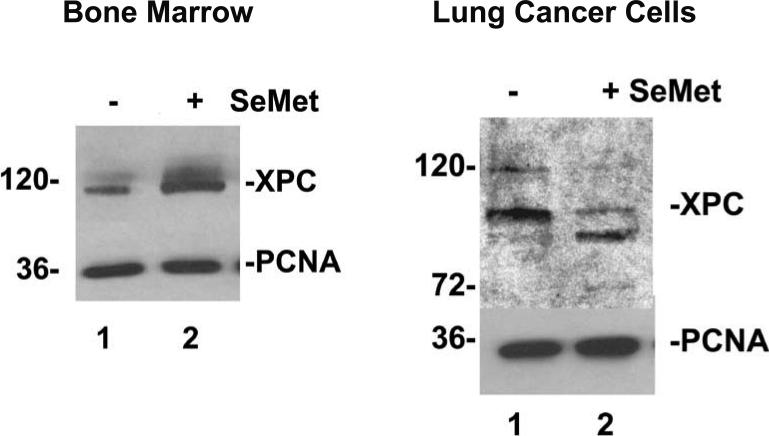
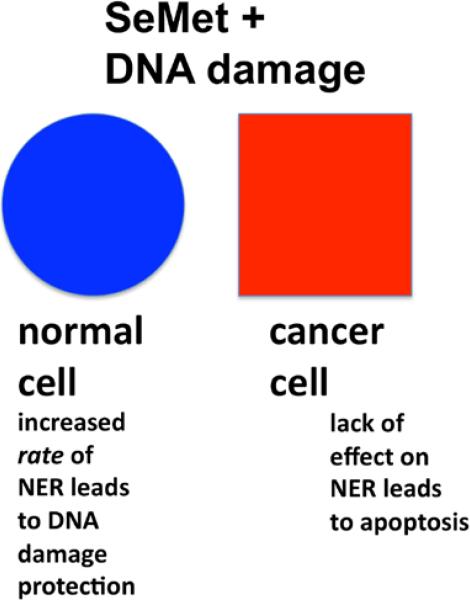
Organic selenium compounds are known to prevent certain cancers although mechanisms may be complex. A widely-held view is that selenium compounds can induce apoptosis in cancer cells, or more precisely, in aberrant cells that are undergoing clonal evolution somewhere along the carcinogenesis process. There are at least 20 different selenium compounds, inorganic as well as organic, that have been used in various published studies. Extrapolation between studies should therefore be undertaken with caution. Similarly, it will be important to ascertain the physiological relevance of the selenium concentrations used in some studies. While cancer prevention by selenium is well-established, recently, organic selenium in the form of pure seleno-L-methionine (SeMet) has been used in combination with cancer chemotherapy drugs. SeMet can induce a DNA repair response in some cell types including bone marrow. Cancer cells generally lack a SeMet-inducible DNA repair response. Thus, SeMet appears to selectively regulate a DNA repair pathway and thereby potentially alter responses to cancer chemotherapy drugs. The specific pathway implicated, nucleotide excision DNA repair (NER) is required for repair of cisplatin or carboplatin DNA damage relevant to chemotherapy. Moreover, some studies have implicated NER as a factor in carcinogenesis processes. Thus, the capacity of SeMet to selectively regulate NER may prove useful in both therapeutic and preventive contexts.
Figures
References
-
- Letavayová L, Vlasáková D, Vlcková V, Brozmanová J, Chovanec M. Rad52 has a role in the repair of sodium selenite-induced DNA damage in Saccharomyces cerevisiae. Mutat Res. 2008;652:198–203. - PubMed
-
- Hu H, Jiang C, Ip C, Rustum YM, Lu J. Methylseleninic acid potentiates apoptosis induced by chemotherapeutic drugs in androgen-independent prostate cancer cells. Clin Cancer Res. 2005;11:2379–88. - PubMed
-
- Meuillet E, Stratton S, Prasad-Cherukuri D, et al. Chemoprevention of prostate cancer with selenium: an update on current clinical trials and preclinical findings. J. Cell Biochem. 2004;91:443–58. - PubMed
-
- Clark LC, Combs GF, Jr, Turnbull BW, et al. Effects of selenium supplementation for cancer prevention in patients with carcinoma of the skin. A randomized controlled trial. Nutritional Prevention of Cancer Study Group. JAMA. 1996;276:1957–63. - PubMed
-
- Reid MC, Stratton MS, Lillico AJ, et al. A report of high-dose selenium supplementation: response and toxicities. J. Trace Elem Biol. 2004;18:69–74. - PubMed
Grants and funding
LinkOut - more resources
Full Text Sources