


Treatment-recalcitrant chronic rhinosinusitis with polyps is associated with altered epithelial cell expression of interleukin-33
- PMID: 20338108
- PMCID: PMC2904061
- DOI: 10.2500/ajra.2010.24.3446
Treatment-recalcitrant chronic rhinosinusitis with polyps is associated with altered epithelial cell expression of interleukin-33
Abstract
Background: Abnormalities in host mucosal immunity exist in chronic rhinosinusitis with nasal polyps (CRSwNPs), but it is unclear whether this is a cause or an effect of the eosinophilic inflammation and frequent microbial colonization that characterizes the disease. Sinonasal epithelial cells (SNECs) are critical participants in healthy antimicrobial innate immune defense. They also can promote Th2 inflammation with various mediators, including interleukin (IL)-33, which induces T helper cells to produce Th2 cytokines.
Methods: CRSwNP SNECs were obtained during sinus surgery and stored. Patients were subsequently classified as either treatment responsive or treatment recalcitrant, based on long-term outcomes of medical and surgical therapy. Epithelial cells from these patients were grown in air-liquid interface (ALI) culture and treated with IL-13, as well as the bacteria-associated molecule, CpG. Expression of IL-33 mRNA was determined by real-time polymerase chain reaction.
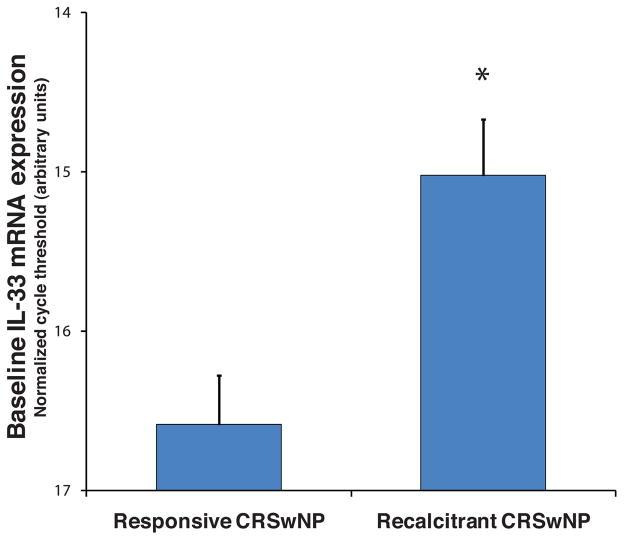
Results: Recalcitrant CRSwNP epithelial cells had increased baseline expression of IL-33 compared with responsive CRSwNPs, which was further increased by 24-hour exposure to CpG. Treatment-responsive epithelial cells were not induced by CpG to express IL-33. Prolonged treatment with IL-13 during differentiation at the ALI diminished the baseline expression of IL-33 and prevented the subsequent induction of IL-33 by CpG.
Conclusion: Mucosal innate immunity likely plays an important role in CRSwNP pathogenesis. A definitive link between infectious triggers and the development of Th2 inflammation has been elusive. We have found constitutive IL-33 expression by SNECs in recalcitrant CRSwNPs, which can be further induced by a bacteria-associated molecular pattern. Dysregulated epithelial cell immune interactions between host and environment may contribute to Th2 inflammation in CRSwNPs.
Figures


References
-
- Poetker DM, Mendolia-Loffredo S, Smith TL. Outcomes of endoscopic sinus surgery for chronic rhinosinusitis associated with sinonasal polyposis. Am J Rhinol. 2007;21:84–88. - PubMed
-
- Bhattacharyya N. Influence of polyps on outcomes after endoscopic sinus surgery. Laryngoscope. 2007;117:1834–1838. - PubMed
-
- Wynn R, Har-El G. Recurrence rates after endoscopic sinus surgery for massive sinus polyposis. Laryngoscope. 2007;114:811–813. - PubMed
-
- Vandermeer J, Sha Q, Lane AP, et al. Innate immunity of the sinonasal cavity: Expression of messenger RNA for complement for complement cascade components and toll-like receptors. Arch of Otolaryngol Head Neck Surg. 2004;130:1374–1380. - PubMed
-
- Schleimer RP, Lane AP, Kim J. Innate and acquired immunity and epithelial cell function in chronic rhinosinusitis. Clin Allergy Immunol. 2007;20:51–78. - PubMed
MeSH terms
Substances
Grants and funding
LinkOut - more resources
Full Text Sources
Other Literature Sources
Medical
