Review
. 2010 Jun;11(6):589-95.
doi: 10.1016/S1470-2045(10)70009-7. Epub 2010 Mar 24.

Multiplexed imaging in cancer diagnosis: applications and future advances

Affiliations
Review

Multiplexed imaging in cancer diagnosis: applications and future advances

Hisataka Kobayashi et al. Lancet Oncol. 2010 Jun.

Abstract

The development of imaging technologies that have sufficient specificity and sensitivity to enable early, accurate detection of cancer and response to therapy has long been a goal in oncology. Various radiological techniques have been used for diagnosis and surveillance of disease recurrence and imaging has revolutionised oncology. However, despite the widespread use of technologies, the ability of currently available imaging methods to facilitate early detection, precise characterisation, and accurate localisation of malignant disease could be improved. The simultaneous use of two or more techniques, contrast reagents, signalling methods, or the coupling of agent and tissue properties to achieve so-called multiplexed imaging is a promising approach. In this review, we provide a broad overview of current and emerging multiplexed, imaging technologies.


Conflict of interest statement

Conflicts of interest

The authors declared no conflicts of interest.

Figures
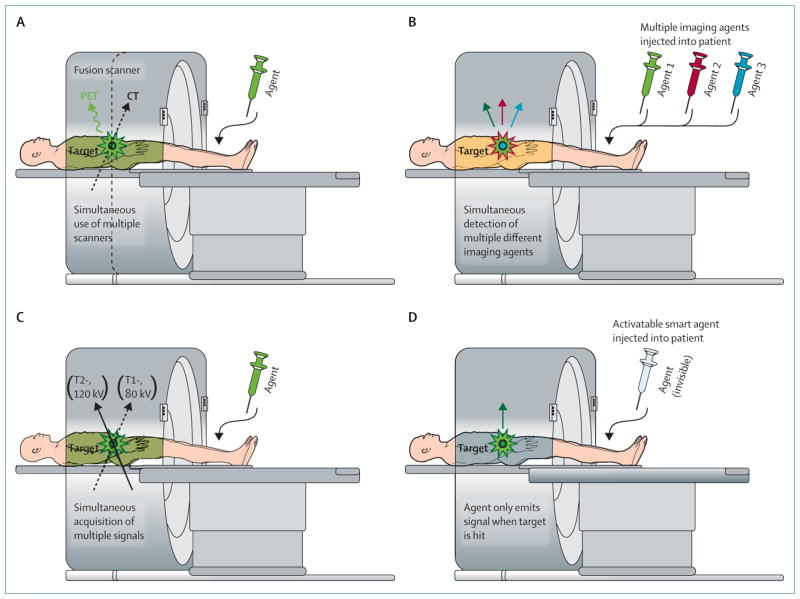
Figure 1
Figure 1. Four categories of multiplexed imaging
Multimodality (A) such as PET with CT, MR with optical, or nuclear with optical imaging. Multicolour (B) such as multiple energy single-photon-emission CT or multicolour optical image. Multisignalling (C) such as T1 and T2-weighted MRI, dual energy x-ray CT, or fluorescence intensity with lifetime fusion signalling acquisition. Activatable sensing probes (D) such as target-cell specific smart contrast agents.
Figure 2
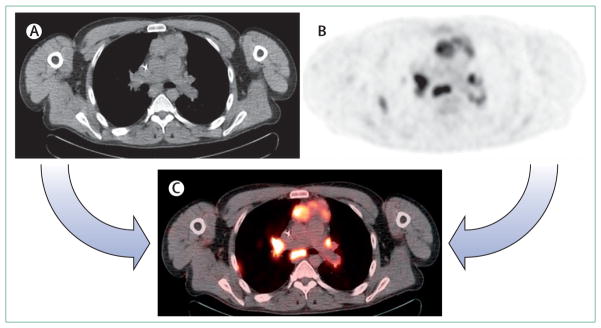
Figure 2. PET, CT, and PET–CT images of a patient with multiple mediastinal and hilar lymph node metastasis
The lesions are difficult to identify with x-ray CT scan (A). The anatomical locations of lesions are difficult to be defined with 18-fluorodeoxyglucose ([18F]FDG) PET (B). PET–CT image can easily identify all lesions and their anatomical locations (C).
Figure 3
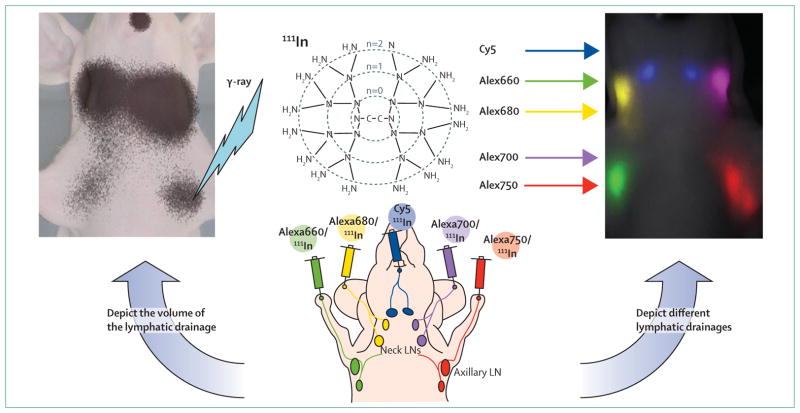
Figure 3. Multicolour, dual-modality lymphatic imaging agents
Nuclear imaging with nuclear 111In can depict quantitative lymphatic drainage from the injection site to the draining lymph nodes to identify the primary sentinel lymph node (left). Near-infrared fluorescence imaging depicts different lymphatic drainages, with distinct colours to determine the individual lymphatic drainage from several different sites in the body (right). LN=lymph node.
Figure 4
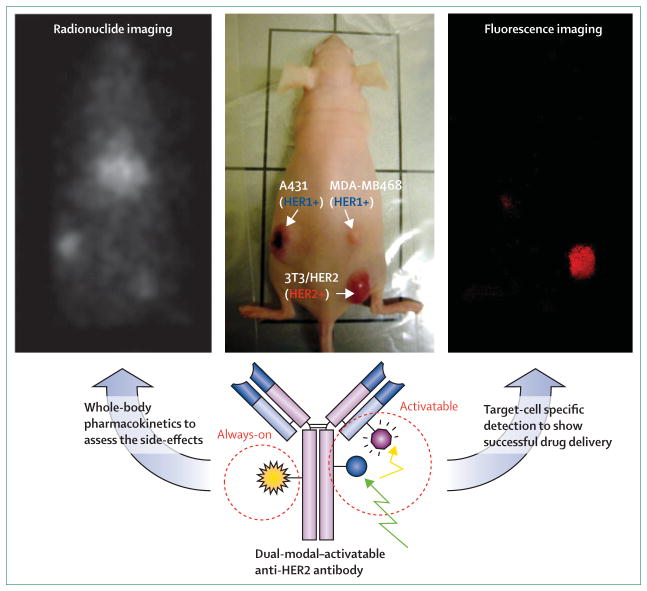
Figure 4. Nuclear imaging with optical imaging multimodality, activatable imaging agent
Nuclear imaging with 111In can show the quantitative pharmacokinetics of the agent (left), illustrating the distribution of injected reagent. This might predict the drug side-effects at the off-target site in the body. Activatable fluorescence imaging can only depict the tumour expressing the target (specific antigen) with minimum background signal (right). This shows the successful target-cell binding, followed by the processing and initiation of the reagent signal at the target cancer cells.

References

    1. Frangioni JV. New technologies for human cancer imaging. J Clin Oncol. 2008;26:4012–21. - PMC - PubMed
    1. Ben-Haim S, Ell P. 18F-FDG PET and PET/CT in the evaluation of cancer treatment response. J Nucl Med. 2009;50:88–99. - PubMed
    1. Ford EC, Herman J, Yorke E, Wahl RL. 18F-FDG PET/CT for Image-Guided and Intensity-Modulated Radiotherapy. J Nucl Med. 2009;50:1655–65. - PMC - PubMed
    1. Mawlawi O, Townsend DW. Multimodality imaging: an update on PET/CT technology. Eur J Nucl Med Mol Imaging. 2009;36 (suppl 1):S15–29. - PubMed
    1. von Schulthess GK, Steinert HC, Hany TF. Integrated PET/CT: current applications and future directions. Radiology. 2006;238:405–22. - PubMed

Publication types