


Impact of Scoring Single or Multiple Occlusal Lesions on Estimates of Diagnostic Accuracy of the Visual ICDAS-II System
- PMID: 20339467
- PMCID: PMC2836852
- DOI: 10.1155/2009/798283
Impact of Scoring Single or Multiple Occlusal Lesions on Estimates of Diagnostic Accuracy of the Visual ICDAS-II System
Abstract
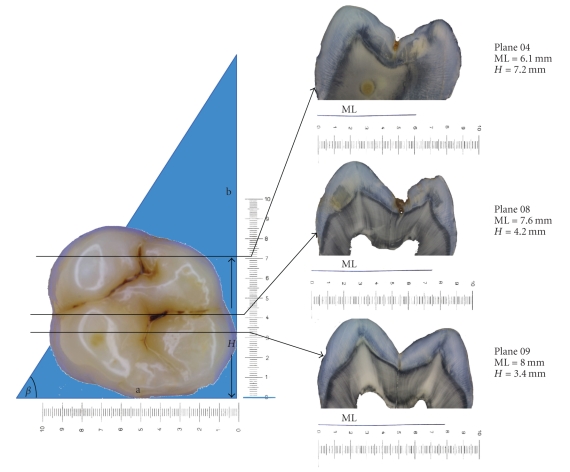
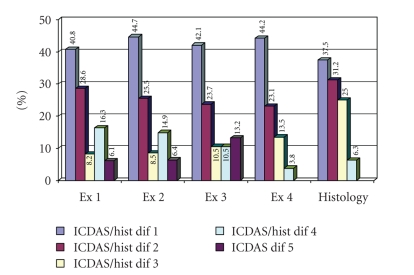
Carious lesions can occur at different sites on the occlusal surfaces of teeth and may differ in appearance and severity. This study aimed to evaluate how estimates of reproducibility and accuracy of ICDAS-II were affected when all lesions on occlusal surfaces, or only a representative lesion, were scored. 100 permanent teeth with 1-4 investigation sites on the occlusal surface were examined visually by four examiners. Serial sections of the teeth were assessed for lesion depth. Intra- and interexaminer reproducibility (weighted kappa values), sensitivity, and specificity were calculated for all investigation sites and for a randomly selected site per tooth. Comparing the kappa values for the whole sample and the independent sites, no effect or only a small effect was found. Comparing the areas under the ROC-curves no effect could be shown. Examining multiple sites on teeth leads to results comparable to when a single independent site is chosen per tooth.
Figures
References
-
- Ismail AI. Visual and visuo-tactile detection of dental caries. Journal of Dental Research. 2004;83:C56–C66. - PubMed
-
- Pitts N. “ICDAS”—an international system for caries detection and assessment being developed to facilitate caries epidemiology, research and appropriate clinical management. Community Dental Health. 2004;21(3):193–198. - PubMed
-
- Ekstrand KR, Ricketts DNJ, Kidd EAM. Reproducibility and accuracy of three methods for assessment of demineralization depth on the occlusal surface: an in vitro examination. Caries Research. 1997;31(3):224–231. - PubMed
-
- Ekstrand KR, Ricketts DNJ, Kidd EAM, Qvist V, Schou S. Detection, diagnosing, monitoring and logical treatment of occlusal caries in relation to lesion activity and severity: an in vivo examination with histological validation. Caries Research. 1998;32(4):247–254. - PubMed
LinkOut - more resources
Full Text Sources
