


SILAC analysis of oxidative stress-mediated proteins in human pneumocytes: new role for treacle
- PMID: 20340163
- PMCID: PMC5184769
- DOI: 10.1002/pmic.201000020
SILAC analysis of oxidative stress-mediated proteins in human pneumocytes: new role for treacle
Abstract
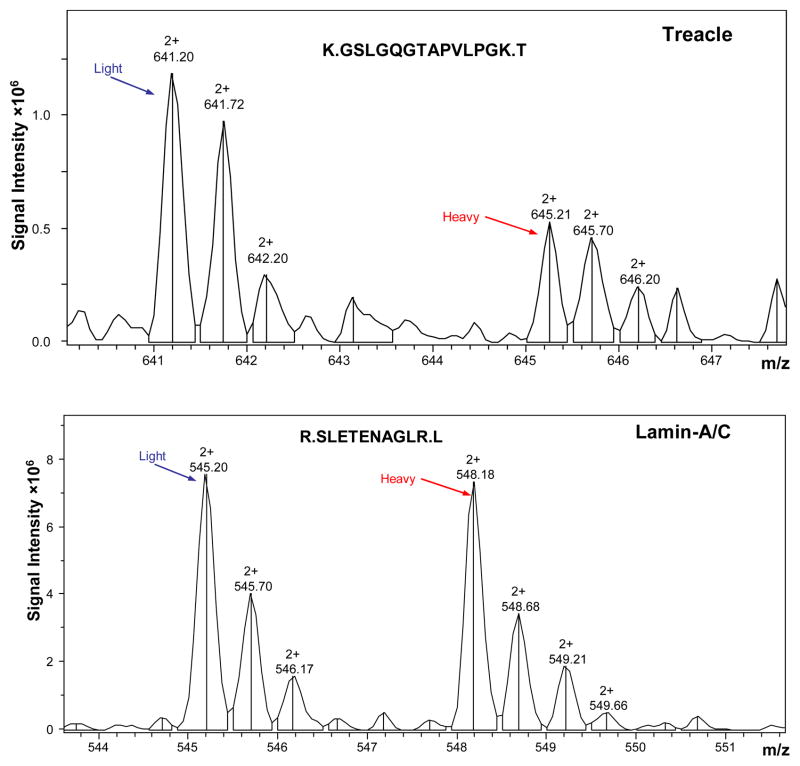
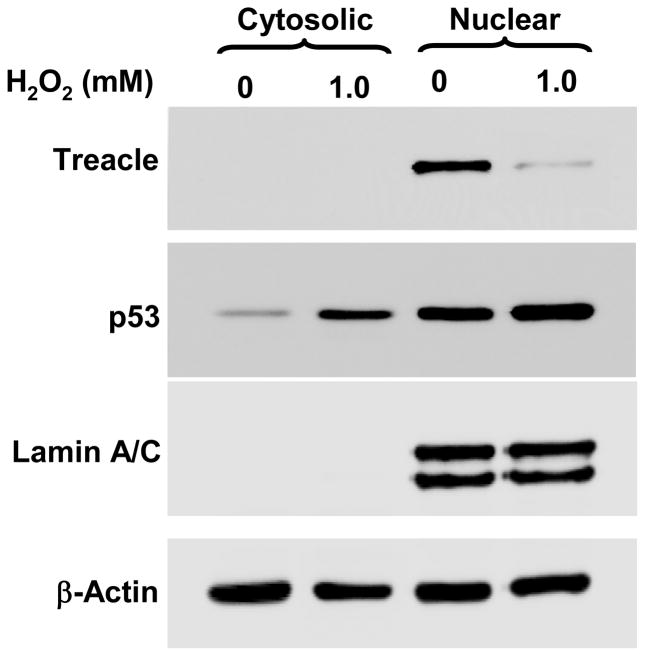
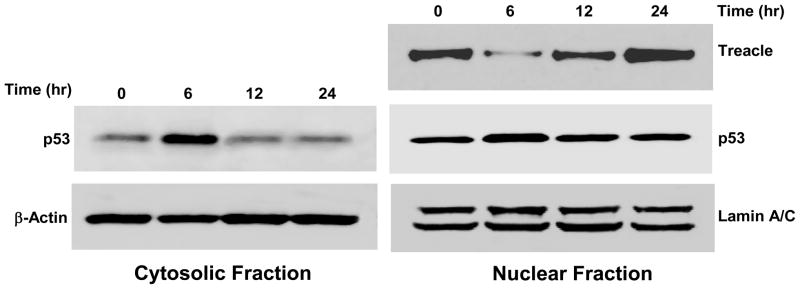
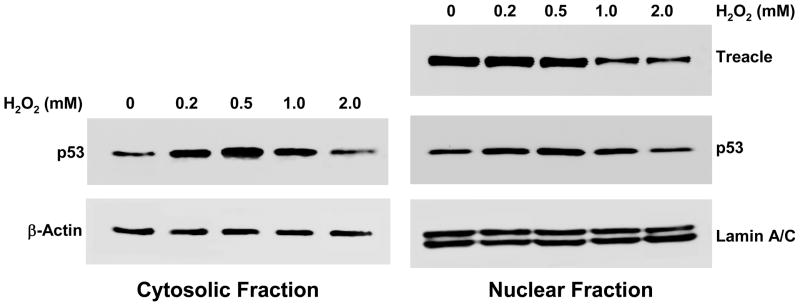
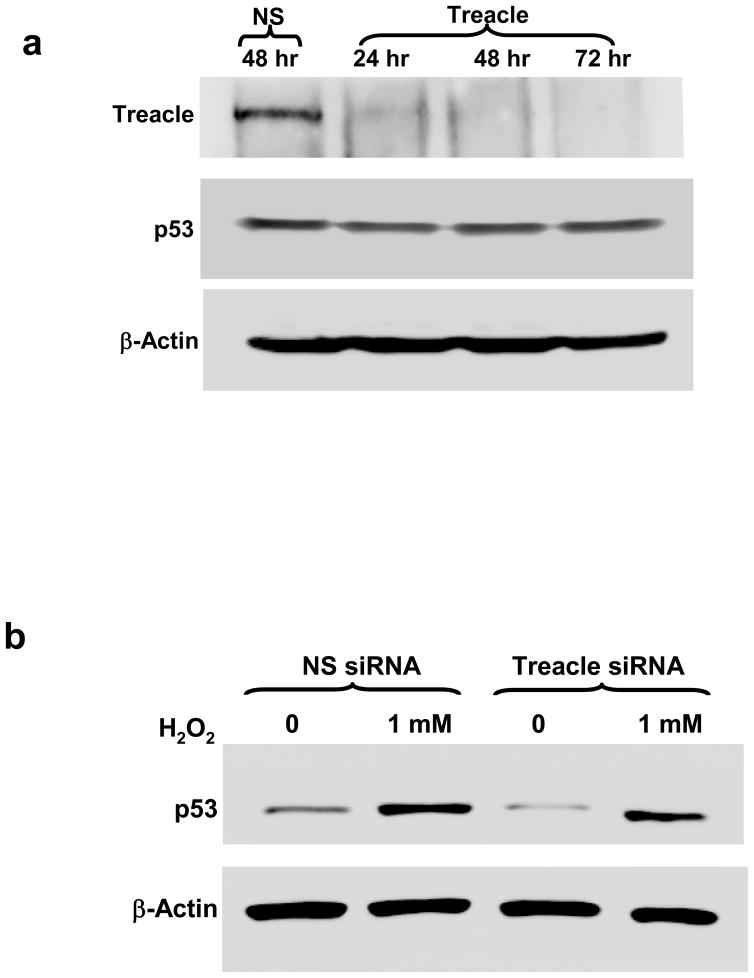
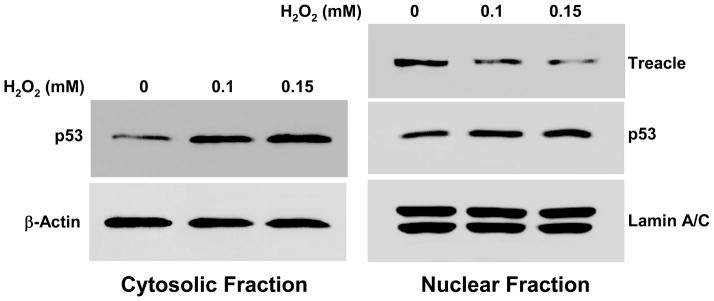
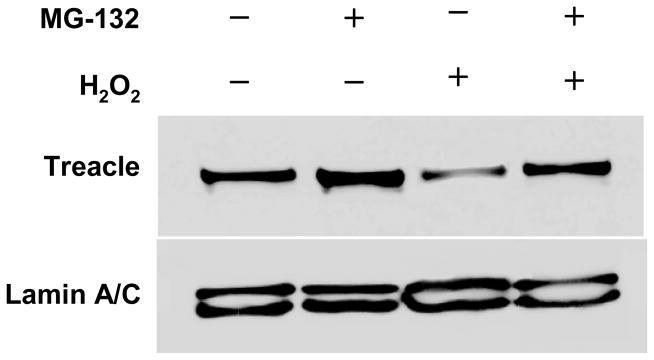
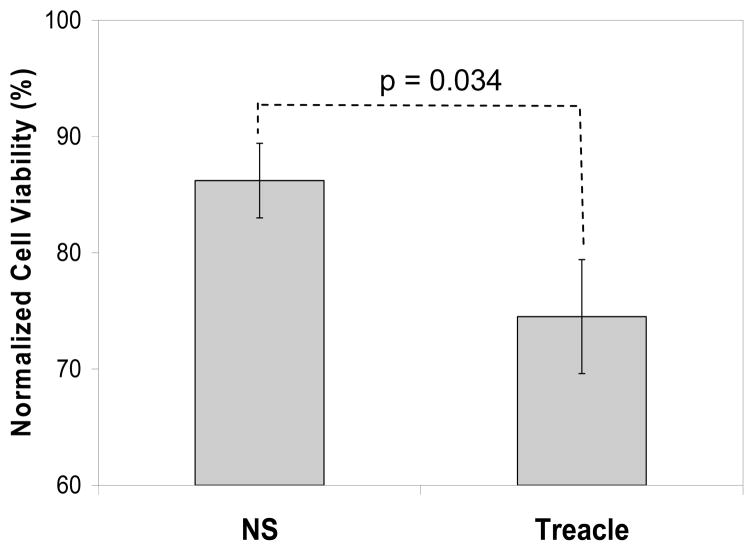
To better understand lung oxidant stress responses, we examined A549 lung cells exposed to H(2)O(2) using "stable isotope labeling by amino acids." We identified 466 cytosolic and 387 nuclear proteins; H(2)O(2) exposure produced >or=twofold differences in 31, all were downregulations. None were previously reported as oxidant stress response proteins, although they share common functions. One of the responders, treacle, was linked to p53, an important oxidative stress response. The Treacher Collins-Franceschetti syndrome can result from treacle mutation and insufficiency was suggested to cause increased p53 leading to the syndrome. However, results here indicate p53 and treacle responses to H(2)O(2) are independent: treacle remains suppressed after p53 recovery; the threshold for treacle reduction is well above that for p53 induction; and treacle suppression by short interfering RNA does not modify the p53 response. Evidence of treacle antioxidant activity include reduction being driven by proteasome degradation independently of mRNA, typical for oxidant-absorbing proteins, and increased sensitivity to H(2)O(2) consequent to short interfering RNA suppression. Data here show a link between oxidative stress and treacle reduction, demonstrate that treacle does not control p53, provide evidence of a treacle oxidant defense role, support the hypothesis that oxidant stress plays a role in the Treacher Collins-Franceschetti syndrome, and raise the possibility that treacle plays an anti-oxidant role in lungs.
Figures
References
-
- Yoshida T, Tuder RM. Pathobiology of cigarette smoke-induced chronic obstructive pulmonary disease. Physiol Rev. 2007;87:1047–82. - PubMed
-
- Martindale JL, Holbrook NJ. Cellular response to oxidative stress: signaling for suicide and survival. J Cell Physiol. 2002;192:1–15. - PubMed
-
- Duan X, Kelsen SG, Merali S. Proteomic analysis of oxidative stress-responsive proteins in human pneumocytes: insight into the regulation of DJ-1 expression. J Proteome Res. 2008;7:4955–61. - PubMed
-
- Yang Y, Gehrke S, Haque ME, Imai Y, Kosek J, Yang L, Beal MF, Nishimura I, Wakamatsu K, Ito S, Takahashi R, Lu B. Inactivation of Drosophila DJ-1 leads to impairments of oxidative stress response and phosphatidylinositol 3-kinase/Akt signaling. Proc Natl Acad Sci U S A. 2005;102:13670–5. - PMC - PubMed
-
- Moll UM, Marchenko N, Zhang XK. p53 and Nur77/TR3 - transcription factors that directly target mitochondria for cell death induction. Oncogene. 2006;25:4725–43. - PubMed
Publication types
MeSH terms
Substances
Grants and funding
LinkOut - more resources
Full Text Sources
Research Materials
Miscellaneous
