


Rapid phasic activity of ventral pallidal neurons during cocaine self-administration
- PMID: 20340176
- PMCID: PMC2904430
- DOI: 10.1002/syn.20792
Rapid phasic activity of ventral pallidal neurons during cocaine self-administration
Abstract
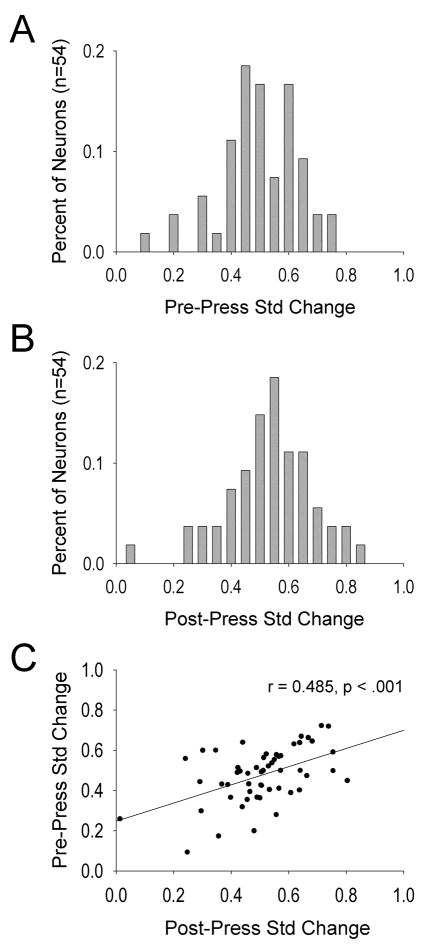
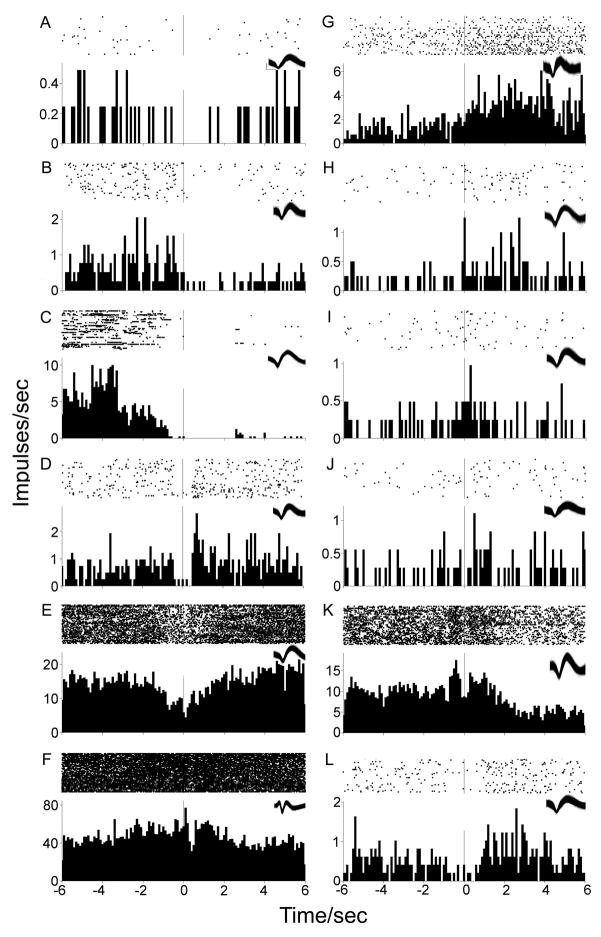
Little is known regarding the involvement of the ventral pallidum (VP) in cocaine-seeking behavior, in contrast with considerable documentation of the involvement of its major afferent, the nucleus accumbens, over the past thirty years utilizing electrophysiology, lesion, inactivation, molecular, imaging, and other approaches. The VP is neuroanatomically positioned to integrate signals projected from the nucleus accumbens, basolateral amygdala, and ventral tegmental area. In turn, VP projects to thalamoprefrontal, subthalamic, and mesencephalic dopamine regions having widespread influence across mesolimbic, mesocortical, and nigrostriatal systems. Prior lesion studies have implicated VP in cocaine-seeking behavior, but the electrophysiological mechanisms underlying this behavior in the VP have not been investigated. In the present investigation, following 2 weeks of training over which animals increased drug intake, VP phasic activity comprised rapid-phasic increases or decreases in firing rate during the seconds prior to and/or following cocaine-reinforced responses, similar to those found in accumbens. As a population, the direction (increasing or decreasing) and magnitude of firing rate changes were normally distributed suggesting that ventral striatopallidal processing is heterogeneous. Since changes in firing rate around the cocaine-reinforced lever press occurred in animals that escalated drug intake prior to neuronal recordings, a marker of "addiction-like behavior" in the rat, the present experiment provides novel support for a role of VP in drug-seeking behavior. This is especially important given that pallidothalamic and pallidomesencephalic VP projections are positioned to alter dopaminoceptive targets such as the medial prefrontal cortex, nucleus accumbens, and dorsal striatum, all of which have roles in cocaine self-administration.
Figures
References
-
- Ahmed SH, Koob GF. Transition from moderate to excessive drug intake: change in hedonic set point. Science. 1998;282(5387):298–300. - PubMed
-
- Alexander GE, DeLong MR, Strick PL. Parallel organization of functionally segregated circuits linking basal ganglia and cortex. Annu Rev Neurosci. 1986;9:357–381. - PubMed
-
- Belin D, Everitt BJ. Cocaine seeking habits depend upon dopamine-dependent serial connectivity linking the ventral with the dorsal striatum. Neuron. 2008;57(3):432–441. - PubMed
-
- Bell K, Churchill L, Kalivas PW. GABAergic projection from the ventral pallidum and globus pallidus to the subthalamic nucleus. Synapse. 1995;20(1):10–18. - PubMed
-
- Bevan MD, Smith AD, Bolam JP. The substantia nigra as a site of synaptic integration of functionally diverse information arising from the ventral pallidum and the globus pallidus in the rat. Neuroscience. 1996;75(1):5–12. - PubMed
Publication types
MeSH terms
Substances
Grants and funding
LinkOut - more resources
Full Text Sources
Other Literature Sources
Research Materials
Miscellaneous