


Intrinsic functional connectivity of the periaqueductal gray, a resting fMRI study
- PMID: 20347878
- PMCID: PMC2862838
- DOI: 10.1016/j.bbr.2010.03.042
Intrinsic functional connectivity of the periaqueductal gray, a resting fMRI study
Abstract
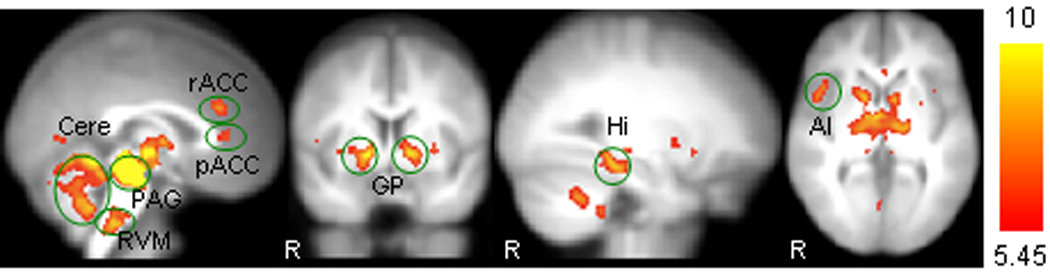
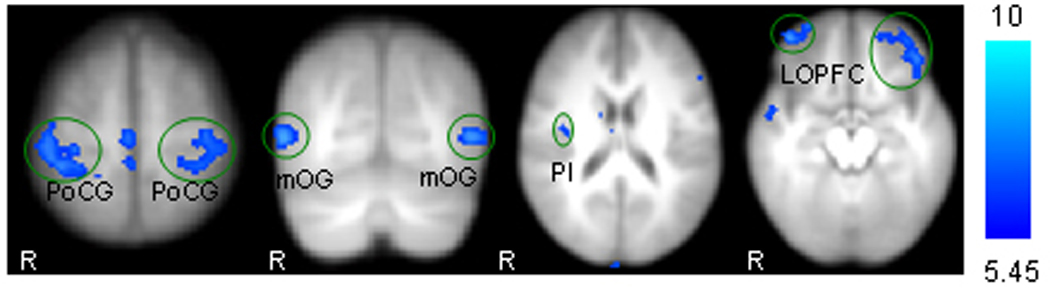
The periaqueductal gray (PAG) is known to play a crucial role in pain modulation and has shown a strong interaction with anterior cingulate cortex in previous functional imaging studies. We investigated the intrinsic functional connectivity of PAG using resting fMRI data from 100 subjects. The results showed that PAG is functionally connected to ACC (rostral and pregenual ACC) and also rostral ventromedial medulla (RVM), forming a core ACC-PAG-RVM network for pain modulation even no pain stimulus is applied. The comparison between genders showed that for the contrast of female minus male, significant difference was observed at mid-cingulate cortex; for the contrast of male minus female, significant differences were observed at left medial orbital prefrontal cortex, and uncus; right insula/operculum and prefrontal cortex. We believe eluciation of this intrinsic PAG network during the resting state will enhance our physiological and pathological understandings of the development and maintenance of chronic pain states.
Copyright 2010 Elsevier B.V. All rights reserved.
Figures
References
-
- Antonijevic I. HPA axis and sleep: identifying subtypes of major depression. Stress. 2008;11:15–27. - PubMed
-
- Bandler R, Shipley MT. Columnar organization in the midbrain periaqueductal gray: modules for emotional expression? Trends Neurosci. 1994;17:379–389. - PubMed
-
- Baskin DS, Mehler WR, Hosobuchi Y, Richardson DE, Adams JE, Flitter MA. Autopsy analysis of the safety, efficacy and cartography of electrical stimulation of the central gray in humans. Brain Res. 1986;371:231–236. - PubMed
Publication types
MeSH terms
Grants and funding
LinkOut - more resources
Full Text Sources
