


The frequency, clinical significance, and pathological features of chronic chorioamnionitis: a lesion associated with spontaneous preterm birth
- PMID: 20348884
- PMCID: PMC3096929
- DOI: 10.1038/modpathol.2010.73
The frequency, clinical significance, and pathological features of chronic chorioamnionitis: a lesion associated with spontaneous preterm birth
Abstract
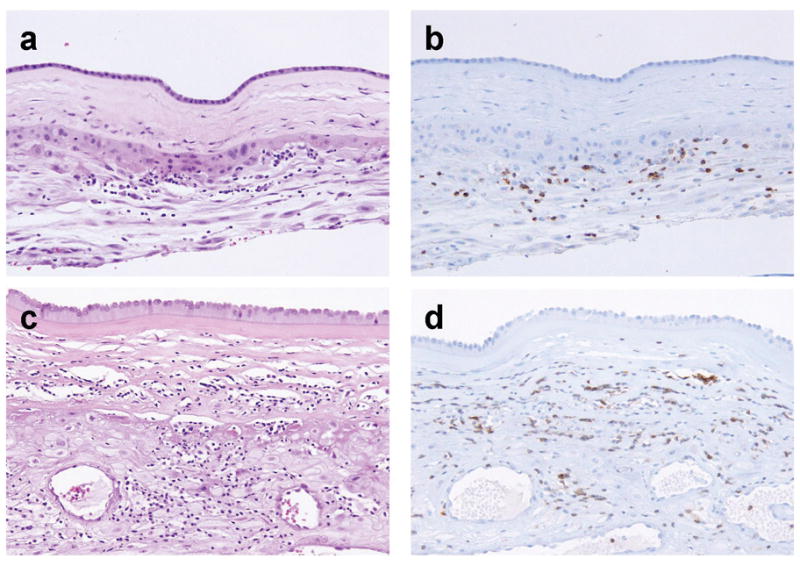
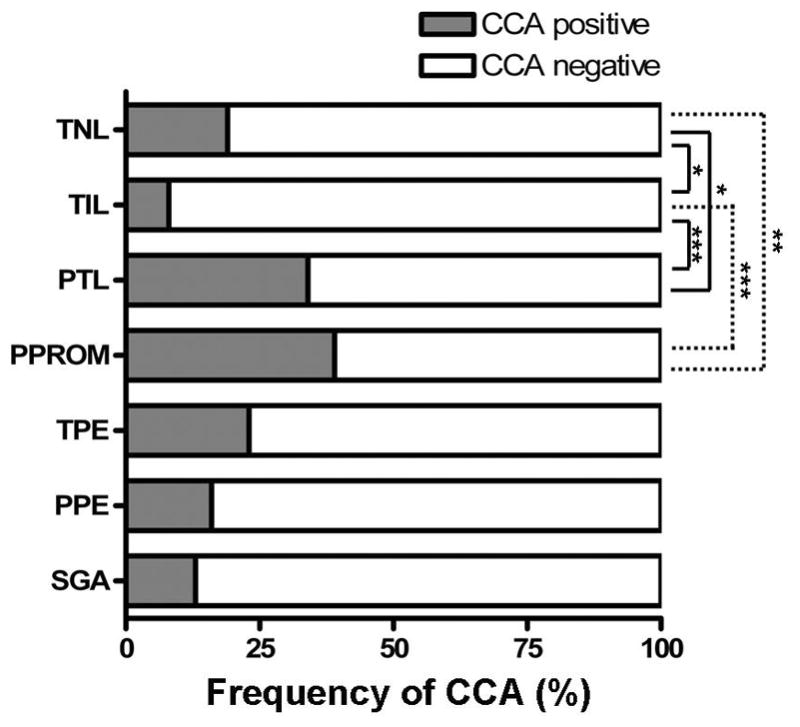
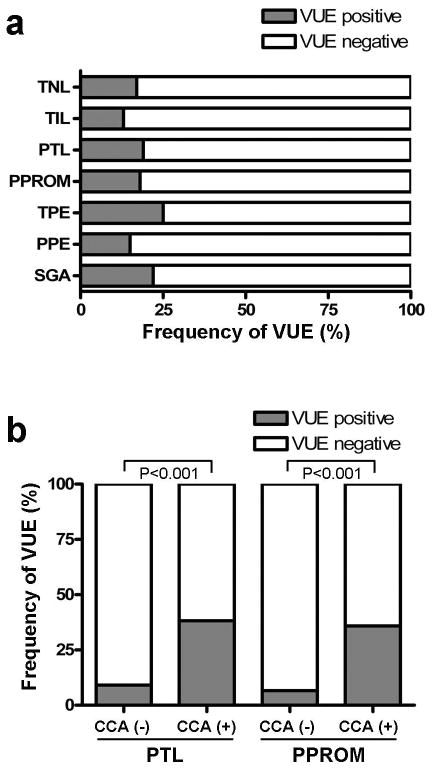
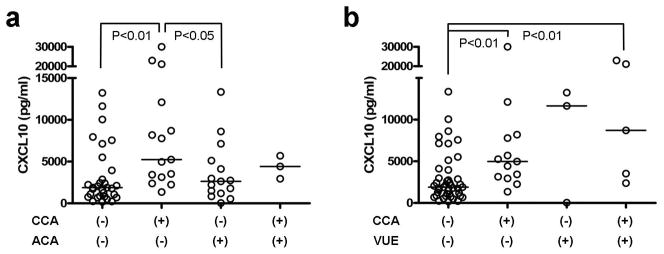
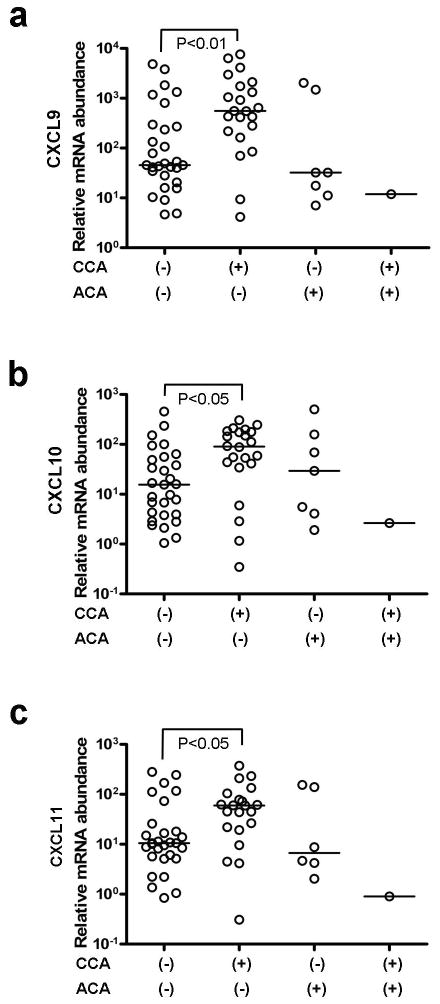
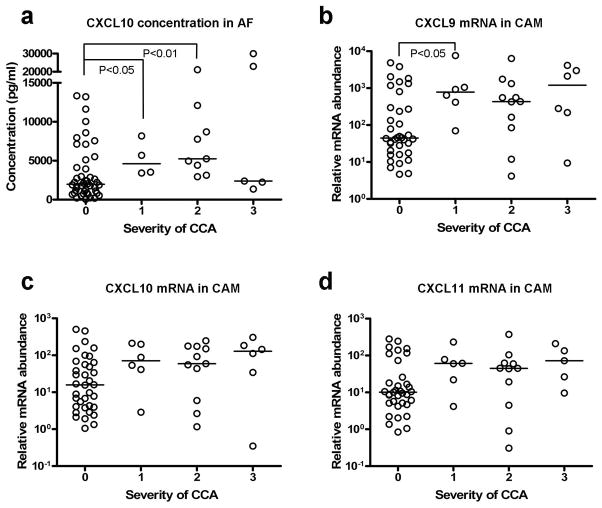
Acute chorioamnionitis is a well-established lesion of the placenta in cases with intra-amniotic infection. In contrast, the clinicopathological significance of chronic chorioamnionitis is unclear. This study was conducted to determine the frequency and severity of chronic chorioamnionitis in normal pregnancy and in various pregnancy complications. Placentas from the following patient groups were studied: (1) term not in labor (n=100), (2) term in labor (n=100), (3) preterm labor (n=100), (4) preterm prelabor rupture of membranes (n=100), (5) preeclampsia at term (n=100), (6) preterm preeclampsia (n=100), and (7) small-for-gestational-age at term (n=100). Amniotic fluid CXCL10 concentration was measured in 64 patients. CXCL9, CXCL10, and CXCL11 mRNA expressions in the chorioamniotic membranes were assessed using real-time quantitative reverse transcription-PCR. The frequency of chronic chorioamnionitis in the preterm labor group and the preterm prelabor rupture of membranes group was 34 and 39%, respectively, which was higher than that of normal-term placentas (term not in labor, 19%; term in labor, 8%; P<0.05 each). The frequency of chronic chorioamnionitis in the preeclampsia at term group, preterm preeclampsia group, and small-for-gestational-age group was 23, 16, and 13%, respectively. Concomitant villitis of unknown etiology was found in 38 and 36% of preterm labor cases and preterm prelabor rupture of membranes cases with chronic chorioamnionitis, respectively. Interestingly, the median gestational age of preterm chronic chorioamnionitis cases was higher than that of acute chorioamnionitis cases (P<0.05). The median amniotic fluid CXCL10 concentration was higher in cases with chronic chorioamnionitis than in those without, in both the preterm labor group and preterm prelabor rupture of membranes group (P<0.05 and P<0.01, respectively). CXCL9, CXCL10, and CXCL11 mRNA expression in the chorioamniotic membranes was also higher in cases with chronic chorioamnionitis than in those without chronic chorioamnionitis (P<0.05). We propose that chronic chorioamnionitis defines a common placental pathological lesion among the preterm labor and preterm prelabor rupture of membranes groups, especially in cases of late preterm birth. Its association with villitis of unknown etiology and the chemokine profile in amniotic fluid suggests an immunological origin, akin to transplantation rejection and graft-versus-host disease in the chorioamniotic membranes.
Conflict of interest statement
The authors declare no conflict of interest.
Figures
References
-
- Faye-Petersen OM. The placenta in preterm birth. J Clin Pathol. 2008;61:1261–1275. - PubMed
-
- Davidoff MJ, Dias T, Damus K, et al. Changes in the gestational age distribution among U.S. singleton births: impact on rates of late preterm birth, 1992 to 2002. Semin Perinatol. 2006;30:8–15. - PubMed
-
- Hagberg H, Mallard C, Jacobsson B, et al. Role of cytokines in preterm labour and brain injury. Bjog. 2005;112:16–18. - PubMed
-
- Romero R, Gotsch F, Pineles B, et al. Inflammation in pregnancy: its roles in reproductive physiology, obstetrical complications, and fetal injury. Nutr Rev. 2007;65:S194–S202. - PubMed
Publication types
MeSH terms
Substances
Grants and funding
LinkOut - more resources
Full Text Sources
Medical
Research Materials
