


Use of clinical alerting to improve the collection of clinical research data
- PMID: 20351853
- PMCID: PMC2815392
Use of clinical alerting to improve the collection of clinical research data
Abstract
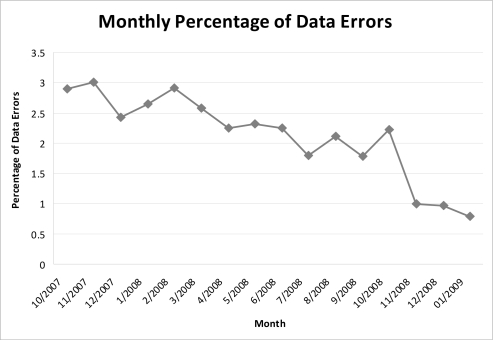
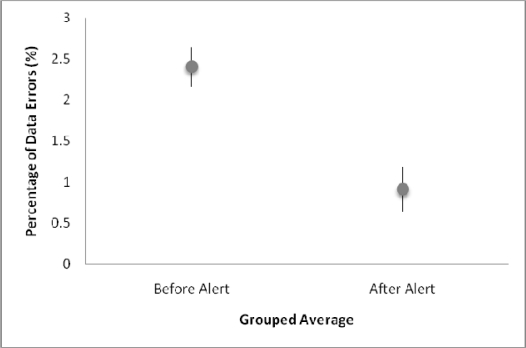
Data errors in electronic health records have been shown to have the potential to adversely impact the conclusions drawn from clinical research. We prospectively studied the efficacy of a new alert to infer errors in previously stored data and to decrease the frequency of data entry errors, in an attempt to improve the quality of data for clinical trials. For the purpose of this study, we monitored data entry errors in height or weight measurements. We predetermined the criteria for probable error as a ten percent variance from a patient's reference value. The care provider entering a value satisfying our error criteria received a disruptive pop-up alert message. The study revealed a significant decrease in the frequency of data errors stored in the EHR, from 2.4% before the alert to 0.9% after the alert. These findings have implications for the development of clinical research trial data collection support tools.
Figures
References
-
- Wood James.Dictionary of Quotations from Ancient and Modern English and Foreign Sources London: Frederick Warne and Co; 1899(“Einer neunen Wahrheit nichts ist schadlicher als ein alter Irrtum” -Johann Wolfgang von Goethe)
-
- Gallivan S, Stark J, Pagel C, Williams G, Williams WG. Dead reckoning: can we trust estimates of mortality rates in clinical databases? Eur J of Cardiothoracic Surg. 2008;33:334–340. - PubMed
-
- Davis JR, Nolan VP, Woodcock J, Estabrook RW. Assuring Data Quality and Validity in Clinical Trials for Regulatory Decision Making: Institute of Medicine. Washington, DC: National Academy Press; 1999. - PubMed
Publication types
MeSH terms
Grants and funding
LinkOut - more resources
Full Text Sources
Medical