


Surmounting the unique challenges in health disparities education: a multi-institution qualitative study
- PMID: 20352503
- PMCID: PMC2847111
- DOI: 10.1007/s11606-010-1269-1
Surmounting the unique challenges in health disparities education: a multi-institution qualitative study
Abstract
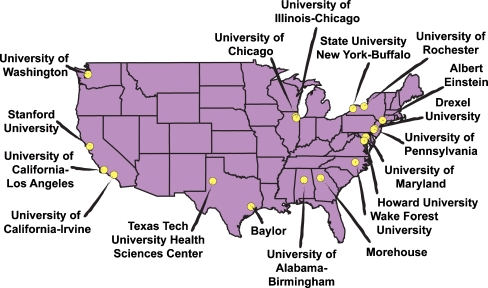
Background: The National Consortium for Multicultural Education for Health Professionals (Consortium) comprises educators representing 18 US medical schools, funded by the National Institutes of Health. Collective lessons learned from curriculum implementation by principal investigators (PIs) have the potential to guide similar educational endeavors.
Objective: Describe Consortium PI's self-reported challenges with curricular development, solutions and their new curricular products.
Methods: Information was collected from PIs over 2 months using a 53-question structured three-part questionnaire. The questionnaire addressed PI demographics, curriculum implementation challenges and solutions, and newly created curricular products. Study participants were 18 Consortium PIs. Descriptive analysis was used for quantitative data. Narrative responses were analyzed and interpreted using qualitative thematic coding.
Results: Response rate was 100%. Common barriers and challenges identified by PIs were: finding administrative and leadership support, sustaining the momentum, continued funding, finding curricular space, accessing and engaging communities, and lack of education research methodology skills. Solutions identified included engaging stakeholders, project-sharing across schools, advocacy and active participation in committees and community, and seeking sustainable funding. All Consortium PIs reported new curricular products and extensive dissemination efforts outside their own institutions.
Conclusion: The Consortium model has added benefits for curricular innovation and dissemination for cultural competence education to address health disparities. Lessons learned may be applicable to other educational innovation efforts.
References
-
- The Right to Equal Treatment: An Action Plan to End Racial and Ethnic Disparities in Clinical Diagnosis and Treatment in the United States. Cambridge: Physicians for Human Rights; 2003.
-
- Smedley BD, Stith AY, Nelson AR. eds. Unequal Treatment: Confronting Racial and Ethnic Disparities in Health Care. Washington, DC: National Academies Press, Institute of Medicine, Committee on Understanding and Eliminating Racial and Ethnic Disparities in Health Care: 2002.
-
- Functions and Structure of a Medical School: LCME Accreditation Standards. Washington: Association of American Medical Colleges; 2008.
-
- Accreditation Council for Graduate Medical Education (ACGME). Outcome Project. General Competencies: Minimum Program Requirements Language. 1999. Available at: http://www.acgme.org/outcome/comp/compMin.asp. Accessed December 14, 2009.
Publication types
MeSH terms
Grants and funding
LinkOut - more resources
Full Text Sources
Medical
Research Materials
Miscellaneous
