


The effects of acute and chronic exercise on the vasculature
- PMID: 20353494
- PMCID: PMC3059589
- DOI: 10.1111/j.1748-1716.2010.02127.x
The effects of acute and chronic exercise on the vasculature
Abstract
Regular physical activity (endurance training, ET) has a strong positive link with cardiovascular health. The aim of this review is to draw together the current knowledge on gene expression in different cell types comprising the vessels of the circulatory system, with special emphasis on the endothelium, and how these gene products interact to influence vascular health. The effect beneficial effects of ET on the endothelium are believed to result from increased vascular shear stress during ET bouts. A number of mechanosensory mechanisms have been elucidated that may contribute to the effects of ET on vascular function, but there are questions regarding interactions among molecular pathways. For instance, increases in flow brought on by ET can reduce circulating levels of viscosity and haemostatic and inflammatory variables that may interact with increased shear stress, releasing vasoactive substances such as nitric oxide and prostacyclin, decreasing permeability to plasma lipoproteins as well as the adhesion of leucocytes. At this time the optimal rate-of-flow and rate-of-change in flow for determining whether anti-atherogenic or pro-atherogenic processes proceed remain unknown. In addition, the impact of haemodynamic variables differs with vessel size and tissue type in which arteries are located. While the hurdles to understanding the mechanism responsible for ET-induced alterations in vascular cell gene expression are significant, they in no way undermine the established benefits of regular physical activity to the cardiovascular system and to general overall health. This review summarizes current understanding of control of vascular cell gene expression by exercise and how these processes lead to improved cardiovascular health.
Figures
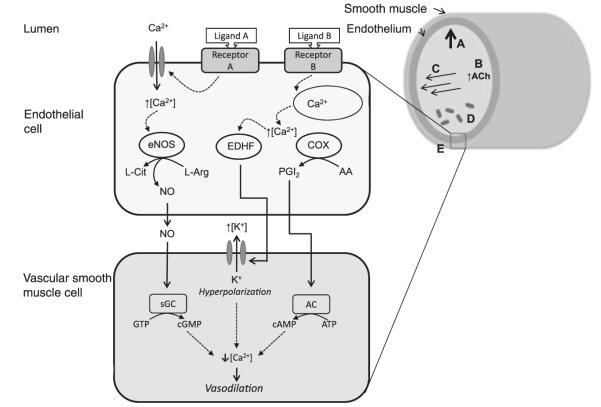
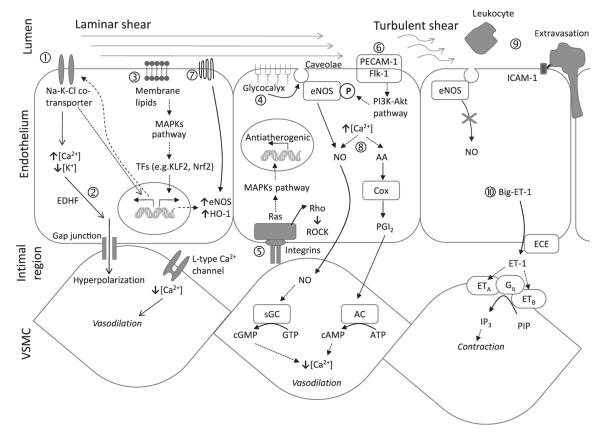
 , gene transcription; ICAM1, intercellular adhesion molecule 1; KLF2, Krüppel-like factor 2; MAPK, mitogen-activated protein kinase; Nrf2, nuclear factor erythroid 2-like 2; PGI2, prostacyclin; sGC, soluble guanylate cyclase; TFs, transcription factors.
References
-
- Abumiya T, Sasaguri T, Taba Y, Miwa Y, Miyagi M. Shear stress induces expression of vascular endothelial growth factor receptor Flk-1/KDR through the CT-rich Sp1 binding site. Arterioscler Thromb Vasc Biol. 2002;22:907–913. - PubMed
-
- Augustin HG, Koh GY, Thurston G, Alitalo K. Control of vascular morphogenesis and homeostasis through the angiopoietin-Tie system. Nat Rev Mol Cell Biol. 2009;10:165–177. - PubMed
-
- Beaglehole R, Ebrahim S, Reddy S, Voûte J, Leeder S. Prevention of chronic diseases: a call to action. Lancet. 2007;370:2152–2157. - PubMed
-
- Bellien J, Thuillez C, Joannides R. Contribution of endothelium-derived hyperpolarizing factors to the regulation of vascular tone in humans. Fundam Clin Pharmacol. 2008;22:363–377. - PubMed
Publication types
MeSH terms
Substances
Grants and funding
LinkOut - more resources
Full Text Sources
Other Literature Sources
Medical
