


Exploring genetic susceptibility to cancer in diverse populations
- PMID: 20359883
- PMCID: PMC4196678
- DOI: 10.1016/j.gde.2010.02.007
Exploring genetic susceptibility to cancer in diverse populations
Abstract
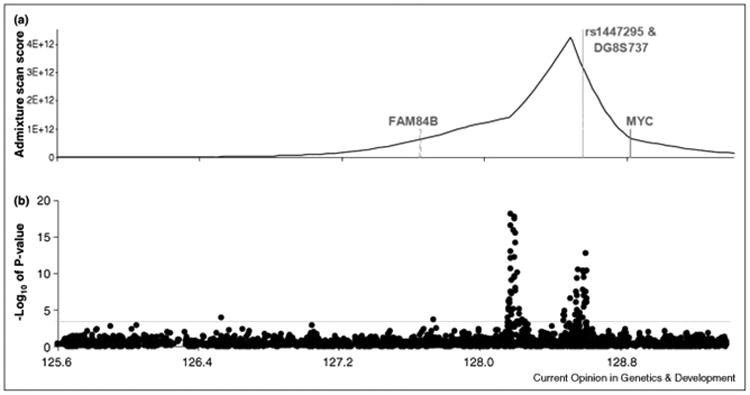
Incidence rates for many cancers differ markedly by race/ethnicity and furthering our understanding of the genetic and environmental causes of such disparities is a scientific and public health need. Genome-wide association studies (GWAS) are widely acknowledged to provide important information about the etiology of common cancers. To date, these studies have been primarily conducted in European-derived populations. There are important reasons for extending the reach of GWAS studies to other groups and for conducting multiethnic genetic studies involving multiple populations and admixed populations. These include a (1) need to discover the full scope of variants that affect risk of disease in all populations, (2) furthering the understanding of disease pathways, and (3) to assist in fine-mapping of genetic associations by exploiting the differences in linkage disequilibrium between populations to narrow the range of marker alleles demarking regions that contain a true biologically relevant variant. Challenges to multiethnic studies relating to study power, control for hidden population structure, imputation, and use of shared controls for multiple cancer endpoints are discussed.
Figures
References
-
- Alberg AJ, Ford JG, Samet JM. Epidemiology of lung cancer: ACCP evidence-based clinical practice guidelines (2nd edition) Chest. 2007;132:29S–55S. - PubMed
-
- Schiffman M, Castle PE, Jeronimo J, Rodriguez AC, Wacholder S. Human papillomavirus and cervical cancer. Lancet. 2007;370:890–907. - PubMed
-
- Kolonel LN, Altshuler D, Henderson BE. The multiethnic cohort study: exploring genes, lifestyle and cancer risk. Nat Rev Cancer. 2004;4:519–527. - PubMed
-
- McCarthy MI, Abecasis GR, Cardon LR, Goldstein DB, Little J, Ioannidis JP, Hirschhorn JN. Genome-wide association studies for complex traits: consensus, uncertainty and challenges. Nat Rev Genet. 2008;9:356–369. - PubMed
Publication types
MeSH terms
Grants and funding
- R01 CA129435/CA/NCI NIH HHS/United States
- HG004802/HG/NHGRI NIH HHS/United States
- U01 HG004802/HG/NHGRI NIH HHS/United States
- HG004726/HG/NHGRI NIH HHS/United States
- CA129435/CA/NCI NIH HHS/United States
- CA054281/CA/NCI NIH HHS/United States
- R01 CA126895/CA/NCI NIH HHS/United States
- U01 CA098758/CA/NCI NIH HHS/United States
- CA098758/CA/NCI NIH HHS/United States
- U01 CA136792/CA/NCI NIH HHS/United States
- R37 CA054281/CA/NCI NIH HHS/United States
- CA136792/CA/NCI NIH HHS/United States
- U01 HG004726/HG/NHGRI NIH HHS/United States
- CA126895/CA/NCI NIH HHS/United States
- R01 CA054281/CA/NCI NIH HHS/United States
LinkOut - more resources
Full Text Sources
