Neuroradiology of cholesteatomas
- PMID: 20360335
- PMCID: PMC7965719
- DOI: 10.3174/ajnr.A2052
Neuroradiology of cholesteatomas
Abstract
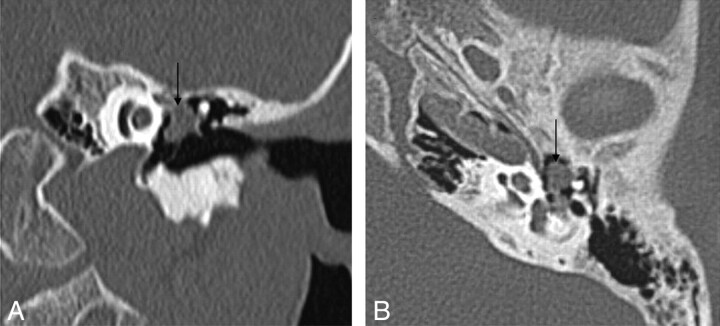
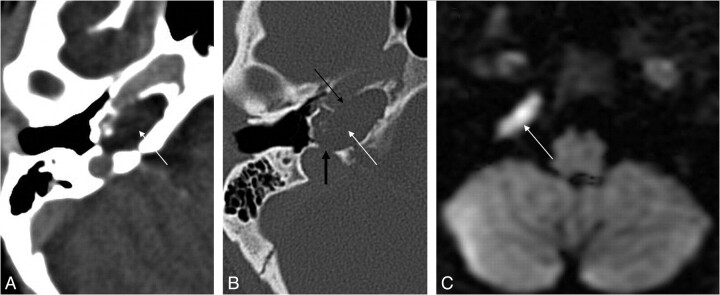
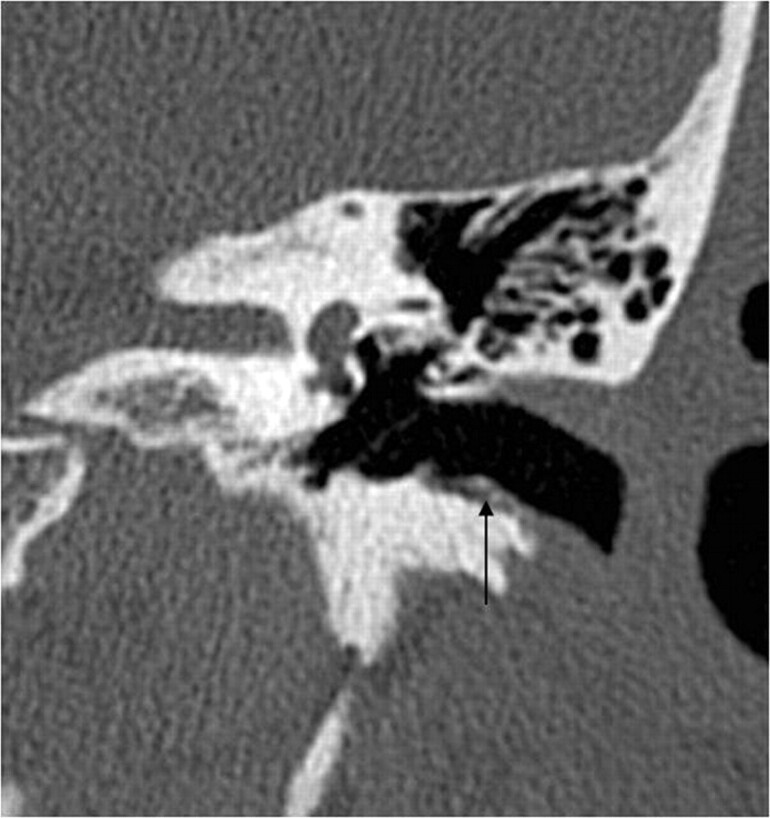
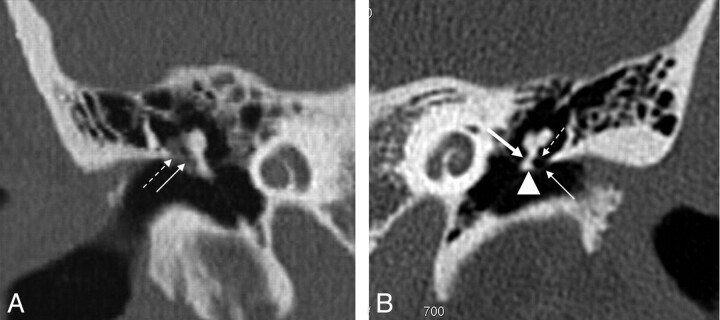
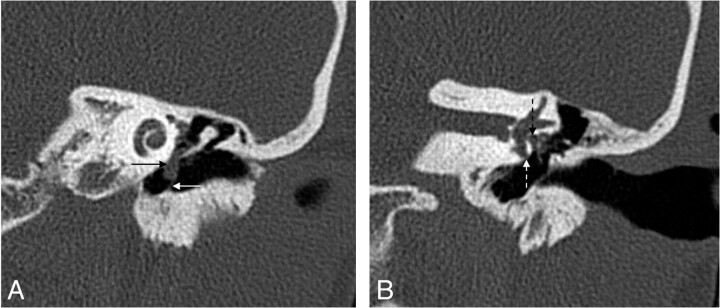
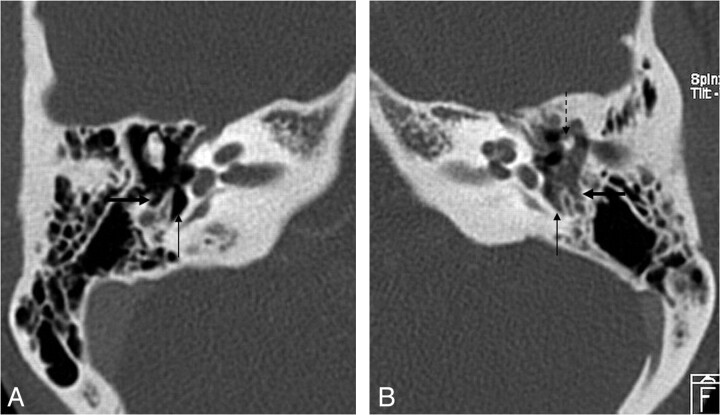
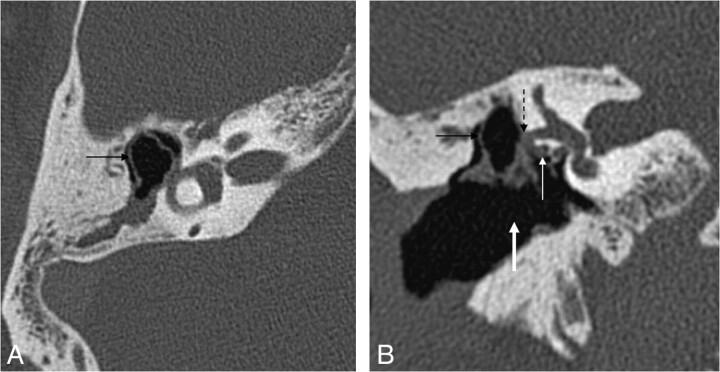
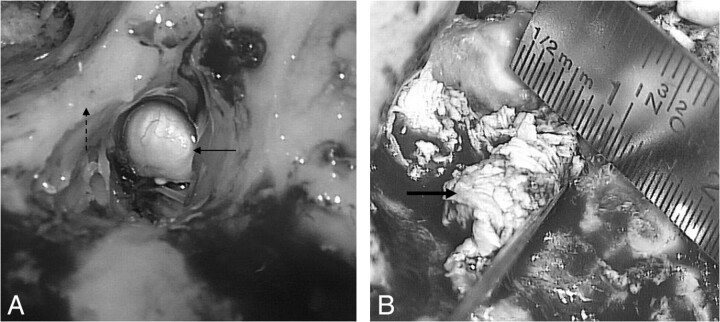
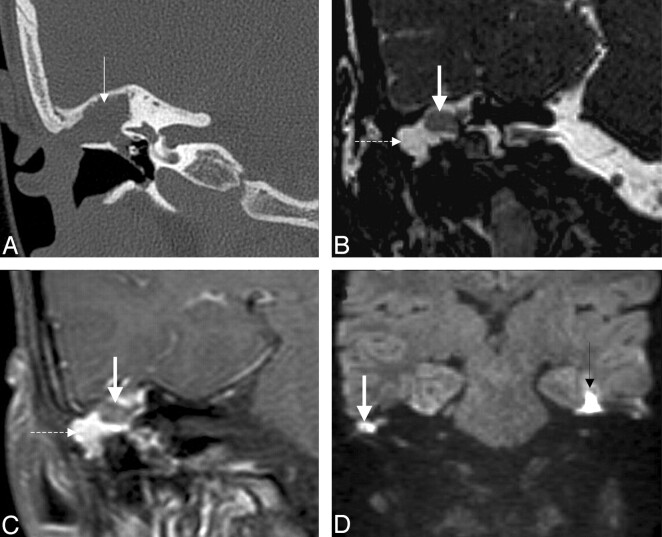
The relevant aspects of cholesteatomas are reviewed with the emphasis on their diagnosis by using cross-sectional imaging. The indications and limitations of CT and MR imaging and the use of novel MR imaging techniques in the diagnosis of cholesteatomas are described. HRCT of the temporal bone has an excellent spatial resolution, thus even small soft-tissue lesions can be accurately delineated (high sensitivity). However, CT has poor specificity (ie, soft-tissue structures cannot be differentiated). MR imaging with the conventional sequences (T1WI, T2WI, postcontrast T1WI) provides additional information for distinguishing different pathologic entities and for accurately diagnosing primary (nonsurgical) and residual/recurrent (surgical) cholesteatomas. Higher diagnostic specificity is achieved by introducing DW-EPI, delayed postcontrast imaging, DW-non-EPI, and DWI-PROPELLER techniques. Studies using DW-non-EPI and DWI-PROPELLER sequences show promising results related to improved diagnostic sensitivity and specificity for even small (<5 mm) cholesteatomas, thus allowing avoidance of second-look surgery in the future.
Figures
References
-
- Moran WB, Jr. Cholesteatoma. In: English GE. ed. Otolaryngology. New York: Harper & Row; 1980
-
- Duverney JG. Traité de l'Organe de l'Ouie. Paris: E. Michaillet; 1683
-
- Müller J. Ueber den feineren Bau und die formen der krankhaften Geschwülste. Berlin: G. Reimer; 1838
-
- Fisch U. Tympanoplasty, Mastoidectomy, and Stapes Surgery. New York: Thieme; 1994:146
-
- Schwartz JD, Harnsberger HR. The Middle Ear and Mastoid. In: Schwartz JD, Harnsberger HR. Imaging of the Temporal Bone. New York: Thieme; 1998:87
Publication types
MeSH terms
LinkOut - more resources
Full Text Sources
Other Literature Sources
Medical