Role of CT angiographic plaque morphologic characteristics in addition to stenosis in predicting the symptomatic side in carotid artery disease
- PMID: 20360336
- PMCID: PMC7965448
- DOI: 10.3174/ajnr.A2078
Role of CT angiographic plaque morphologic characteristics in addition to stenosis in predicting the symptomatic side in carotid artery disease
Abstract
Background and purpose: Atherosclerotic disease of the carotid artery is an important cause of ischemic stroke. We evaluated carotid plaque morphologic features by using CTA in addition to stenosis in the setting of symptomatic hemispheric TIA/stroke to identify factors that may predict plaque activity.
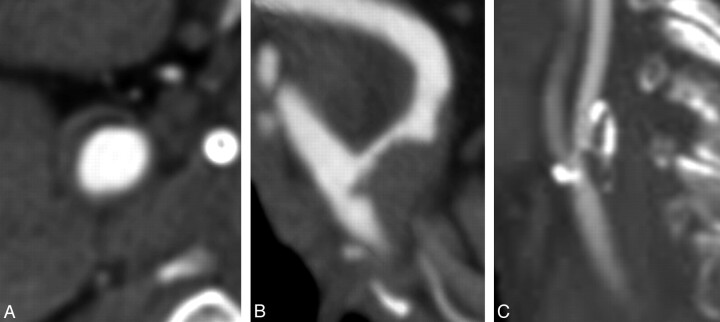
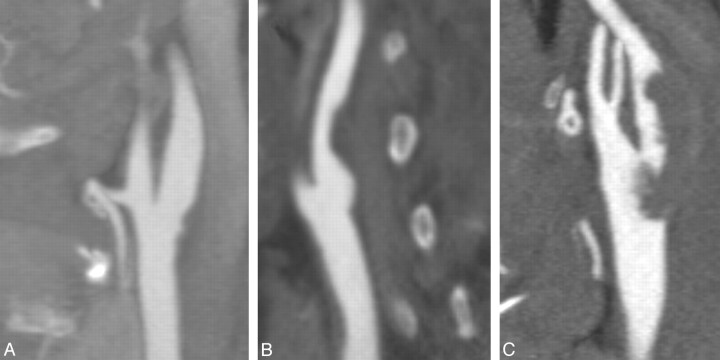
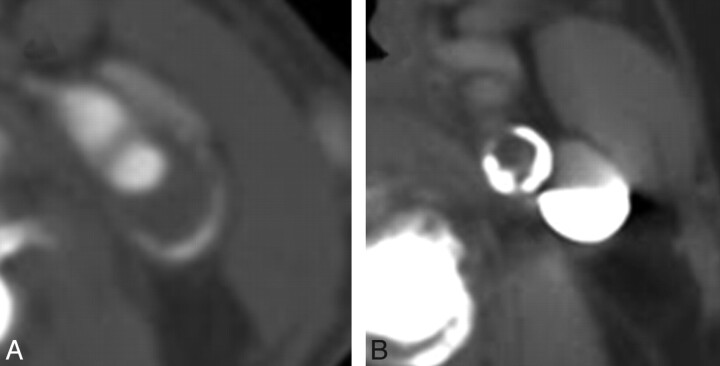
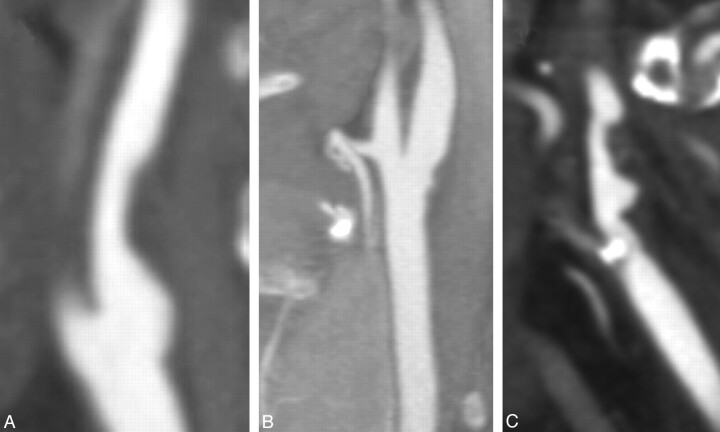
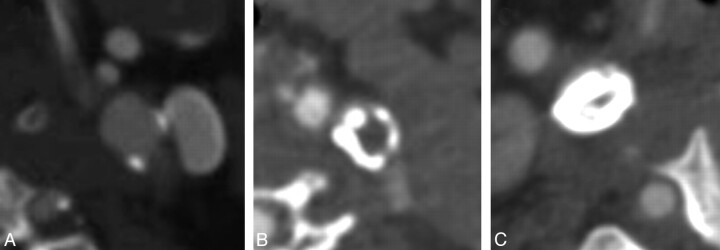
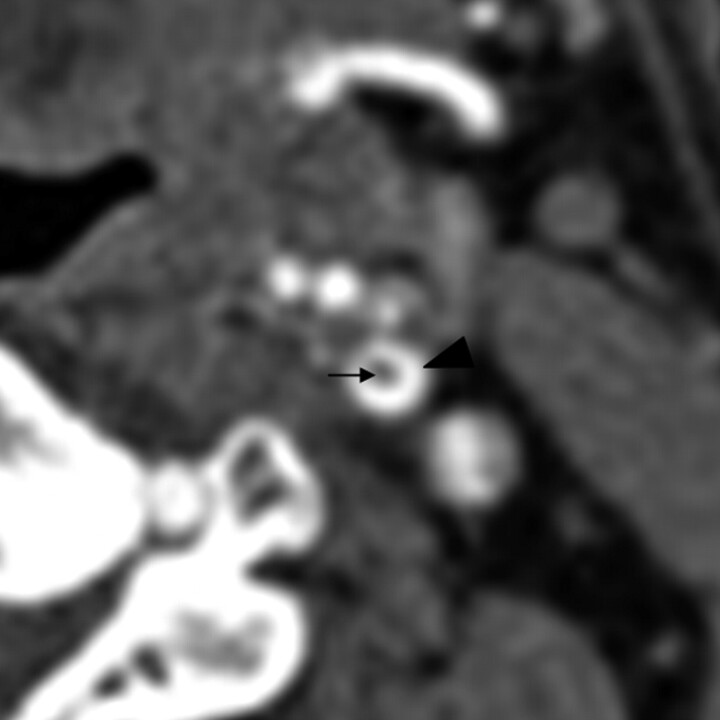
Materials and methods: Six hundred seventy-three patients (408 men; ages, 18-91 years; mean, 65.8 +/- 15.2 years) presenting with hemispheric ischemic symptoms and having a CTA that included imaging of both carotid arteries within 24 hours were studied. Scans were interpreted for morphologic features, such as plaque length and width, attenuation, shape, surface, presence and degree of calcification, and ILT in addition to stenosis.
Results: Univariable analysis showed that carotid occlusions (P = .01, OR = 5.27), high-grade stenosis (70%-99%) (P = .06, OR = 1.8), and the presence of ILT (P = .01, OR = 4.33) were highly predictive of the symptomatic side. Smooth plaque (P = .01, OR = 0.73) and extensive calcification (P = .03, OR = 0.72) were more commonly associated with the asymptomatic side. There was no correlation between plaque hypoattenuation (P = .7, OR = 1.06) or ulcerated plaque (P = .74, OR = 0.955) in predicting the symptomatic side. In a multivariable logistic regression model, the presence of ILT was still found to be significantly associated with the symptomatic side (P = .048, OR = 3.1) and the presence of extensive calcification, with the asymptomatic carotid artery (P = .047, OR = 0.69).
Conclusions: In addition to higher stenosis grades, the presence of ILT is highly predictive of the symptomatic side in carotid disease. Smooth plaque and extensive calcification seem to afford a protective effect. This information may be useful in radiologic risk stratification in carotid disease in addition to the current evidence available based on stenosis criteria alone.
Figures
References
-
- Beneficial effect of carotid endarterectomy in symptomatic patients with high-grade carotid stenosis: North American Symptomatic Carotid Endarterectomy Trial Collaborators. N Engl J Med 1991;325:445–53 - PubMed
-
- MRC European Carotid Surgery Trial: interim results for symptomatic patients with severe (70%–99%) or with mild (0%–29%) carotid stenosis—European Carotid Surgery Trialists' Collaborative Group. Lancet 1991;337:1235–43 - PubMed
-
- Mayberg MR, Wilson SE, Yatsu F, et al. for the Veterans Affairs Cooperative Studies Program 309 Trialist Group . Carotid endarterectomy and prevention of cerebral ischemia in symptomatic carotid stenosis. JAMA 1991;266:3289–94 - PubMed
-
- Gray-Weale AC, Graham JC, Burnett JR, et al. . Carotid artery atheroma: comparison of preoperative B-mode ultrasound appearance with carotid endarterectomy specimen pathology. J Cardiovasc Surg (Torino) 1988;29:676–81 - PubMed
-
- Grønholdt ML, Nordestgaard BG, Schroeder TV, et al. . Ultrasonic echolucent carotid plaques predict future strokes. Circulation 2001;104:68–73 - PubMed
MeSH terms
LinkOut - more resources
Full Text Sources
Medical