


Relationship of tear size and location to fatty degeneration of the rotator cuff
- PMID: 20360505
- PMCID: PMC2842942
- DOI: 10.2106/JBJS.H.01746
Relationship of tear size and location to fatty degeneration of the rotator cuff
Abstract
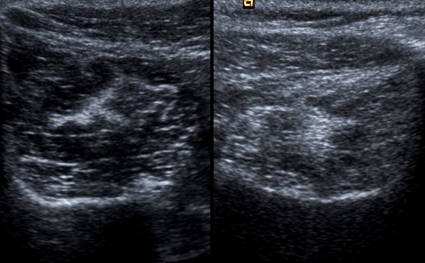
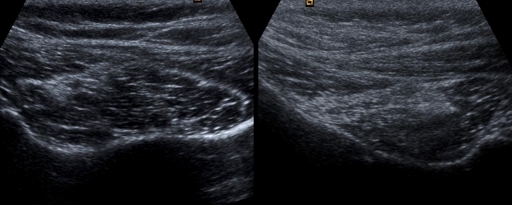
Background: Fatty degeneration of the rotator cuff muscles may have detrimental effects on both anatomical and functional outcomes following shoulder surgery. The purpose of this study was to investigate the relationship between tear geometry and muscle fatty degeneration in shoulders with a deficient rotator cuff.
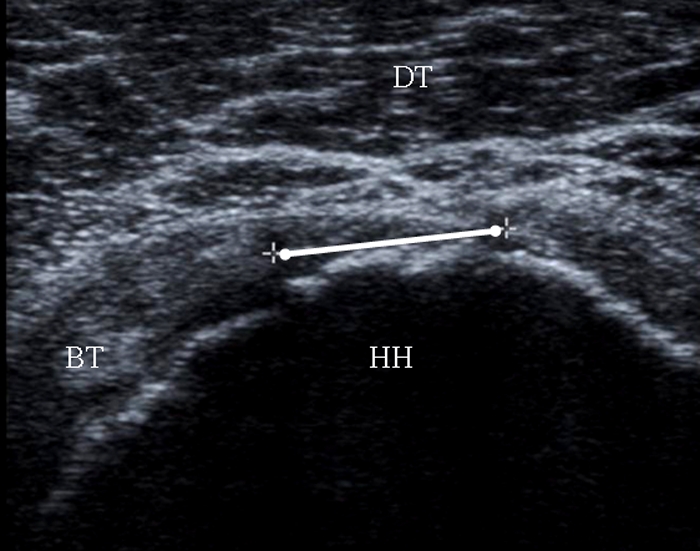
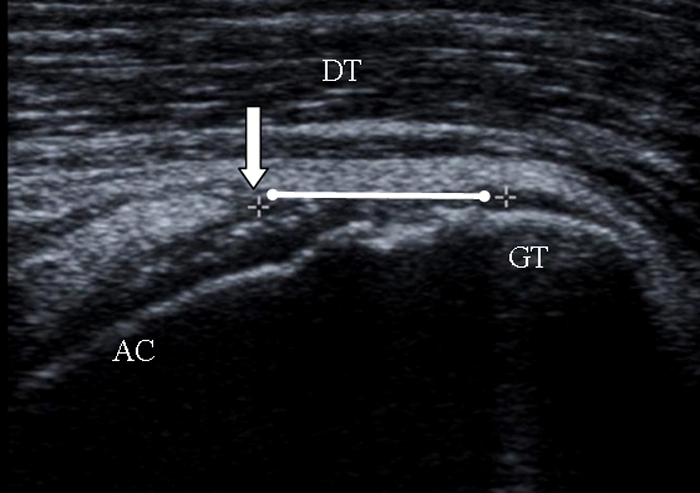
Methods: Ultrasonograms of both shoulders of 262 patients were reviewed to assess the type of rotator cuff tear and fatty degeneration in the supraspinatus and infraspinatus muscles. The 251 shoulders with a full-thickness tear underwent further evaluation for tear size and location. The relationship of tear size and location to fatty degeneration of the supraspinatus and infraspinatus muscles was investigated with use of statistical comparisons and regression models.
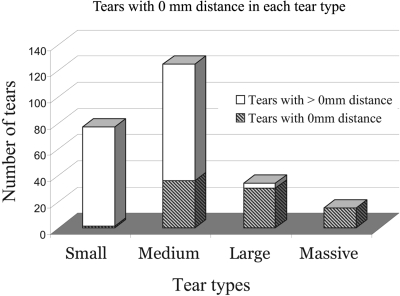
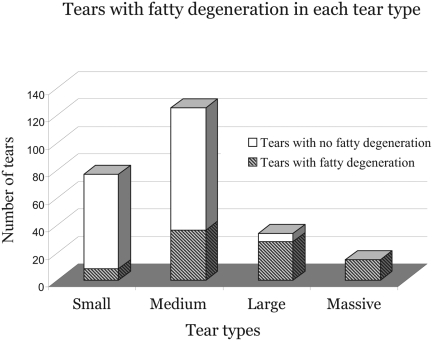
Results: Fatty degeneration was found almost exclusively in shoulders with a full-thickness rotator cuff tear. Of the 251 shoulders with a full-thickness tear, eighty-seven (34.7%) had fatty degeneration in either the supraspinatus or infraspinatus, or both. Eighty-two (32.7%) of the 251 full-thickness tears had a distance of 0 mm between the biceps tendon and anterior margin of the tear. Ninety percent of the full-thickness tears with fatty degeneration in both muscles had a distance of 0 mm posterior from the biceps, whereas only 9% of those without fatty degeneration had a distance of 0 mm. Tears with fatty degeneration had significantly greater width and length than those without fatty degeneration (p < 0.0001). Tears with fatty degeneration had a significantly shorter distance posterior from the biceps than those without fatty degeneration (p < 0.0001). The distance posterior from the biceps was found to be the most important predictor for supraspinatus fatty degeneration, whereas tear width and length were found to be the most important predictors for infraspinatus fatty degeneration.
Conclusions: Fatty degeneration of the rotator cuff muscles is closely associated with tear size and location. The finding of this study suggests that the integrity of the anterior supraspinatus tendon is important to the development of fatty degeneration. Patients with full-thickness tears that extend through this area may benefit from earlier surgical intervention if fatty degeneration has not already occurred. Additionally, the findings suggest the importance of secure fixation and healing of the anterior aspect of the supraspinatus with surgical repair.
Figures
References
-
- Gladstone JN, Bishop JY, Lo IK, Flatow EL. Fatty infiltration and atrophy of the rotator cuff do not improve after rotator cuff repair and correlate with poor functional outcome. Am J Sports Med. 2007;35:719-28 - PubMed
-
- Goutallier D, Postel JM, Bernageau J, Lavau L, Voisin MC. Fatty muscle degeneration in cuff ruptures. Pre- and postoperative evaluation by CT scan. Clin Orthop Relat Res. 1994;304:78-83 - PubMed
-
- Goutallier D, Postel JM, Gleyze P, Leguilloux P, Van Driessche S. Influence of cuff muscle fatty degeneration on anatomic and functional outcomes after simple suture of full-thickness tears. J Shoulder Elbow Surg. 2003;12:550-4 - PubMed
-
- Jost B, Pfirrmann CW, Gerber C. Clinical outcome after structural failure of rotator cuff repairs. J Bone Joint Surg Am. 2000;82:304-14 - PubMed
-
- Gerber C, Fuchs B, Hodler J. The results of repair of massive tears of the rotator cuff. J Bone Joint Surg Am. 2000;82:505-15 - PubMed
Publication types
MeSH terms
Grants and funding
LinkOut - more resources
Full Text Sources
Medical
