


Estimating the disease burden of pandemic (H1N1) 2009 virus infection in Hunter New England, Northern New South Wales, Australia, 2009
- PMID: 20360868
- PMCID: PMC2848017
- DOI: 10.1371/journal.pone.0009880
Estimating the disease burden of pandemic (H1N1) 2009 virus infection in Hunter New England, Northern New South Wales, Australia, 2009
Abstract
Introduction: On May 26, 2009, the first confirmed case of Pandemic (H1N1) 2009 virus (pH1N1) infection in Hunter New England (HNE), New South Wales (NSW), Australia (population 866,000) was identified. We used local surveillance data to estimate pH1N1-associated disease burden during the first wave of pH1N1 circulation in HNE.
Methods: Surveillance was established during June 1-August 30, 2009, for: 1) laboratory detection of pH1N1 at HNE and NSW laboratories, 2) pH1N1 community influenza-like illness (ILI) using an internet survey of HNE residents, and 3) pH1N1-associated hospitalizations and deaths using respiratory illness International Classification of Diseases 10 codes at 35 HNE hospitals and mandatory reporting of confirmed pH1N1-associated hospitalizations and deaths to the public health service. The proportion of pH1N1 positive specimens was applied to estimates of ILI, hospitalizations, and deaths to estimate disease burden.
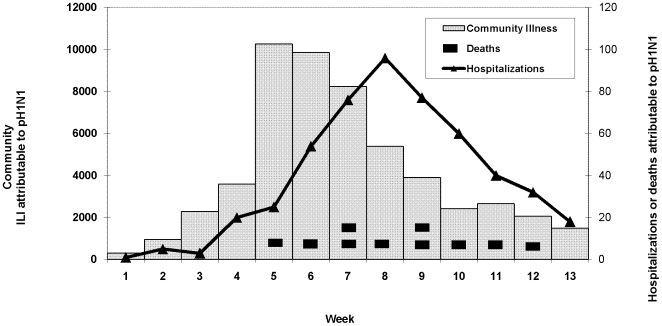
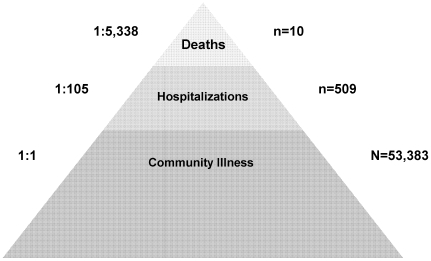
Results: Of 34,177 specimens tested at NSW laboratories, 4,094 (12%) were pH1N1 positive. Of 1,881 specimens from patients evaluated in emergency departments and/or hospitalized, 524 (26%) were pH1N1 positive. The estimated number of persons with pH1N1-associated ILI in the HNE region was 53,383 (range 37,828-70,597) suggesting a 6.2% attack rate (range 4.4-8.2%). An estimated 509 pH1N1-associated hospitalizations (range 388-630) occurred (reported: 184), and up to 10 pH1N1-associated deaths (range 8-13) occurred (reported: 5). The estimated case hospitalization ratio was 1% and case fatality ratio was 0.02%.
Discussion: The first wave of pH1N1 activity in HNE resulted in symptomatic infection in a small proportion of the population, and the number of HNE pH1N1-associated hospitalizations and deaths is likely higher than officially reported.
Conflict of interest statement
Figures
References
-
- About Hunter New England Health. Accessed September 22, 2009 at http://www.hnehealth.nsw.gov.au/about_us.
-
- Lipsitch M, Hayden FG, Cowling BJ, Leung GM. How to maintain surveillance for novel influenza A H1N1 when there are too many cases to count. Lancet. 2009;374:1209–1211. - PubMed
-
- Weekly Influenza Epidemiology Report, NSW. Accessed August 30, 2009 at http://www.health.nsw.gov.au/news/2009/20090827_01.html.
-
- Flutracking.net. Accessed on September 22, 2009 at www.flutracking.net.
-
- Parrella A, Dalton C, Pearce R, Litt J. ASPREN surveillance system for influenza-like illness: A comparison with FluTracking and the National Notifiable Diseases Surveillance System. Australian Family Physician. 2009;39 - PubMed
MeSH terms
LinkOut - more resources
Full Text Sources
Medical
