


Unlike the synchronous Plasmodium falciparum and P. chabaudi infection, the P. berghei and P. yoelii asynchronous infections are not affected by melatonin
- PMID: 20360886
- PMCID: PMC2840578
- DOI: 10.2147/ijgm.s3699
Unlike the synchronous Plasmodium falciparum and P. chabaudi infection, the P. berghei and P. yoelii asynchronous infections are not affected by melatonin
Abstract
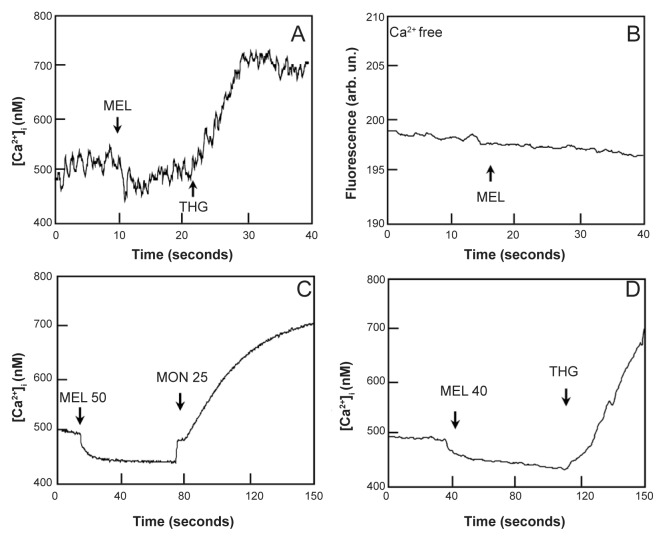
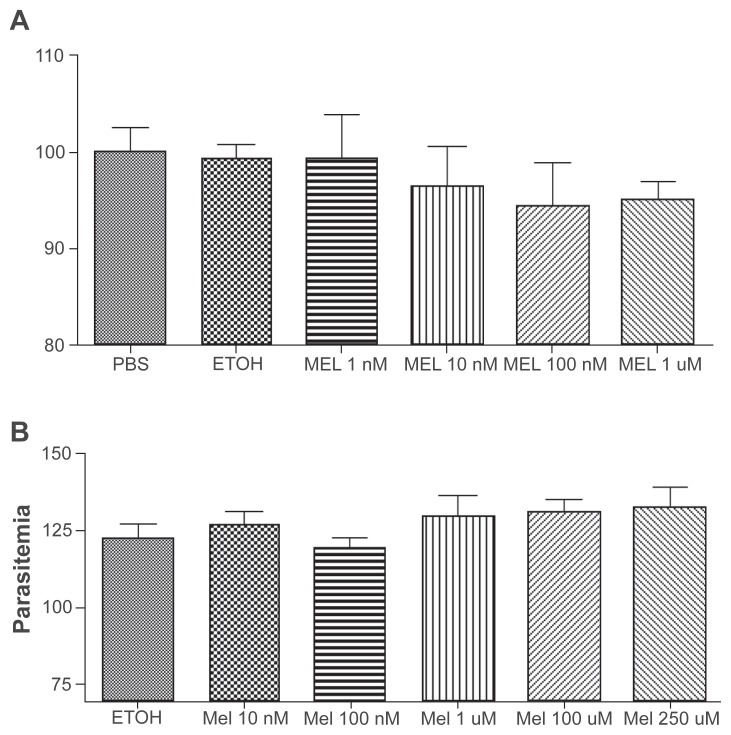
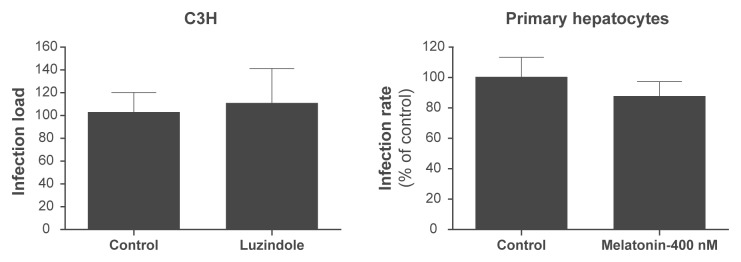
We have previously reported that Plasmodium chabaudi and P. falciparum sense the hormone melatonin and this could be responsible for the synchrony of malaria infection. In P. chabaudi and P. falciparum, melatonin induces calcium release from internal stores, and this response is abolished by U73122, a phospholipase C inhibitor, and luzindole, a melatonin-receptor competitive antagonist. Here we show that, in vitro, melatonin is not able to modulate cell cycle, nor to elicit an elevation in intracellular calcium concentration of the intraerythrocytic forms of P. berghei or P. yoelii, two rodent parasites that show an asynchrononous development in vivo. Interestingly, melatonin and its receptor do not seem to play a role during hepatic infection by P. berghei sporozoites either. These data strengthen the hypothesis that host-derived melatonin does not synchronize malaria infection caused by P. berghei and P. yoelii. Moreover, these data explain why infections by these parasites are asynchronous, contrary to what is observed in P. falciparum and P. chabaudi infections.
Keywords: calcium; cell cycle; malaria; melatonin; rhythm; sporozoite.
Figures


References
-
- Garcia CR, Takeuschi M, Yoshioka K, et al. Imaging Plasmodium falciparum-infected ghost and parasite by atomic force microscopy. J Struct Biol. 1997;119:92–98. - PubMed
-
- Przyborski JM, Lanzer M. Protein transport and trafficking in Plasmodium falciparum-infected erythrocytes. Parasitology. 2005;130:373–388. - PubMed
-
- Boyd GH. Induced variations in the asexual cycle of Plasmodium cathemerium. Am J Hyg. 1929;9:181–187.
-
- Taliaferro WH, Taliaferro LG. Morphology, periodicity and course of infection of Plasmodium brasilianum in Panamanian monkeys. Am J Hyg. 1934;20:1–49.
LinkOut - more resources
Full Text Sources
