


Pigment epithelium-derived factor stimulates tumor macrophage recruitment and is downregulated by the prostate tumor microenvironment
- PMID: 20360944
- PMCID: PMC2847741
- DOI: 10.1593/neo.92046
Pigment epithelium-derived factor stimulates tumor macrophage recruitment and is downregulated by the prostate tumor microenvironment
Abstract
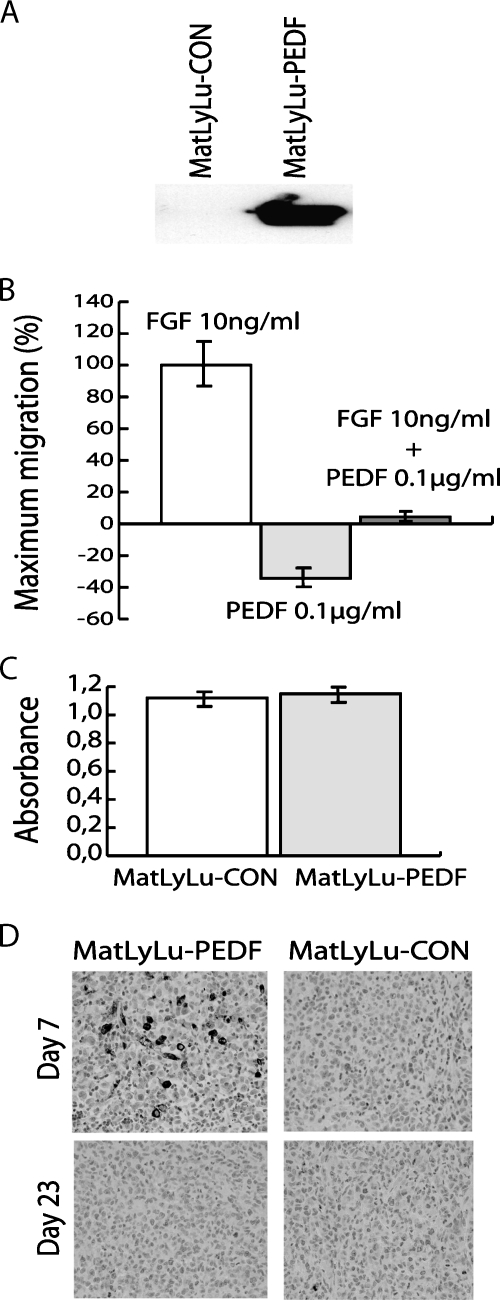
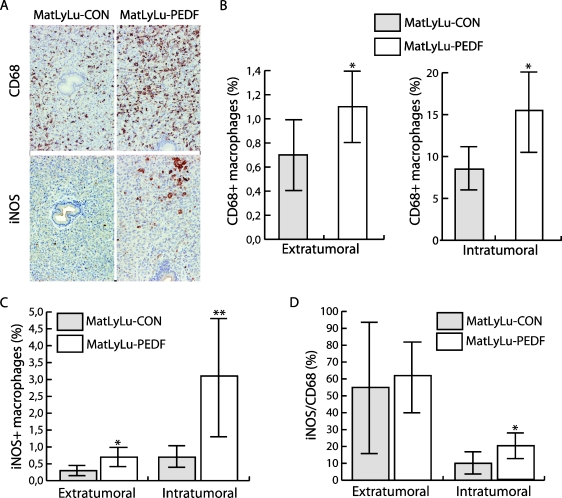
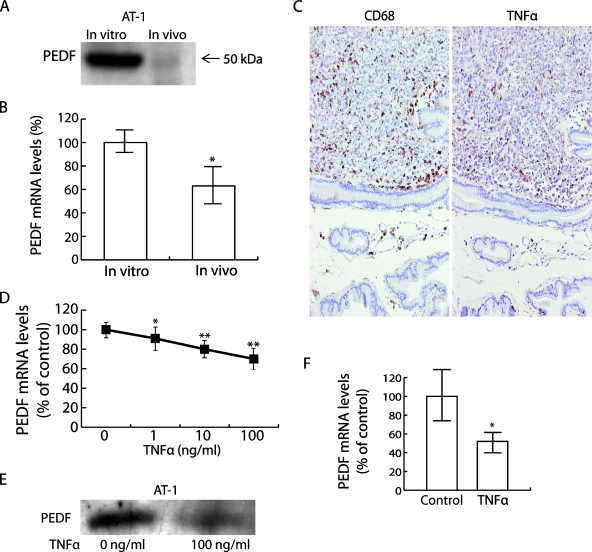
Pigment epithelium-derived factor (PEDF) is a potent inhibitor of angiogenesis but whether it has additional effects on the tumor microenvironment is largely unexplored. We show that overexpression of PEDF in orthotopic MatLyLu rat prostate tumors increased tumor macrophage recruitment. The fraction of macrophages expressing inducible nitric oxide synthase, a marker of cytotoxic M1 macrophages, was increased, suggesting that PEDF could enhance antitumor immunity. In addition, PEDF overexpression reduced vascular growth both in the tumor and in the surrounding normal tissue, slowed tumor growth, and decreased lymph node metastasis. Contrary, extratumoral lymphangiogenesis was increased. PEDF expression is, for reasons unknown, often decreased or lost during prostate tumor progression. When AT-1 rat prostate tumor cells, expressing high levels of PEDF messenger RNA (mRNA) and protein, were injected into the prostate, PEDF is markedly downregulated, suggesting that factors in the microenvironment suppressed its expression. One such factor could be macrophage-derived tumor necrosis factor alpha (TNFalpha). A fraction of the accumulating macrophages expressed TNFalpha, and TNFalpha treatment downregulated the expression of PEDF protein and mRNA in prostate AT-1 tumor cells in vitro and in the rat ventral prostate in vivo. PEDF apparently has multiple effects in prostate tumors: it suppresses angiogenesis and metastasis, but it also causes macrophage accumulation. Accumulating macrophages may inhibit tumor growth, but they may also suppress PEDF and enhance lymph angiogenesis and, in this way, eventually enhance tumor growth.
Figures
References
-
- Pollard JW. Tumour-educated macrophages promote tumour progression and metastasis. Nat Rev Cancer. 2004;4:71–78. - PubMed
-
- Biswas SK, Sica A, Lewis CE. Plasticity of macrophage function during tumor progression: regulation by distinct molecular mechanisms. J Immunol. 2008;180:2011–2017. - PubMed
-
- Sica A, Larghi P, Mancino A, Rubino L, Porta C, Totaro MG, Rimoldi M, Biswas SK, Allavena P, Mantovani A. Macrophage polarization in tumour progression. Semin Cancer Biol. 2008;18:349–355. - PubMed
-
- Lissbrant IF, Stattin P, Wikstrom P, Damber JE, Egevad L, Bergh A. Tumor associated macrophages in human prostate cancer: relation to clinicopathological variables and survival. Int J Oncol. 2000;17:445–451. - PubMed
Publication types
MeSH terms
Substances
LinkOut - more resources
Full Text Sources
Other Literature Sources
Medical
Research Materials
Miscellaneous