


Words and melody are intertwined in perception of sung words: EEG and behavioral evidence
- PMID: 20360991
- PMCID: PMC2847603
- DOI: 10.1371/journal.pone.0009889
Words and melody are intertwined in perception of sung words: EEG and behavioral evidence
Abstract
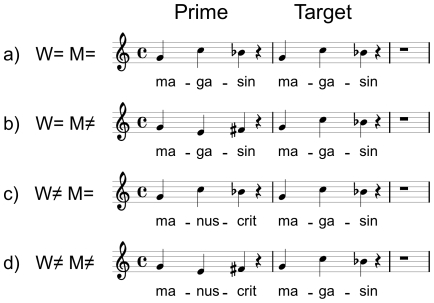
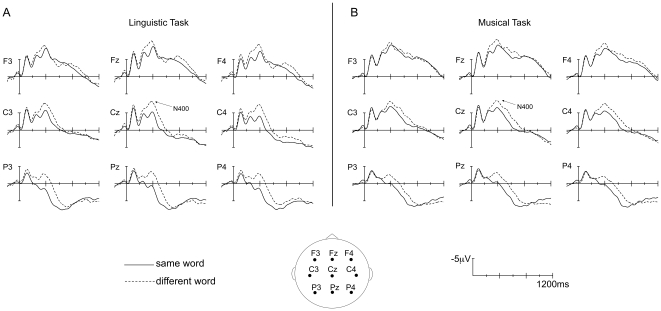
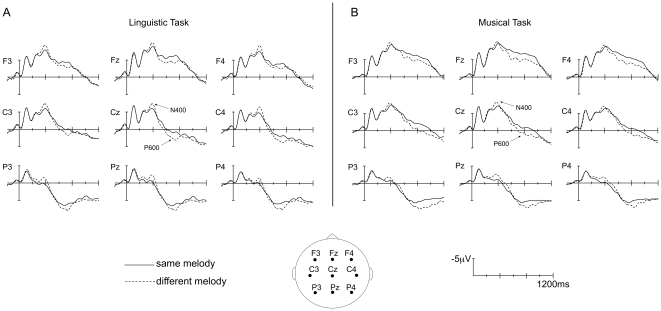
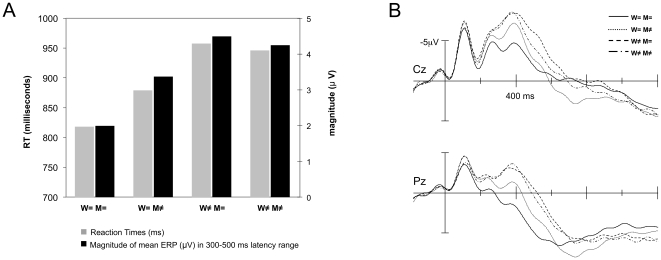
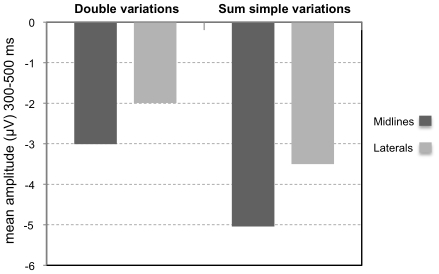
Language and music, two of the most unique human cognitive abilities, are combined in song, rendering it an ecological model for comparing speech and music cognition. The present study was designed to determine whether words and melodies in song are processed interactively or independently, and to examine the influence of attention on the processing of words and melodies in song. Event-Related brain Potentials (ERPs) and behavioral data were recorded while non-musicians listened to pairs of sung words (prime and target) presented in four experimental conditions: same word, same melody; same word, different melody; different word, same melody; different word, different melody. Participants were asked to attend to either the words or the melody, and to perform a same/different task. In both attentional tasks, different word targets elicited an N400 component, as predicted based on previous results. Most interestingly, different melodies (sung with the same word) elicited an N400 component followed by a late positive component. Finally, ERP and behavioral data converged in showing interactions between the linguistic and melodic dimensions of sung words. The finding that the N400 effect, a well-established marker of semantic processing, was modulated by musical melody in song suggests that variations in musical features affect word processing in sung language. Implications of the interactions between words and melody are discussed in light of evidence for shared neural processing resources between the phonological/semantic aspects of language and the melodic/harmonic aspects of music.
Conflict of interest statement
Figures
References
-
- Besson M, Schön D. Comparison between language and music. Annals of the New York Academy of Sciences. 2001;930:232–258. - PubMed
-
- Patel AD, Peretz I. Is music autonomous from language? A neuropsychological appraisal. In: Deliege I, Sloboda J, editors. Perception and cognition of music. London: Erlbaum Psychology Press; 1997. pp. 191–215.
-
- Peretz I, Coltheart M. Modularity of music processing. Nature Neuroscience. 2003;6:688–691. - PubMed
-
- Koelsch S. Neural substrates of processing syntax and semantics in music. Current Opinion in Neurobiology. 2005;15:207–212. - PubMed
-
- Patel AD. New York: Oxford University Press; 2008. Music, Language, and the Brain.
Publication types
MeSH terms
LinkOut - more resources
Full Text Sources
