


Multi-dimensional liquid chromatography in proteomics--a review
- PMID: 20363391
- PMCID: PMC2852180
- DOI: 10.1016/j.aca.2010.02.001
Multi-dimensional liquid chromatography in proteomics--a review
Abstract
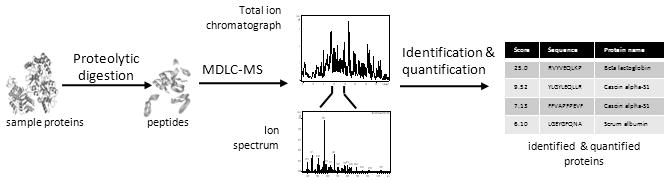
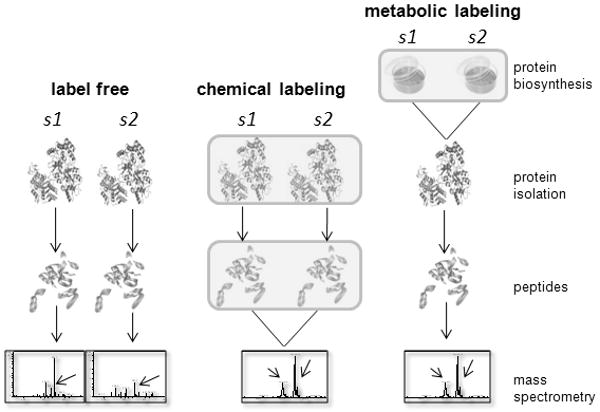
Proteomics is the large-scale study of proteins, particularly their expression, structures and functions. This still-emerging combination of technologies aims to describe and characterize all expressed proteins in a biological system. Because of upper limits on mass detection of mass spectrometers, proteins are usually digested into peptides and the peptides are then separated, identified and quantified from this complex enzymatic digest. The problem in digesting proteins first and then analyzing the peptide cleavage fragments by mass spectrometry is that huge numbers of peptides are generated that overwhelm direct mass spectral analyses. The objective in the liquid chromatography approach to proteomics is to fractionate peptide mixtures to enable and maximize identification and quantification of the component peptides by mass spectrometry. This review will focus on existing multidimensional liquid chromatographic (MDLC) platforms developed for proteomics and their application in combination with other techniques such as stable isotope labeling. We also provide some perspectives on likely future developments.
Published by Elsevier B.V.
Figures
References
-
- UNIMOD. http://www.unimod.org.
-
- Anderson NL, Polanski M, Pieper R, Gatlin T, Tirumalai RS, Conrads TP, Veenstra TD, Adkins JN, Pounds JG, Fagan R, Lobley A. Mol Cell Proteomics. 2004;3:311–326. - PubMed
-
- Anderson NL, Anderson NG. Mol Cell Proteomics. 2002;1:845–867. - PubMed
-
- Adkins JN, Varnum SM, Auberry KJ, Moore RJ, Angell NH, Smith RD, Springer DL, Pounds JG. Mol Cell Proteomics. 2002;1:947–955. - PubMed
Publication types
MeSH terms
Substances
Grants and funding
LinkOut - more resources
Full Text Sources
Other Literature Sources
